


African states are gearing up for the second African Climate Summit (ACS-II), which will take place two years after the inaugural gathering held in Nairobi in September 2023.
ACS-II will be held in Addis Ababa, Ethiopia, from September 8th to 10th, 2025. It will be preceded by a pre-Summit engagement from September 5 to 7, 2025.
The theme of this year's Summit is "Accelerating Global Climate Solutions: Financing for Africa's resilient and Green Development", stands out as a well-thought out rallying call meant to add impetus to the continent's climate agenda, as its States push for a more inclusive climate financing mechanism, that recognizes Africa's unique circumstances, as it battles the ravages of climate change.
The hope across the continent is that ACS-II will ride on the momentum of the Nairobi summit to amplify Africa's voice on the global stage. Africa has been outspoken regarding fair, progressive, and just climate finance.
The State of the Climate in Africa 2021 report noted that the continent warmed at a rate of 0.3°C per decade between 1991 and 2021, which is faster than the rate observed during the 1961–1990 period.
The rise in sea levels along the African coastlines amounts to almost four millimetres annually (4mm/year), a rate greater than the global average.
As presented by the World Economic Forum, "By 2030, 108-116 million people in Africa will be exposed to sea level rise, 700 million will be displaced because of high-water stress, and four out of five African countries are unlikely to have sustainably managed water resources."
The threat is real and is already being felt in Kenyan and African communities. In Kenya, the increasing water levels in Lake Baringo, Lake Bogoria, Lake Victoria, and Lake Naivasha (among others) have led to the displacement of thousands of families, affecting schools, health facilities, and churches.
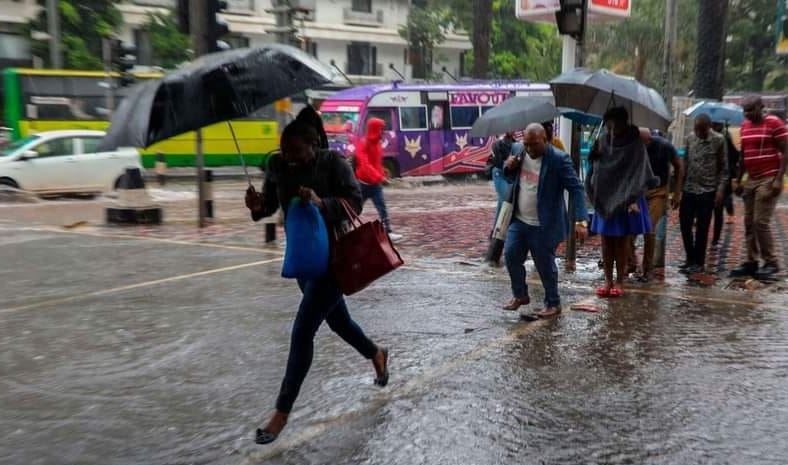
Local communities around Lake Victoria, particularly in Budalangi and Kisumu, have been affected by frequent floods that destroy homes and croplands, leaving families vulnerable to food insecurity. Such Kenyan facts, which we have witnessed and experienced, reflect the global African dilemma and justify the urgency and equity of climate action.
Another dark example is the prolonged droughts in East Africa. Kenya's arid and semi-arid regions, including Turkana, Garissa, and Kajiado, have faced four consecutive failed rainy seasons. In 2022/2023, livestock bones covered the grazing lands, and families made long treks towards the water holes.
School enrollments decreased as children dropped out to support their families. The Kenyan experience is representative of what is happening throughout East Africa, where drought, conflict, and displacement converge to further increase vulnerability.
Similarly, in other regions within Africa, floods have swept through parts of South Sudan, Nigeria, and the Democratic Republic of Congo. Still, Kenyans cannot forget the 2020 flash floods and landslides in West Pokot and Elgeyo-Marakwet, which wiped out entire villages and left indelible scars to date. All this real-life experience points to one course: climate change is not a distant event, but a present emergency.
A recent paper by the Pan African Climate Alliance (PACJA) and Clim-Sec Africa highlights the dire nature of this reality. It stresses the ubiquity of loss and damage as a direct consequence of climate change, emphasizing that the problem must be addressed across all regions of the world through a shared agenda.
In Kenya, the overfilled lakes of the Kenya Rift Valley necessitated mass migrations, which in turn produced humanitarian crises, straining governmental resources in settling the relocated communities. The paper also notes that the security risks associated with climate change make the processes of preventing and resolving conflicts more challenging.
A microcosm of what is happening in the Sahel and Horn of Africa, pastoralist communities in northern Kenya have been fighting deadly battles over their dwindling grazing lands and water resources. Lastly, the report cautions about the increase in human insecurity caused by climate risks, resulting in displacement and involuntary migration. This danger is proved by the increasing number of internally constructed families along Lake Victoria as well as the Kenyan Coast.
It is on this backdrop that African policymakers find themselves coming under increasing scrutiny. The Addis summit presents an opportunity to recalibrate Africa's engagement with the global climate agenda and to project a united front that commands respect. Yet, governments are unable to take on such a burden.
First, Non-state actors, such as civil society organisations, youth movements, faith-based institutions, indigenous groups, academia, private sector innovators, and community networks, must be part of the conversation. Their closeness to communities, policy savvy, and advocacy strength have also made them vital players in creating outcomes that are not only legitimate but also actionable.
From the emphasis of the pre-ACS-II meeting of Non-State Actors that took place in Addis Ababa on May 15, 2025: when grassroots voices enter into the discussion, solutions are more robust, feasible, and believable.
Besides, to ensure that the summit yields meaningful outcomes, the voice of Non-State Actors cannot be dismissed as a symbolic token; instead, it must be included throughout the process. Their input should be integrated into the planning, agenda-setting, negotiations, and monitoring processes.
In Kenya, ventures by young people focusing on climate change in Nairobi and groups in Turkana have produced creative responses regarding clean energy and climate-smart farming, which would greatly benefit continental approaches if given the opportunity to operate and cooperate.
Thirdly, the summit should ensure that it has accountability mechanisms that clearly trace the adoption of Non-State Actor recommendations and provide feedback loops to inform the summit on what has been taken up and why.
In addition to participating in discussions, Non-State Actors should play a transparent role in the implementation of summit resolutions. Their actions on the ground, such as handling community-based early warning systems like those in the Tana River, stimulating interest in solar-powered irrigation schemes in Machakos, or the campaign to sensitize schools in Kisumu, prove their ability to turn words into reality. Providing them with access to draft declarations and summit texts would increase legitimacy, ensuring that operations are informed by frontline realities, rather than potentially unrealistic abstract thinking.
Intergenerational engagement must also be institutionalised. Such spaces have been pioneered in Kenya, such as the Nairobi Summer School on Climate Justice, a platform for learning, networking, and developing innovative solutions to climate change challenges, with a particular focus on the Global South. ACS-II must build on this by creating youth and children's assemblies, ensuring that climate discourse speaks to the generations most affected.
Non-state actors should be supported in convening independently, through civil society assemblies, women's caucuses, and youth summits, all of which feed into the official processes. These platforms, together with areas where African innovations are showcased, such as agroecological farming systems or locally developed clean energy technologies, would ensure that the summit was not just a negotiation platform but also a site of celebration and learning.
Grassroots voices are often overshadowed by officialdom, even in high-level engagements. But Africa's climate agenda cannot afford to be the exclusive preserve of governments. Kenya's experiences with floods, droughts, and displacement make it clear that those closest to the crisis are also those most likely to find the solutions.
ACS-II thus has to be considered a continental moment of common ownership, wherein the language of State and Non-State Actors is one not of competition but of chorus.
The future of Africa can only be more assured when it comes to inclusivity. The Addis summit presents an opportunity to set things back on track. However, it is the responsibility of Africa and the world to listen to the people, including presidents, pastoralists, global negotiators, and grassroots youth.
Dismas Ngoda is the head of research and data analyst at Green Communication Institute