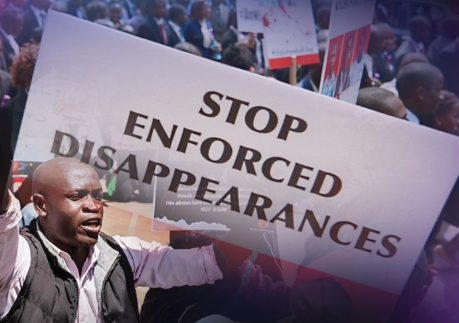
The Kenyan state has been implicated in the enforced disappearances of its citizens.
The targets have been outspoken government critics, protestors and civil society actors.
These enforced disappearances have occurred in broad daylight—or sometimes during nighttime raids—with victims often picked up by law enforcement officers in unmarked vehicles, never to be seen again.
The blatant disregard for Kenya's constitution is at the heart of this crisis. The constitution guarantees the right to life, security and protection from arbitrary arrest and detention.
Article 29 explicitly shields every individual from cruel, inhuman, or degrading treatment. At the same time, Article 49 outlines the rights of arrested persons, including the right to be informed promptly of the reason for arrest, to legal counsel and to be presented in court within 24 hours. These provisions are now being trashed openly.
A recent Missing Voices report reveals that at least 104 people were killed and 55 others disappeared in 2024. Enforced disappearances reached the highest number in the past five years, representing a 450 per cent increase from 10 cases in 2023.
Most victims were young men, activists or vocal citizens who had spoken out online or participated in the anti-Finance Bill protests in June and July 2024.
Human Rights Watch documented instances where protest leaders were abducted, tortured, and, in some cases, executed. Many were detained in unknown locations, denied legal representation or contact with family.
By the end of 2024, at least 29 people remained missing, swallowed by a system designed to erase.
The Kenya National Commission on Human Rights recorded at least 82 cases of enforced disappearances during this period, most involving individuals known for their online activism. I must caution that the number of those killed or forcefully disappeared could be higher than the official records.
This trend suggests a targeted campaign to stifle dissent.
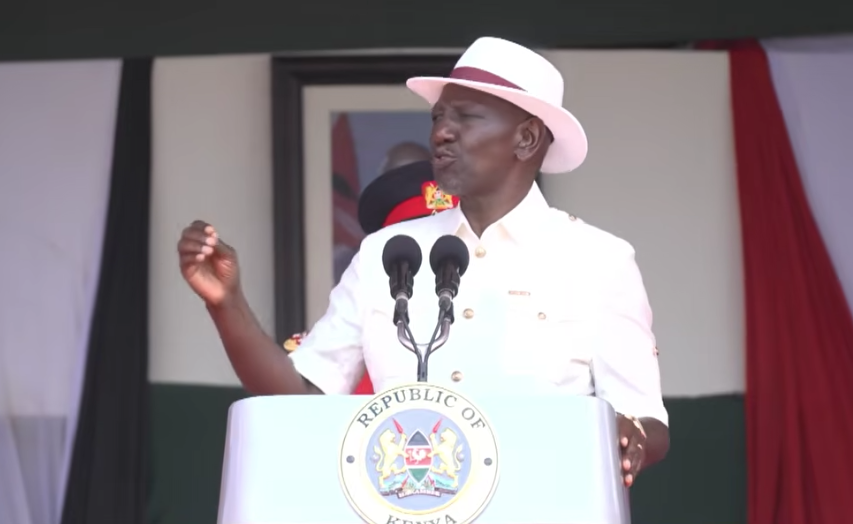
In a stunning admission this month, however, President William Ruto reversed months of official denials.
Speaking during a state visit by the Finnish President Alexander Stubb, he acknowledged that “all the people who disappeared or were abducted have been brought back to their families or homes”.
Ruto vowed that such incidents would never happen again. But for many families, the damage is already done. The issue has spilt beyond Kenya’s borders.
The abduction of Tanzanian activist Maria Sarungi Tsehai in January 2025, reportedly with Kenyan state involvement, triggered international outcry.
The African Commission on Human and Peoples’ Rights, alongside European envoys, condemned the incident, calling for investigations and accountability. The timing was especially ironic, as Kenya had just assumed a seat on the United Nations Human Rights Council, a position meant to champion the freedoms now under siege at home.
Once heralded for reforms, Kenya’s government is accused of becoming the monster it once vowed to tame. As British philosopher John Stuart Mill warned, “the worth of a state in the long run is the worth of the individuals composing it.”
Mill suggests that a nation’s true strength and value are not in its institutions, military or wealth, but in the character, integrity and capability of its citizens.
Over time, it is the people, not the systems, who determine the health and future of the state. As such, our collective integrity must demand independent investigations into every enforced disappearance, the prosecution of all responsible regardless of rank, and reparations for affected families.
Anything less would betray the law and the values we claim to uphold. Until then, the question remains, who’s next?
Manager for Inclusion and Political Justice at the Kenya Human Rights Commission