

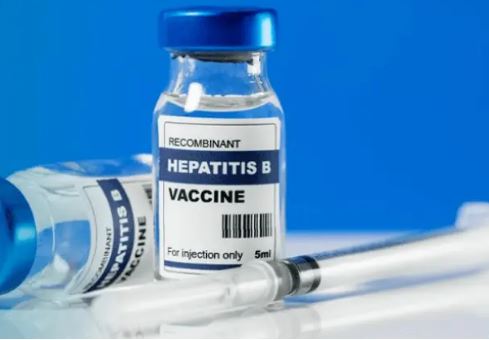
A US panel of vaccine advisers has voted to end a longstanding recommendation for vaccinations against the hepatitis B virus (HBV) right after birth.
The Advisory Committee on Immunisation Practices (Acip) voted 8-3 to back "individual-based decision-making" on whether to vaccinate babies born to mothers who have tested negative for the liver infection.
In June, Health Secretary Robert F Kennedy Jr, a vaccine sceptic, fired all the members of the Acip and replaced them with others who are critical of vaccines.
The US has vaccinated newborns against hepatitis B since 1991, and data suggests that since then, the shots have prevented an estimated 90,000 deaths.
The Acip is responsible for making recommendations to the US Centers for Disease control and Prevention (CDC) on when and who should be vaccinated. The acting director the CDC has the final sign-off on the recommendation.
The new guidance also suggests that babies who do not receive a birth dose of the vaccine should get their initial dose of the shot "no earlier than two months of age", a recommendation that several members of the group opposed.
Public health experts worry the vote could raise unfounded safety concerns about the vaccine and encourage some people to opt out, leading to more sickness.
The concern was shared by some members of the Acip panel.
"The hepatitis B vaccine recommendation is very well established," Dr Cody Meissner said before voting no.
"We know it's safe and we know it's very effective. And to make the changes that are being proposed, we will see more children and adolescents and adults infected with hepatitis B."
The panel continues to recommend that babies born to mothers who have tested positive for hepatitis B be given a birth dose of the vaccine. The move is not expected to affect insurance coverage of the shot.
Hepatitis B is a liver infection that spreads through direct contact with bodily fluids, and can lead to dangerous liver conditions including cancer, liver failure and cirrhosis.
Pregnant people who have hepatitis B also can transmit the virus to newborns during delivery, which can lead to chronic infections that can damage the liver.
People infected with HBV do not always have symptoms, meaning they may not even be aware they are carrying the virus and can spread it while caring for children and infants.
Friday's decision came after a tense two-day meeting on the issue, after the Acip decided to postpone a vote on the hepatitis B shots two times.
On Friday, several members of the panel voiced their objections to the new guidelines, and in particular, that shots be recommended no sooner than two months of age.
The voting choices are "incredibly problematic", Dr Joseph Hibbeln said, while Dr Meissner said members were acting on "baseless sceptisicm".
One committee member in favour of the change, Retsef Levi, said the US hepatitis B vaccine policy was "misaligned" with other countries around the world.
The World Health Organization recommends vaccinating children against HBV at zero, one and six-months old.
In the UK, vaccines are recommended at eight weeks, 12 weeks and 16 weeks old, unless a mother has tested positive for the virus.
During hours of meetings on Thursday and Friday, the committee heard from several physicians, including many who criticised the panel for considering ending universal vaccination recommendations.
Committee members who voted in favour of the new recommendations argued that the risk of catching the virus was low and that vaccines should be tailored to individual patients.
Critics of the birth dose have argued that babies should only be vaccinated as newborns if their mother tests positive for the virus.
But doctors say this leaves some babies at risk, because not all pregnant people have reliable access to testing, while others could receive a false negative test for hepatitis B.
Kennedy and his allies have questioned the safety of the hepatitis B vaccine and have argued it is primarily spread through sexual contact and sharing needles.
Research has shown, however, that it can also spread through indirect contact such as shared toothbrushes and razors.
Since taking office, Kennedy has made a number of changes to US vaccine policy.
The Acip's decision to revisit the vaccine recommendations sparked anger from Republican Senator Bill Cassidy, a physician who cast a deciding vote in confirming Kennedy as health secretary despite worries about his previous stances on vaccines.
"As a liver doctor who has treated patients with hepatitis B for decades, this change to the vaccine schedule is a mistake," Cassidy said in a statement.
"The hepatitis B vaccine is safe and effective. The birth dose is a recommendation, NOT a mandate."