Part of the Kenya contingent in Haiti leaves Port-au-Prince for Port-de-Paix on December 4, 2025/COURTESY
Kenyan police officers deployed in Haiti are beginning their journey home, with the first batch of approximately 400 officers scheduled to leave the Caribbean nation beginning next week.
The group will be replaced by another one scheduled to leave with a chartered plane, officials said.
Their departure marks the conclusion of a year-long Multinational Security Support (MSS) mission that saw Kenya play a pivotal role in supporting the Haitian National Police (HNP) amid escalating gang violence.
The returning officers are part of a larger deployment of about 800 officers that has been in Haiti since June 2024.
The first contingent, comprising 400 officers, and the second, made up of 200 personnel, were drawn from a cross-section of elite Kenyan police units, including the General Service Unit (GSU), the Anti-Stock Theft Unit (ASTU), and the Rapid Deployment Unit (RDU) of the Administration Police.
The troops have operated under the command of the force commander Geoffrey Otunge, who led the mission from its inception.
In preparation for the withdrawal, a team of about 170 personnel is scheduled to leave Kenya this weekend to relieve the first and second contingents from their bases.
The officers selected for the team that had previously undergone training.
They were recalled Thursday to the GSU Training School for final briefings and preparations ahead of their departure.
Meanwhile, a group of officers from the main camp in Port-au-Prince were redeployed Thursday to Port-de-Paix base.
The officers will hold the positions at the base temporarily as the departing team moves to Port-au-Prince capital ahead of the scheduled return to Nairobi.
The rotation, according to officers privy to this is to ensure continuity in security operations and prevent any gaps that could be exploited by gangs.
The deployment of MSS was approved by a United Nations Security Council (UNSC) resolution in October 2023, reflecting the international community’s recognition of the urgent security challenges facing Haiti.
During their year-long mission, the MSS officers participated in joint patrols, secured sensitive locations, and trained local police units, contributing to a safer environment for both residents and humanitarian organisations.
Their professionalism and discipline have been widely recognised by both Haitian authorities and international partners.
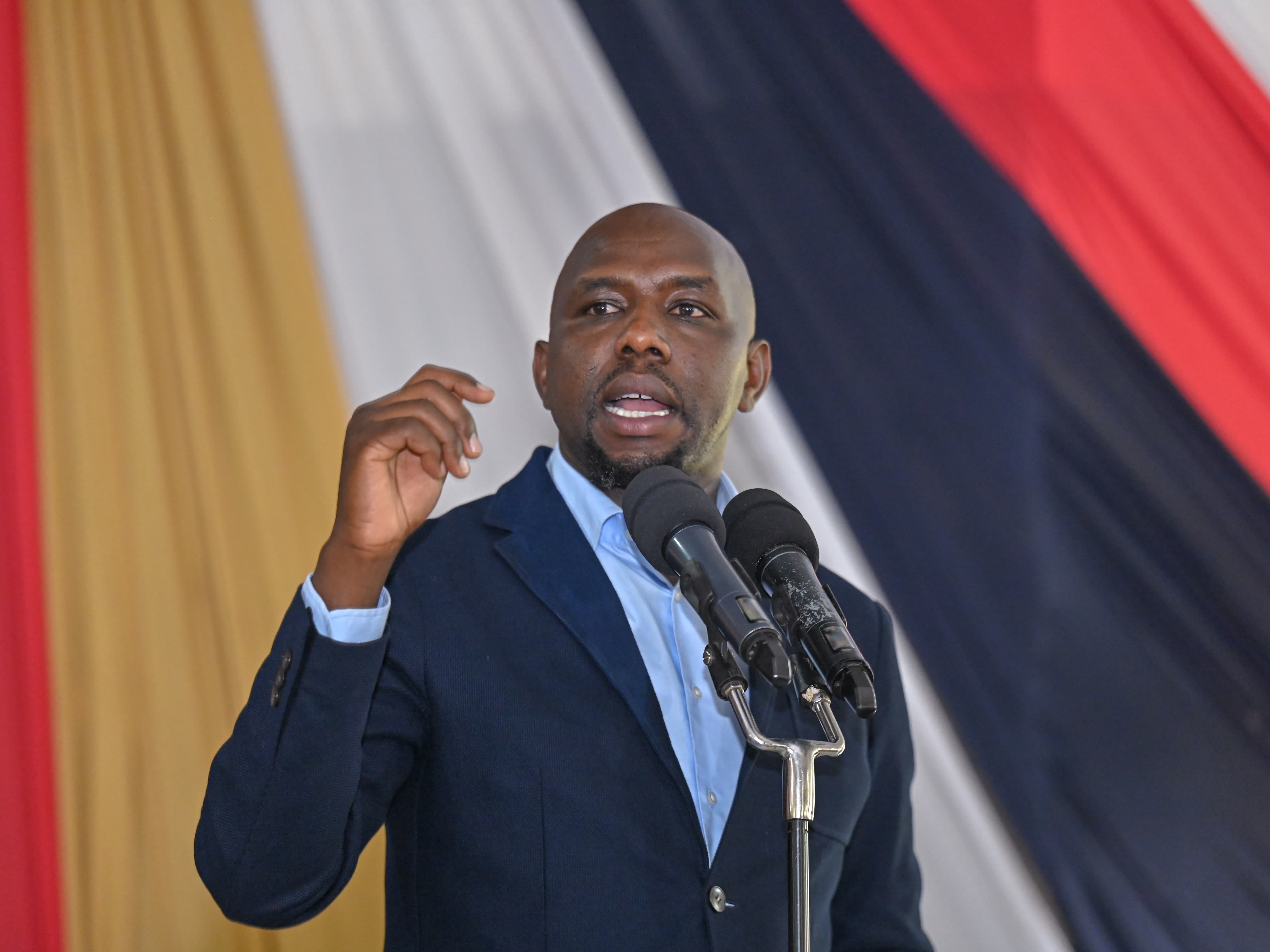
Interior Cabinet Secretary Kipchumba Murkomen said in a past event that their experience will be used to tackle gangs in parts of the country.
The officers’ return follows a new UNSC resolution transitioning the UN mission into a specialised Gang Suppression Force (GSF).
On Thursday, US Secretary of State Marco Rubio praised the role the Kenyan team has played in stabilising the country.
Rubio said Kenya has been a key partner across multiple areas, including counterterrorism in Africa, but highlighted its engagement in Haiti as particularly notable.
He said Kenya had “carried a huge burden” for nearly two years as the lead country in international efforts to help restore order in Haiti.
He added that without Kenya’s involvement, the situation in the country could have been far more challenging.
“Our gratitude for the role they have played is extraordinary,” Rubio said, noting that the progress achieved would serve as a foundation for the next phase of Washington’s strategy in Haiti.
The GSF marks the third major international intervention in Haiti since 1994.
Prior to the MSS, there was Operation Uphold Democracy (1994–95) and the UN Stabilisation Mission in Haiti (2004–2017).
The latter ultimately sowed deep distrust in the United Nations due to the introduction of cholera by peacekeepers and allegations of human rights violations and sexual abuse.
Compared to its predecessor, the GSF is a larger mission with a more offensive mandate and is set to last an initial period of one year.
It has the potential to reach 5,550 personnel, though troop commitments have yet to be announced, who will work alongside Haitian authorities to target and neutralise gangs, combat illicit arms trafficking, secure critical infrastructure, and ensure security conditions conducive to holding national elections.


![[PHOTOS] Uhuru graces commissioning mass of Catholic Women](https://cdn.radioafrica.digital/image/2026/06/0bbd7e96-f180-4e02-966f-97c3fb201478.jpg)