

Fifa World Cup Qualifiers 2026: Nigeria vs Gabon game intrigues
21d agoadminvideo
Experts warn that high temperatures, wildfires and even hurricanes could affect teams, fans and stadium workers.
In Summary

Audio By Vocalize
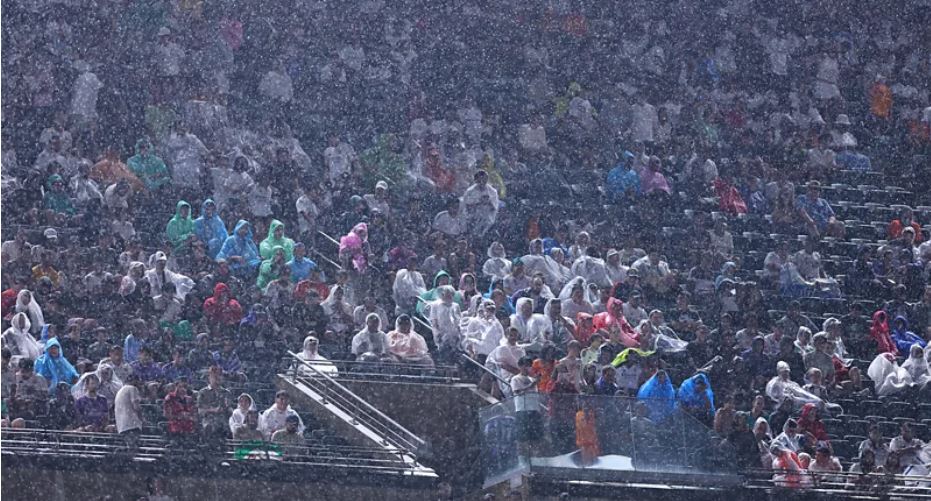
With the World Cup draw set to take place in Washington DC this Friday, fans and businesses have been warned that extreme heat, bad weather and poor air quality could cost them.
There's a lot that the 16 host cities are already planning for ahead of the North American World Cup. Re-vamping stadiums, recruiting staff and bolstering security. But some things are beyond even the most prepared – the weather.
With the tournament taking place across the US, Canada and Mexico in June and July 2026, experts warn that high temperatures, wildfires and even hurricanes could affect teams, fans and stadium workers.
While the safety of everyone on site will be the priority, the knock-on effects of extreme weather could still lead to significant costs for supporters, organisers and local businesses.
A recent report from Pitches in Peril found that 10 of the 16 venues are at "very high risk of experiencing extreme heat stress conditions."
There are multiple implications from climate risks, says Maddy Orr, a researcher who studies the impact of climate on professional sport. Based in Toronto – one of the host cities – Orr says the largest cost could be cancelled matches.
"If you were to cancel an event you might have to refund tickets and pay staff who had to come to the site to work."
Delays were a feature of last summer's FIFA Club World Cup – also held in the US – and seen by many as a dress rehearsal for the 2026 World Cup. Benfica against Auckland City had its second half kick-off delayed by more than two hours because of heavy rain and storms in Orlando.
The start of Mamelodi Sundowns against Ulsan HD, hosted in the same city, was also delayed for over an hour.
And there were long pauses in the second halves of Palmeiras v Al-Ahly in New Jersey (40 minutes) and Salzburg v Pachuca in Cincinnati (90 minutes).
We don't know exactly how much delays cost organisers, but as Orr explains "legal liability for events that don't go off as planned could add up to millions per match lost in damages."
Orr says this could be TV broadcast, fan-zone or food vendor contracts. "You might have promised them certain things that can't happen because the event isn't happening, but you'd still be on the hook for that."
Fans travelling to North America are advised to get insurance and read the small print.
Lisa Webb, a senior lawyer and consumer expert at Which? Magazine, says travellers should "check a policy covers what you need it to before you buy, especially cancellations." She adds the caveat that insurance policies work differently depending on the country you are in.
With the possibility of games being rescheduled, Webb highlights flights, hotel bookings and transport as factors which could be impacted, "It is tempting to go for cheap offers, but try booking hotels that are flexible, and avoid zero cancellation policies," she says.
Webb explains that many fans don’t realise that the rules differ between a cancelled game and a rescheduled one.
"If a match is cancelled, you should get your ticket refunded. But if it's rescheduled, the ticket is still valid and it's up to you to make sure you can get there," she says. "FIFA won't cover extra hotel nights or new travel."
She also recommends using a credit card for big purchases like flights, accommodation or match tickets. Under UK consumer law, card providers can be jointly liable for purchases over £100, meaning fans may be able to claim money back through them if something goes wrong.
US rules also let cardholders raise disputes about undelivered or mis-sold services directly with the card issuer itself, up to the amount still outstanding on the card. But only once they've tried to sort it out with the merchant.
If heat, storms or wildfire smoke make an area unsafe, the Foreign Office in your home country may issue a travel warning. "If that happens, it's much easier to get your money back," Webb says.
In Kansas City, one of the host cities with a "very high risk of experiencing extreme heat stress conditions," organisers are taking no chances.
That will mean installing misting fans, additional shade and cooling stations at Fan Parks, for an estimated 650,000 visitors across the tournament.
What organisers can control, says Pam Kramer, head of the KC2026 organising committee, is everything around the matchday experience. Kansas City has set up a regional heat-planning task force, focusing on prevention, public advice, on-site medical response, high-risk groups and real-time environmental monitoring.
The task force brings together academics, healthcare professionals, meteorologists and athletic trainers from the city's four major sports teams, all of whom regularly manage heat during their own matches.
Another strategy it's planning to deploy are phone push notifications before fans leave their hotel rooms for the day, about what to do and how to stay hydrated.
"What we can do is provide expert opinion. For example, here's how the Kansas City Chiefs handle heat when they are playing," Kramer says referencing the city’s NFL team. "The fact is that our local experts deal with this all the time.”
But there are some things out of Ms Kramer's control.
"We can’t set the match times, but what we can do is give FIFA our expert view," Kramer says. "Our teams play in this weather all the time, so we know what works here."
She stresses that Kansas City is not alone in facing high summer temperatures. "We’re not hotter than Atlanta, Miami, Dallas or Houston," she says. "Heat is manageable, the important part is communicating clearly with visitors, so they know what to expect."
And while the attention remains on US cities, known for their high temperatures, spectators in Canada need to be wary too.
"We've absolutely seen some heat warnings in Toronto and Vancouver in recent years and that could very well fall during the event," says Orr.
She adds, "in the context of wildfires, these things can go on for days. If you have a heat wave and air pollution and let's say Vancouver or Toronto becomes unplayable for a period of time, there's going to have to be some adaptations around where the games are hosted."
Come rain, smog or shine, Mark Kenna, owner of a gift shop in downtown Vancouver, is hoping next year is going to be "massive" for his company. He is hoping that football collaborations will boost sales. "We've got a soccer ball keyring and several other sports-related items."