As the fight against harmful chemicals blamed for the rising
chronic illnesses continues, Murang’a farmers continue to exhibit a rising
thirst for organic products.
The county was the first to pass an agroecology policy and
Act in 2023 that have helped spearhead activities seeking to promote the
practice, which involves sustainable farming practices.
Since then, markets
continue to fill up with organic produce, with special stalls in Kangari and
Kirwara markets in Kigumo and Gatanga subcounties.
Training days that formerly
saw a handful of people attend, now overflow with farmers eager to learn more
about organic farming and agroecology, their interest stoked by the promise of
healthy foods and better harvests.
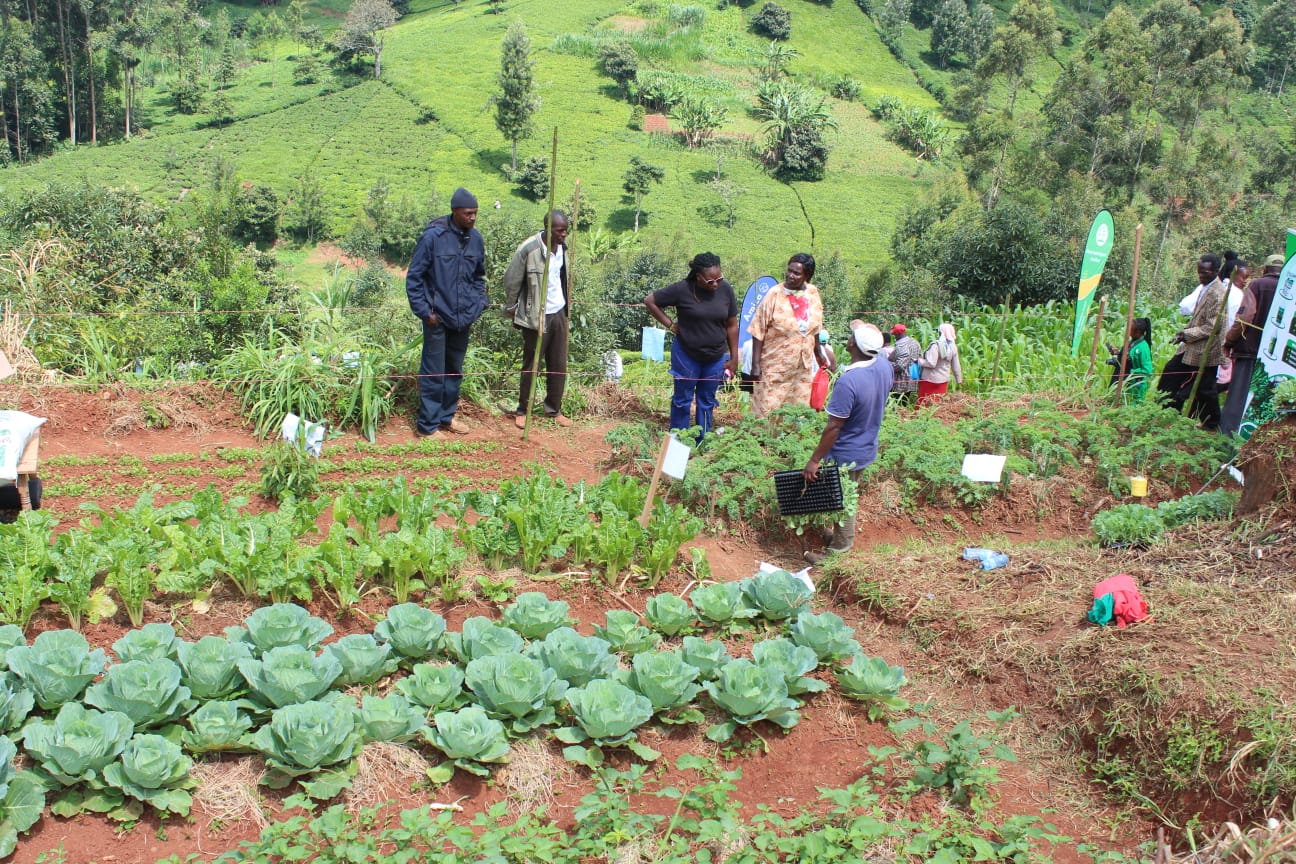
“I started practicing agroecology about four
years ago on my one and a quarter acre farm. I have planted tea, arrowroots,
avocados and vegetables,” Joyce Wanjiku Maina, a farmer, said during a farmers’
training in Ikumbi, Kigumo.
She practices mixed farming and intercropping that
allows her to save space and optimise her farm, improving her income.
Wanjiku
is now thinking of reducing her tea bushes to give vegetables more space.
When
Organic Agriculture Centre of Kenya approached her with the proposition of
using her farm as a demo months ago, Wanjiku and her family quickly jumped in
on the idea, taking it as an opportunity to learn more.
The organisation
prepared the farm and later planted crops for training in partnership with
Ikumbi Tea factory and Amica Sacco.
“They trained me to do better conservation,
showed me how to make better farm beds and how to treat my soil and crops. From
now on, I’m sure my farming will improve. I wanted them to use my farm to expand
my knowledge”.
Wanjiku sells her vegetables to local traders, incurring no
transport costs.
“I sell kales, locally known as ‘Mahu’, managu, spinach,
cabbage, carrots, terere, arrowroots, milk and fruits such as tree tomatoes,
all organically grown,” she says.
Ruth Wangui, said she plants vegetables and
tea and agro-ecology has helped her harvest 3.5 kg per tea bush annually, far
above the average two kilogrammes.
OACK’s executive director David Karanja said
agro-ecology has the potential to fight food insecurity and malnutrition in the
country, while saving farmers from poverty.
He said the practice has been
proven to greatly improve harvests over time while conserving the environment.
“The turn up here shows Murang’a people are really hungry for knowledge on
agro-ecology and spot visits in farms shows that they have really embraced it,”
Karanja said.