

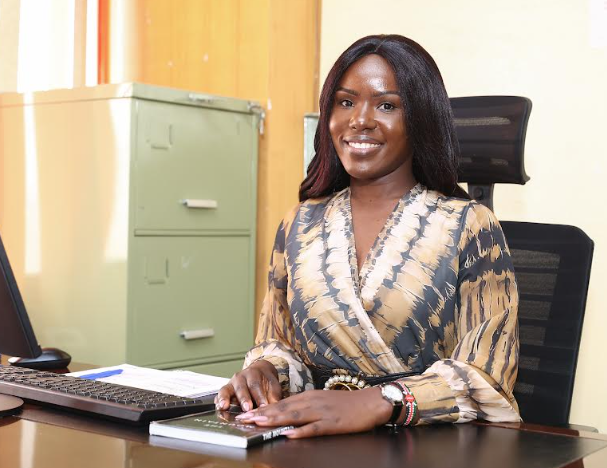
Back in her childhood, Lydia Rosasi experienced first-hand the trauma of living with disability, and before taking charge of her life, she was often underestimated.
This was because she would be on crutches or in a wheelchair.
But in her adulthood, she decided to prove she was worthy of success. She joined Sightsavers, where her journey to employment and empowerment began.
The journey began when Lydia took part in a Sightsavers-run programme in Nairobi, which offers young job seekers with disabilities the chance to train and get hands-on experience in the IT sector.
“I joined the IT bridge in 2021; the digital skills that this program impacts are long term. Even if anyone took away the jobs, the opportunities will never take away those skills from you,” she said.
She said that after completing a training project for people with disabilities and gaining digital and communication skills, she is now working with the government.
Lydia is leading a project that increases access to information for people with disabilities.
“I also founded a development forum that supports young people in accessing economic empowerment opportunities, from businesses to banking,” she added.
Lydia, however, said that as a female communications specialist with a disability, she has had to prove myself to colleagues on multiple occasions.
“However, my resilience has allowed me to overcome these challenges and succeed in my career,” she said.
Lydia pointed out that throughout history, women have had to prove themselves to get jobs and to be at the decision-making table.
Women with disabilities have to double their efforts in several facets of life.
Noting this, Lydia said, “For women with disabilities, it is double. You have to prove yourself as a woman and your abilities as a woman with disabilities”.
Sightsavers Country Director Moses Chege said that lack of access to resources and workplace barriers continue to exclude millions of women, particularly those with disabilities, from economic opportunities.
“The combined impact of disability and gender discrimination creates multiple, overlapping barriers that push women with disabilities into extreme poverty,” Chege said.
“We urge global leaders gathering at the upcoming Commission on the Status of Women (CSW69) and the Global Disability Summit (GDS) to commit to disability-inclusive approaches that could unlock billions in economic potential while advancing gender equality.”
Sightsavers works to make sure women can access health services.
Its programmes also transform the lives of women with disabilities, helping them to gain skills and build their confidence so they can get a job or start or grow a business.
If women were employed at the same rate as men, it is estimated that Kenya’s Gross Domestic Product (GDP) per capita would increase by five percent from $1,952 to $2,050, equivalent to an increase of around Sh12,500 per person today.
According to a World Bank report, the global failure to close the gender employment gap could cost countries up to a fifth of their potential income.
The report highlights that three-quarters of the total gains of closing this gap would be felt almost immediately, with the rest taking a generation.
Sightsavers called for urgent action to boost women’s access to employment, especially those with disabilities, who face multiple barriers to financial independence.