This ends the ban put in place by former President Uhuru Kenyatta about 23 months ago (April 1, 2021), which sough to give room for re-negotiations and scrutiny of new contracts.
The former regime appointed a taskforce to audit the energy sector especially Independent Power Producers (IPPs), constantly blamed for exorbitant power prices mainly those in thermal generation.
The John Ngumi-led taskforce came up with recommendations aimed at reducing tariffs charged by the IPPs, including renegotiation of PPAs.
It also recommended that Kenya Power conduct a forensic audit on the PPAs and Independent Power Producers, after it failed to receive enough comprehensive information from the utility firm.
The taskforce further advised that the procurement processes used to on-board IPPs be scrutinised, beneficial owners identified, and an analysis of IPPs’ audited accounts for at least the last five years to ascertain whether key parameters were in line with the audited financial models in the PPAs.
It also recommended that Kenya Power explore the use of the Kenya shilling as the purchase agreements currency.
Some independent producers are selling power almost ten times more that of the cheapest producer- KenGen, whose units are going for as low as Sh6.12.
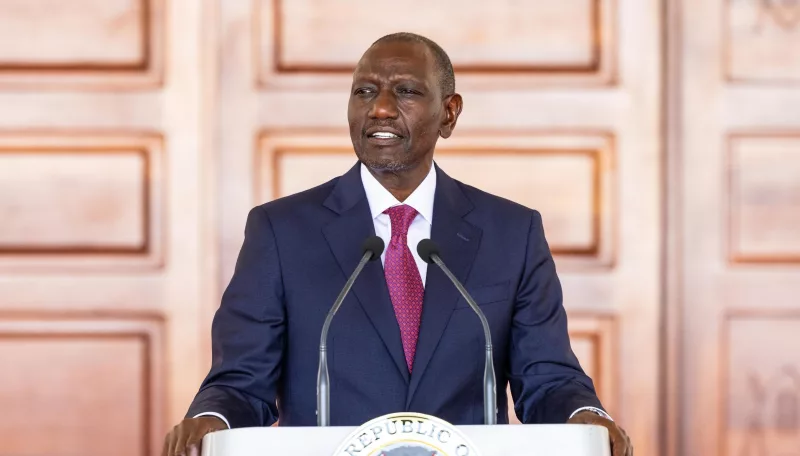
A Cabinet meeting chaired by President William Ruto on Tuesday however resolved that the moratorium be lifted to address the challenges of realising sustainable energy mix, occasioned by the prolonged drought moratorium.
“Cabinet further approved a framework for transparent engagement of Independent Power Producers in keeping with the Renewable Energy Auction Policy,” the dispatch from the Executive Office of the President reads in part.
The policy framework is a break from the current negotiated procurements or feed-in tariffs.
Therefore, the new framework will enable the State to procure clean energy at prices that reflect those prevailing in the market, giving consumers the benefit of competition in pricing, it said.
This now opens the market for IPPs to compete on prices, with Kenya Power determining the best offers.
According to Kenya Power acting managing director Geoffrey Muli, IPPs coming on board must adhere to the Least Cost Power Development plan being implemented to cut costs.
“EPRA has done research on new technology and come up with a reference amount per kilowatt hour for every technology. That is what is guiding KPLC as we on-board new generators going forward,”Muli said during a recent briefing in Nairobi, on January 31.
The move is expected to cut power purchase costs where the firm spent Sh123.4 billion on 24 IPPs last year–Kenya Power audit report 2022.
Analysis of the energy units purchases during the year vis-a-vis the total power purchase cost for the same year shows that KenGen supplied Kenya Power with 62 per cent of all the energy it distributed. However, its cost proportion was only 47 per cent.
On the contrary, the IPPs who only supplied 38 per cent of power, accounted for 53 per cent of the proportion of costs.
"This indicates that the entity entered very expensive Power Purchase Agreements (PPAs),”Kenya Power notes in its financial statement for the year ended June 2022.
Meanwhile, Cabinet has also approved the implementation of the 40 MW Olkaria Olkaria I additional Unit 4 and 5 and Olkaria IV Unit 1 and 2 uprating power project, a decision it says will enhance energy security as a catalyst for economic development.
This will increase the units’ combined capacity to 340MW, KenGen notes in its financials released yesterday.
“We are on track to rehabilitate the forty-year-old 45 MW Olkaria I geothermal power plant, giving it a new lease of life and increasing its capacity to 63 MW,” the firm added.