Sleepwalking, a sleep disorder that causes people to walk or perform activities while asleep, affects millions of people worldwide and can pose serious safety risks if left unmanaged.
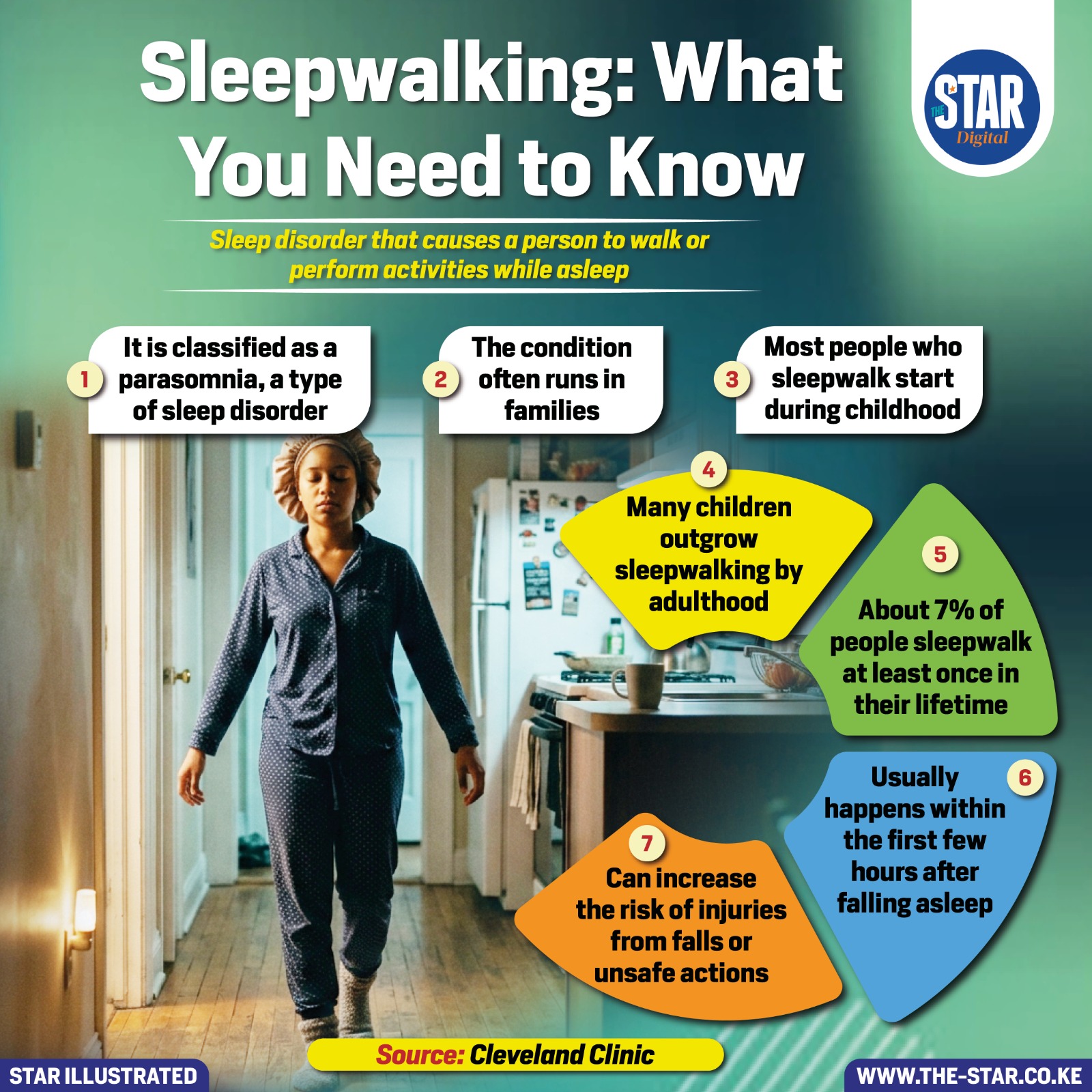
According to information from the Cleveland Clinic, sleepwalking is classified as a parasomnia, a category of sleep disorders involving unusual behaviours during sleep.
The condition often runs in families, suggesting that genetics may play a role in its development. Health experts note that most people who experience sleepwalking begin showing symptoms during childhood.
In many cases, children outgrow the condition as they grow older. However, some individuals continue to experience sleepwalking episodes into adulthood.
Research indicates that about seven per cent of people will sleepwalk at least once during their lifetime, making it a relatively common sleep-related condition.
Sleepwalking episodes typically occur within the first few hours after a person falls asleep. During these episodes, an individual may walk around, perform routine activities or appear awake despite remaining asleep.



![[PHOTOS] The new Ngong –Naivasha Road viaduct](https://cdn.radioafrica.digital/image/2026/06/64d4f771-4432-4aee-ba3c-2f304c4436ec.jpg)