Kemri tackles unmet women’s health needs in Africa
Institution leading effort towards making Kenya a medical research hub for all of Africa.
by JOSEPHINE MAYUYA
Audio By Vocalize
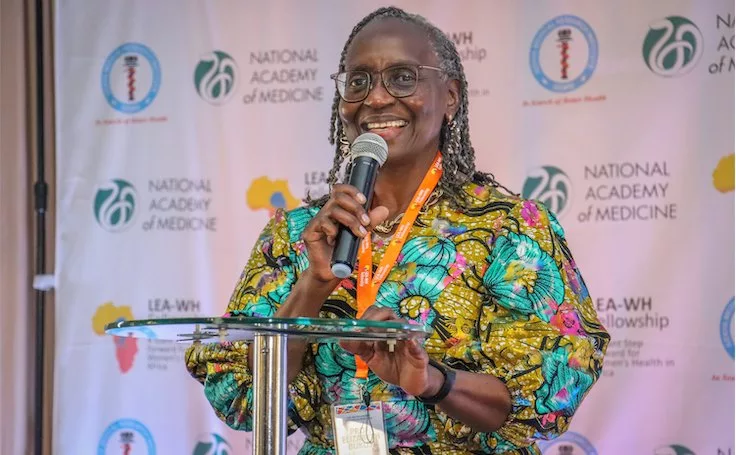
Prof Elizabeth Bukusi during the opening ceremony of the LEA-WH Immersion Week at Windsor hotel, Nairobi, on May 11, 2026 /HANDOUT
One of Kenya's national ambitions is for the country to become a major hub for medical tourism. This lesson was learned from the sheer number of Kenyans who travel to India or South Africa for medical procedures of various kinds. And central to the development of a medical tourism hub is empirical research into various diseases and conditions.
Kemri has led this effort towards making Kenya a medical research hub for all of Africa. And most recently, Kemri launched what it describes as "a giant step forward for women's health in Africa" – the LEA-WH programme, which is led by Prof Elizabeth Bukusi. In this interview, she explains why indeed this programme is foundational to improving women's health on the continent.In just a few words, what is LEA-WH?LEA-WH is a one-year, pan-African fellowship built by Kemri and the National Academy of Medicine (United States of America) that trains mid-career researchers and product innovators to address unmet women's health needs by proposing and the conduct of rigorous research, by developing fundable proposals, and enabling the developing of viable products that meet this need.
LEA WH exists to close the gap between generating evidence, fuelling innovation, and real-world impact. In short: it builds the leaders who will make sure research on African women finally meets the needs of African women.LEA-WH is described as 'a giant step forward for women's health in Africa.' What was the defining insight, or the defining moment, which convinced you this fellowship had to exist?The data alone should have been enough. African women giving birth die – they have maternal mortality rates 27 times higher than women living in high-income countries. Over 75 per cent of women's health research for our continent is funded and designed outside Africa.
More than 200 million African women are affected by conditions that are entirely preventable. And yet, in my years at Kemri and across this field, I kept encountering the same paradox: the research is done, the talent among African researchers exists, the innovations are working, but the impact remains stubbornly limited.The defining insight was that the gap is not about effort. It is about broken connections. Research does not become policy. Innovations do not become products that get to market and are utilised. Products do not reach the women who need them most.
What African women's health has lacked is not data or dedication; it is a generation of leaders who can navigate every stage of that pipeline simultaneously, from problem identification through to implementation at scale.Why was Kemri the right home for this programme, and what drew you to partner with the US National Academy of Medicine specifically?Kemri brings 45 years of research excellence grounded in African realities. We do not import frameworks; we build them from our own communities, our own disease burden, our own health system constraints. The KEMRI Graduate School has been training researchers across Africa for over two decades. We had the infrastructure, the credibility, and critically, the ethos of locally led science.The American National Academy of Medicine brought something equally important: global scientific leadership, a reputation for evidence-based policy advice, and an extraordinary mentorship infrastructure that we would not have been able to build alone in the timeframe we had.That distinction matters enormously to our fellows and to the integrity of what LEA-WH stands for. A continental ecosystem built by Africans, for African women, with world-class global support. That is the balance we designed for.Take us inside the selection process. What signals do you look for in the application that tell you this person is truly ready for LEA-WH?We are looking for mid-career professionals, people who have enough experience to know the problem deeply and enough runway to turn their fellowship work into decade-defining impact. For the research track, this means a minimum of five years' experience and a master's-level qualification at minimum. For product developers, a minimum of three years and a clear product concept already forming in their minds.But the requirement that matters most to me is deceptively simple: they must be African citizens currently working in Africa. This programme is not a training pathway out of the continent. It is a commitment to building capacity that stays.The spark of leadership is already present in those applications. You can feel it. Those are the people who will use this fellowship as a stepping stone to greater heights rather than simply complete the year of being part of a programme.The programme sets ambitious targets: five to 10 products reaching market testing, five to 10 startup companies, $3 to 5 million in follow-on funding catalysed. How did you arrive at those numbers, and how confident are you that they are achievable?They are ambitious, and they are evidence-based. We looked at comparable fellowship programmes globally and at the baseline capacity of the fellows we are recruiting. These are not entry-level trainees. They arrive with ideas that are already partially formed, problems they already understand deeply, and networks they have been building for years. The fellowship accelerates trajectories that are already in motion.The target I find most meaningful is the 20 to 50 per cent of fellows securing research and development grants during or shortly after the fellowship. That metric measures something foundational: whether the programme has genuinely transferred the individual fellow’s capacity to compete for resources independently.What will the LEA-WH research and innovation ecosystem look like in 10 years? What are you building toward beyond the first 60 fellows?In 10 years, I want to be able to point to a self-sustaining, pan-African women's health research and innovation ecosystem that no longer depends on any single institution or funder. The cohorts of fellows build on each other’s work. Cohort one fellows become mentors for Cohort three. Alumni from the product development track fund startups founded by later cohorts. The Science X Africa Summit becomes an annual institution that the field organises around.The deepest measure of success will be when LEA-WH is no longer exceptional. When training world-class women's health researchers and innovators on the African continent, with African data, through African institutions, is simply how things are done.What do you most want the first cohort of LEA-WH fellows to know, something you wish you had been told earlier in your own career?That the system will not change itself. And that you are not alone in seeking to change it.Early in my career, I believed that if you did excellent science, the rest would follow. That evidence would speak for itself, that good research would find its way into policy, that the right innovations would reach the people who needed them. I was wrong.
Excellent science is necessary but not sufficient. You have to advocate. You have to build coalitions. You have to sit in rooms where decisions are made and make sure the evidence you have generated is understood and acted upon. You have to be a leader and be recognised as one. Your voice has to be heard. You have to work to make your voice heard.Any final words for our Kenyan readers?Kenya is not just the host of this fellowship. Kenya is its proof of concept. Kemri has spent 45 years demonstrating what African-led science can achieve, and LEA-WH is built on that foundation. So, my first word to Kenyan readers is one of pride.
This is a Kenyan institution, in partnership with one of the most respected scientific bodies in the world, training researchers and innovators from across the continent, and it begins here, in Nairobi, because of the credibility Kenya has built through decades of rigorous, ethical, community-grounded research.And my final word is one of accountability. We have set ambitious targets for this fellowship, but the truest measure of its success will be felt here, at home, before it is felt anywhere else. If LEA-WH does not change outcomes for Kenyan (African) women first, in our own counties, our own facilities, our own communities, then we have not yet done our job. I want every Kenyan (African) reading this to hold us to that standard.Prof Elizabeth Bukusi is a Senior Principal Clinical Research Scientist at the Kenya Medical Research Institute (KEMRI) and is the Program Director of the LEA-WH Fellowship, the Leadership for Innovation and Excellence in Accelerating Research on Women’s Health
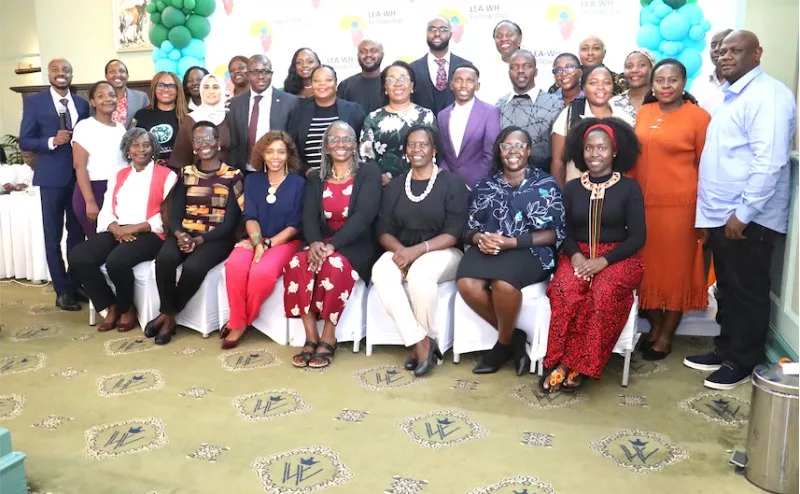
LEA-WH Cohort One Fellows and programme team during the Immersion Week in May 2026 at the Windsor hotel in Nairobi /HANDOUT