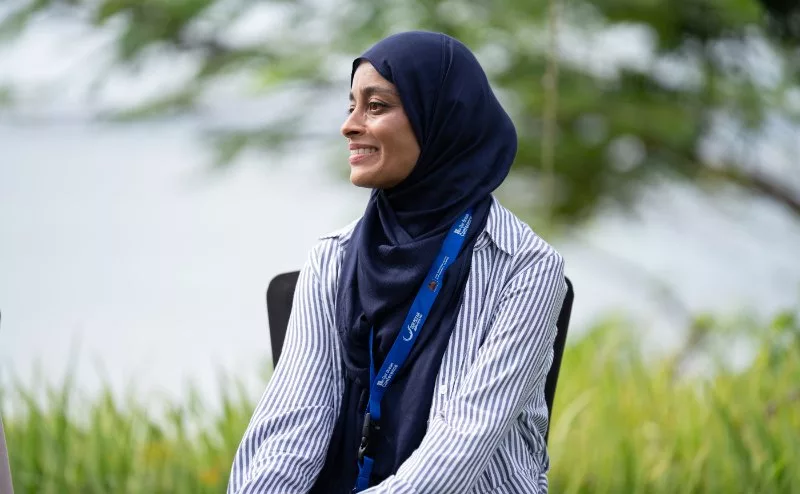
In the remote wilderness of the Tana Delta and the enchanting Lamu archipelago along Kenya’s coastline, one Kenyan woman is winning global acclaim for her distinguished work in wildlife and marine conservation.
After years on the frontline of a deadly war against poachers who decimated Africa’s wildlife, including thousands of elephants and hundreds of lions, Raabia Hawa turned her attention to the ‘pirates’ of the ocean.
In 2014, the model and media personality-turned-wildlife ranger delivered an emotional address against poaching titled ‘The Future of Wildlife Conservation?’ before a global audience. With a heavy heart, a tearful Raabia described encountering an incident where poachers killed 30 elephants, including one riddled with 60 bullets. She told horrified viewers of a ‘genocide’ in Tanzania, where poachers killed 10,000 elephants (official figures, though sources suggested up to 30,000) and 120 lions were poisoned.
In the Masai Mara, 30 lions were poisoned and 10 speared to death. Six were speared in Kitengela in one night, while a beautiful male lion from Nairobi National Park was run down by three vehicles. “They ran over him three times in reverse and forward gear over and over. And they got out of the car and they speared him over and over again and took photos and posted them on Facebook!” she recounted to the shocked audience.
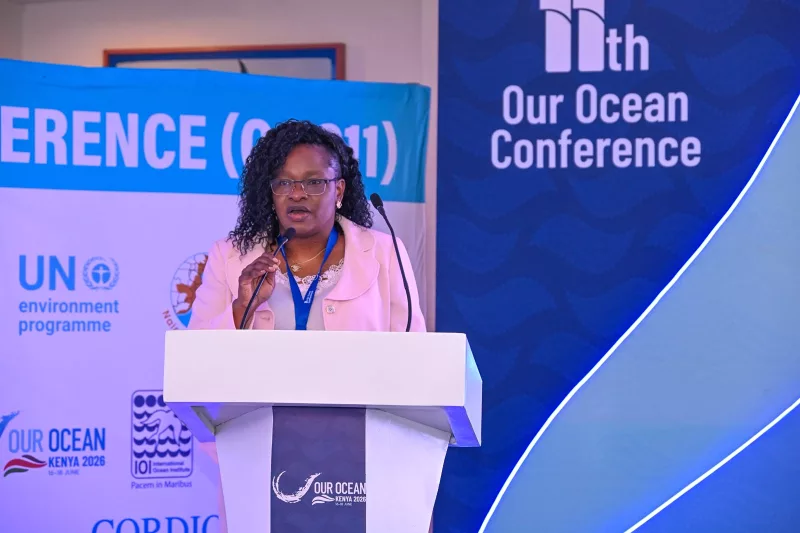
During the recent Our Ocean Conference in Mombasa, Raabia was celebrated among the world’s leading conservationists. She narrated her relentless battle to save local fishers and marine life from illegal fishing, trawlers and mining prospectors destroying a rich, biodiverse ecosystem.
Through her Ulinzi Africa Foundation, Raabia is recognised as one of Africa’s most influential conservationists. Addressing journalists, environmentalists, scholars and celebrities, she struck the image of an ‘Iron Lady’ — a title the UK press famously gave the tough late British Prime Minister Margaret Thatcher — fighting to protect nature with stoic humility.
Raabia was accompanied by actress, ocean activist and Oceana ambassador Kate Walsh, beloved for her starring role as Dr Addison Montgomery on the hit medical dramas Grey’s Anatomy and Private Practice. Oceana is the world’s largest international advocacy organisation focused exclusively on ocean conservancy. Walsh called for urgent global action to progress the ‘30x30’ initiative (protecting at least 30 per cent of the ocean by 2030) and elevate women’s leadership in conservation.
“Indigenous peoples, coastal communities, artisanal fishers and local leaders must have a meaningful seat at the table," Walsh told the Star. "Women’s work in conservation is inspiring, despite restrictions and external factors, such as trawling, drilling and mining. Individuals and communities are doing extraordinary, critical conservation work. I’m humbled and grateful.”
Walsh advocated for community-led conservation and inclusive ocean governance during a panel titled ‘Women’s Voices Are Key to the Future of Kenya’s Ocean’, where coastal women leaders discussed marine conservation and sustainable livelihoods. The event featured Raabia; Amina Komora, a fisher from the Sanye community in Lamu county; and Zulfa Hassan, widely known as ‘Mama Mikoko’, a pioneering mangrove conservation leader from Pate Island. The discussion was moderated by Dr Christina Hicks, a Kenyan-British environmental social scientist and professor at Lancaster University.
In this distinguished company, Raabia described how women’s conservation efforts have historically been underrated despite their valiant contributions alongside household responsibilities. However, she noted that perception is changing.
For Muslim women, Raabia explained, the traditional dress code poses practical challenges when working alongside men in dense forests or at sea. Yet the community is now embracing their invaluable contributions. Because the ocean is the coastal community's lifeline, women benefit directly from its preservation, drawing inspiration from their husbands and sons to join initiatives like mangrove restoration.
FROM AIRWAVES TO THE WILD
Raabia was fortunate to gain acceptance early. “My father, who passed on in 2021, understood and inspired my passion for conservation," she says. "He kept the family close to nature, instilling a deep sense of compassion and empathy for all living things in me.”
Soon after high school, Raabia stumbled into a job hosting a local radio breakfast show. “My dream was to be a marine biologist, but for financial and family reasons, this was not in the cards.”
Little did she know radio would be the ideal gateway. She eventually gave up her media career to become a ranger, shifting from broadcasting to defending a unique East African ecosystem.
“From a young age, I volunteered with wildlife organisations, leading to my appointment by the then Ministry of Wildlife and Environment as an honorary wildlife warden,” she revealed in an April 2025 interview with Nature Africa. “This gave me an opportunity to work alongside rangers, expanding my experience deep in the Kenyan wilderness. However, it was my work in journalism that ultimately drove me to establish my place in conservation.”
A television gig followed her radio career. “These were ideal platforms to report on wildlife alongside other topics. Working in media, I realised there was silence around Kenya’s poaching crisis, so I wanted to bring these stories to the public.”
This inspired Raabia to launch the “Walk with Rangers” initiative, a 500km annual cross-country trek from Arusha, Tanzania, to Nairobi to raise funds and awareness. This initiative birthed the Ulinzi Africa Foundation in 2014, focusing on wildlife protection and ranger welfare.
Raabia noticed underserved areas that critically needed anti-poaching support, telling Nature Africa that the Tana Delta, a volatile region near the Somalia border surrounding Kenya’s longest river, was paramount. An essential maternity forest for elephants, the Tana Delta houses a unique ecosystem with endemic species like the Tana River mangabey, the red colobus and the critically endangered coastal topi. It is one of the few places in Africa where you can encounter an elephant, a lion, a leopard and a beach turtle in the same landscape.
Few people knew about the maneless lions of Lamu until Raabia came face-to-face with one. That incredible encounter inspired her to promise to protect that unusual pride from rampant local poaching.
FACING HUMAN PREDATORS
The threat to wildlife does not only come from poachers, but also from mining prospectors targeting the Tana Delta, Kipini and Lamu West. Raabia displays proposed mining sites on a map for which Base Titanium has applied for permits.
“Look at the wildlife presence. This will completely destroy the last strongholds of the endemic and endangered coastal topi, which has already seen a decline of 96.2 percent in the last 24 years,” she notes with concern.
“My goal is to put in place measures to save the Tana ecosystem and replicate this framework in other remote regions,” Raabia says.
But protecting nature from human predators is hazardous.
“Through my work defending this vulnerable area, I have faced an onslaught of harassment, threats and intimidation — a testament to the risk and trauma that taint the path of an environmental defender. It can get very difficult, but I find a deep sense of purpose and fulfillment,” she reflects.
The mortal danger is real. “Poachers are not only killing elephants and wildlife, they are killing people, too," Raabia recounted from her 2014 global address. "I’m a volunteer for wildlife, an honorary warden with the Kenya Wildlife Service (KWS), and I go on anti-poaching patrols. If I’m on duty one day and we come across a poacher, they could kill me, too. I have a family and my family needs me, just like elephants have families who need them.”
Raabia leads multiple anti-poaching units, and the Ulinzi Africa Foundation was named second runner-up at the 2024 Africa Conservation Awards. Having served as an honorary warden for nine years, Raabia pioneered ranger welfare, fortified security in remote landscapes and strengthened Kenya’s wildlife legislation. Today, her impact encompasses advocating for marine conservation policy, an achievement recognised at the Our Ocean Conference.
National recognition came early. She was named among the Top 100 Most Influential Young Kenyans in 2016 and was one of five conservationists who participated in a Conversation with Civil Society hosted by President Barack Obama during his 2015 visit to Kenya.
BATTLE FOR THE OCEANS
In Lamu county, Raabia is at the frontline of a continuing battle against illegal fishing and trawlers, where she witnessed the horrors of marine destruction firsthand. An avid diver, Raabia routinely patrols the deep blue for turtles, sharks and seahorses.
She received numerous complaints from the local fishing community in Kipini on the South Coast. Local fishers reported that dead turtles were washing up daily and their fishing gear was being torn apart ever since a specific trawler arrived.
“Trawlers have created an imbalance among local fishers, who also have to contend with a reduced catch as they can’t compete with the indiscriminate and destructive fishing practices,” Raabia notes.
In April 2021, Raabia and KWS officers conducted an ocean patrol around an Italian-owned trawler, the MV Roberto, which was fishing illegally in very shallow waters. The vessel’s owner is allegedly associated with a senior government official. Raabia is still pursuing justice in this case.
“Upon inspection, we found the trawler had excessive crew, no bycatch reduction devices, no turtle extraction devices, and rays, a guitarfish, and a chopped-up shark puppy,” Raabia recalls. “A haul was pulled up, and a dead shark came out. I threw him back into the ocean with all my broken hopes that somehow he would live again. But I knew he wouldn’t."
“The fishermen on board came in, one with a machete, starting to hack away and I screamed for him to stop. I frantically began picking out the few flapping fish that were alive and the little flower crabs and puffer fish and threw them back into their home. It was harrowing. The fish were so tiny, some barely an inch long.
“Another haul was pulled up, a lifeless ray fell onto the giant tray. He was gone. What else was in the belly of this monstrous ocean beast?”
The horrors continued when the blast freezer was opened as dozens of kilos of baby fish were stuffed into sacks.
“That’s when I knew there was no turning back. A sack was emptied out — 41 shark puppies. Frozen stiff, some while clearly writhing to live another moment. How can all this destruction be licensed at just Sh200? A packed box of prawns from this same boat is sold at Sh1,200. Where is the logic?" she fumed.
“Phones started ringing while I was watching the massacre unfold. All I needed was to confirm that what I was witnessing was wrong in the framework of legislation. An hour and a half later, we landed on shore and drove seven minutes to the police station. The captain of the vessel MV Roberto was booked and exhibits preserved.
“In between all the panicked calls of the prawn company owners and attempts to sway the wheels of justice, the frantic fight to live that I witnessed in those hauls is all I can think about and see.”
Invaluable bycatch thrown away is a common crisis along Lamu beaches, Raabia added. Bycatch — the accidental capture of unintended marine life like non-target fish, endangered sea turtles, seabirds, dolphins and whales in commercial gear — is a major driver of ocean biodiversity loss, resulting in millions of tonnes of wasted catch annually.
The MV Roberto was impounded and its commanding officer was arrested and charged — a major victory for Raabia. The vessel’s Italian tycoon owner claimed losses exceeding Sh40 million. Authorities confirmed the vessel used prohibited gear for bottom trawling in shallow waters, a practice outlawed in Kipini to protect the benthic habitat, and lacked mandatory turtle excluder devices (TEDs). Its hold contained protected and endangered species, including the Halavi guitarfish, young sharks and dead sea turtles.
The local fishing community rejoiced, praising the ‘Iron Lady’ for defending their lifeline. “The community was overjoyed," Raabia says, smiling. "They brought me vitumbua (doughnuts) at home to thank me. I was so humbled.”
Alarmed by industrial trawling in Malindi-Ungwana Bay and Lamu waters, Raabia and the Kenyan coastal fishing community took their case to the global stage. In a joint statement released during the Our Ocean Conference, a consortium of civil society and Beach Management Units called for a total blacklist on trawling in Kenyan coastal waters.
“Bottom trawling continues to inflict severe degradation on Kenya’s marine ecosystems through the indiscriminate use of heavy trawl gear that destroys critical benthic habitats, including seagrass meadows, coral reef structures and fish spawning and nursery grounds,” the statement read, warning of long-term habitat loss, reduced ecological productivity and disrupted food webs.
For Raabia, the battle to halt biodiversity loss is intensifying, but her successes fuel her resolve despite the ongoing threats and intimidation.
"For example, dolphin mortality dropped from 34 in 2023 to 11 in 2024, and only one in 2025. We have been able to enhance community advocacy, fighting for the ocean and marine life. Keep us in your prayers as we continue to fight for justice for those who can't fight for themselves. This one's for the sharks!”