
On a chilly morning in Mathare, 50‑year‑old Grace Wairimu walks through a park once feared as a dumpsite. Children chase footballs where garbage and sewage once lay, their laughter replacing silence and fear.
Women tend saplings, birds hop between branches, and the space feels alive. Only a few years ago, drug users gathered here, and women avoided the area for fear of violence. Today, little remains of that past.
Grace stops beside a papaya tree and gently places her hand on its trunk.
“That is my tree,” she says with a smile. “I planted it myself in 2021.”
She looks up through its branches before adding quietly:
“When I see it, I feel joy. It reminds me of the struggles we went through. I believe that God will help us and we will grow like these trees. We will have hope that one day, the children we have fought for will help us.”
Around her stand dozens of trees, each carrying a story. Some commemorate women who survived sexual violence, while others honour women who endured exploitation, wage theft, physical abuse and humiliation while working as domestic workers in the area.
For Grace, a resident of Eastleigh, planting her papaya tree became deeply personal. She has spent decades working as a domestic worker, raising children while enduring hardships she rarely spoke about.
“We were women who washed clothes in Eastleigh. I have been doing this job for
many years. I have raised my children with this job. We have educated our
children through washing clothes. We have done it to help ourselves, but we
have gone through many challenges.”
Those challenges often included insults, beatings, false accusations and humiliation. “Different houses have different experiences,” she says. “We were insulted. We were beaten. We were abused. We were accused of stealing.”
One accusation remains particularly painful.
“You find someone who has employed you. They put money in the sitting room, then later they ask you where the money is. You tell them, ‘I saw it but I did not touch it.’ But they proceed to say you took it.”
She says such accusations became more common towards the end of the month. “By the 27th, 28th or 29th, when they see only two days left before paying you, they start beating you and saying you have stolen.”
But wage theft and false accusations were not the only dangers.
“There was a time when a man tried to rape me,” she says. “He was touching me, telling me I was very beautiful and that he wanted to give me money.”
She escaped only because another domestic worker heard the commotion and intervened.
“Luckily there was a woman washing clothes in the corridor who helped me. I ran away.”
That experience reinforced the importance of standing together.
“That is why when we came together as women, we knew we had to support each
other. Many of us had gone through things like this and suffered alone.”
UNITING
FOR CHANGE
Grace’s
experience reflects a much wider pattern in Kenya. According to Oxfam
International’s 2025 findings, gender-based violence remains a critical issue
within Kenya’s domestic work sector.
More than
half of domestic workers surveyed (59.8 per cent) reported experiencing some
form of GBV, while 56.7 per cent identified it as a major problem in their
workplaces.
For Grace, her troubles were compounded by the burden of single parenting. She raised seven children through domestic work despite raising them largely on her own.
“I struggled alone,” she says. “They have different fathers who are not here.”
Grace remembers meeting community organiser Stellah Omuka, popularly known as Mama Shiko, while seeking help after a series of workplace injustices.
“There were about five women crying because we had been mistreated,” Grace recalls. “She called us and listened.”
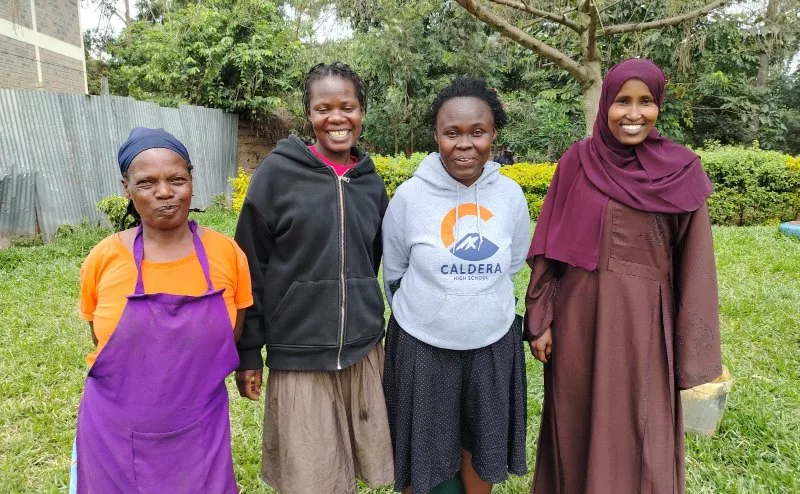
What started as a conversation about unpaid wages, harassment and exploitation gradually grew into a movement for healing, economic empowerment and justice: Dhobi Women’s Network.
The women soon turned their attention to a neglected piece of public land that had become synonymous with fear.
“This place was just a neglected space where drug peddlers were thriving. Children were being raped here,” she says.
Instead of avoiding it, the women decided to reclaim it.
“We started with my fellow women and cleared the place completely. We
dug a drainage channel and removed everything. We prepared the land.”
A few
metres away, another tree carries another story. An avocado tree sways gently
in the morning breeze. It belongs to Fridah Ambunya, 39.
Like Grace, Ambunya remembers the day her life changed.
“I was downstairs scrubbing the floor, when a young man came from the upper floors and told me to follow him,” she recalls.
At first, she assumed he wanted help with household chores.
“He said he wanted me to wash some clothes and do another task. But what he actually wanted was to rape me.”
When she refused, the situation quickly turned violent.
“He started beating me. Then he claimed I had come to steal from the house, yet I had been called there to work. He was accusing me of things I didn’t even understand.” The assault escalated until neighbours heard her screams.
“I was beaten until my clothes were torn. It was the neighbours who rescued me and covered me with lesos.”
Today, she stands beneath the avocado tree she planted after joining the network.
“My tree is right over there,” she says, pointing towards its broad green leaves.
“It makes me feel good because it serves as a reminder. Even though it has not started bearing fruit, I am happy. It brings peace to my heart.”
She says the tree cannot erase what happened, but caring for it reminds her that she survived.
“It gives you strength, knowing that you went through such a difficult
situation and made it through.”
CHANGING
THE NARRATIVE
Near the edge of the park stands a Thika palm planted in memory of Jane Wambui, a mother who died on August 15, 2024 after years of domestic abuse.
The tree was planted by her daughter, Mary Wanjiru. Standing beneath its shade, Wanjiru says caring for the tree has become one way of keeping her mother’s memory alive.
“We were in a violent home,” she says softly. “When she died, members of the Dhobi Women’s Network invited us to plant a tree here.”
She visits the tree several times a week.
“I take care of it most days. It is like a remembrance. It is a symbol of hope, remembrance and strength for our family,” She pauses, looking up at the fronds moving gently in the wind.
Since her mother’s death, Wanjiru has taken on greater responsibility at home, helping hold the family together while supporting her younger siblings.
Omuka, the community organiser and network founder, says the movement began after years of witnessing domestic workers endure exploitation with little support.
“Women were going through a lot of abuse, including sexual violence at work and being denied their wages after being accused of theft,” she says.
Reporting those cases often brought little justice.
“When you go to a police station to report, you often find no one willing to help you. In many cases, the response depends on who has money.”
As more women called her, seeking assistance, Omuka realised individual interventions were no longer enough.
“I was going from one police station to another. Women would call me saying they had been arrested or not paid. It became too much for me to handle alone.”
Another co-founder, Sadia Hassan, says the idea of combining environmental restoration with women’s organising was inspired by discussions at the Mathare Social Justice Centre.
“We attended community meetings every Saturday, where we learnt about our rights,” she says.
Those conversations prompted an important question.
“We asked ourselves: If we have a place where women can address these abuses and if we join hands to defend ourselves and others, wouldn’t that be much better?” Like many of the women she now supports, Sadia’s activism grew from her own experience.
“I had been abandoned by my husband, so I went into domestic work. Rent was waiting for me. School fees was waiting. My children needed food.”
She earned Sh4,000 a month. But poverty was only part of the struggle.
“My vulnerability almost led to me being raped at work. I told myself that if this happened to me, and another woman says the same thing happened to her, then our voices together become strength.”
Working alongside local administrators, the women registered their group, continued planting trees and educated one another about their rights.
Today, members help survivors report abuse, pursue unpaid wages and support one another through crises.
“There is no way you can oppress them now,” Sadia says. “If they see abuse happening somewhere, even if it is not happening to them, they raise the alarm.”
The trees also follow their own symbolism. Women who die without children are remembered with fruit trees.
Those who leave children behind are honoured with shade trees that will shelter future generations.
For survivors, planting becomes part of healing.
“We said, why don’t we plant a tree in memory of a woman who has experienced violence? She comes, plants a tree and that becomes part of her healing therapy.”
“We want our nature to be calm, cool and free from violence. That is our vision. When you plant a tree, you see life. Humanity is what matters.”
SOCIAL IMPACT
Eastleigh assistant chief David Mbugua says the women approached his office after identifying the neglected public land.
“The memorial park is on public land. We gave them tools to help clear it and asked members of the Kazi kwa Vijana programme to assist,” he says.
Mbugua says the impact was immediate.
“The area had become a haven for drug users and criminals. The moment the dumpsite was cleared, crime reduced and the community started using the place as a park.”
As more women joined the initiative, the group expanded from five members to more than 60, many of them sharing similar experiences of abuse, exploitation and economic hardship.
Alongside restoring the land, they also began rebuilding their financial independence. “Mama Shiko told each of us to contribute Sh200,” Grace says. “At first, one woman would take the money and help herself. Then another woman would take it. Later, we started a bigger group and increased the savings.”
What began as small contributions eventually grew into a table-banking scheme
that continues to support dozens of women.
Mbugua says many of the women first sought help after experiencing wage theft or abuse while working as domestic workers.
“They were here, about 15 of them, and we decided to register them as a self-help group so we could see how to support them,” he says.
“Sometimes they are not paid their wages and they come to us. We call the perpetrators and force them to pay. We receive almost one case every day involving women being harassed, but the cases become more common at the end of the month, when salaries are due.”
What the women discovered through instinct is increasingly supported by science. Environmentalist Alphonse Muia says spending time in forests and other green spaces, often associated with spirituality, has been shown to reduce depression, anxiety and stress, while improving mindfulness.
“For survivors of trauma, the act of nurturing a tree can build self-efficacy,
provide purpose and reduce feelings of isolation through shared experiences in
a supportive environment,” he says.