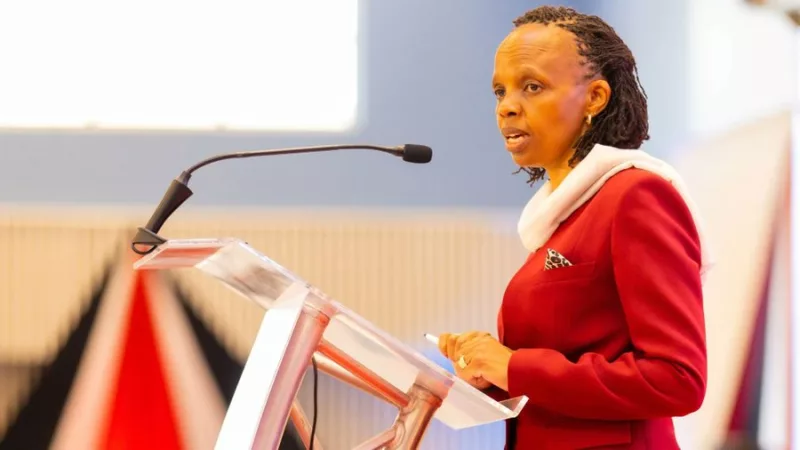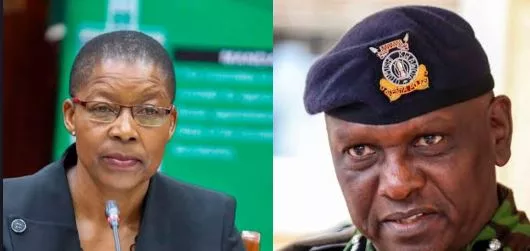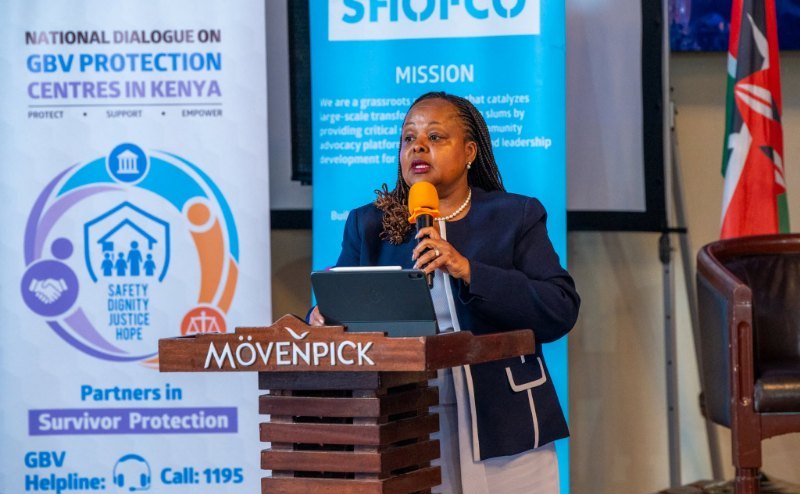
Mercy Wanjau, secretary to the Cabinet, who was chief guest at the National Dialogue on GBV Protection Centres co-hosted by Shining Hope for Communities in partnership with the State Department for Gender /HANDOUT
In Kenya, one in three women experiences physical violence in her lifetime, while 41 per cent of women and 36 per cent of men have experienced intimate partner violence.
Yet demand for shelter services far exceeds the available capacity and many counties still lack adequate protection centres.
This stark reality was the focus of a two-day National Dialogue on GBV Protection Centres, convened by the Gender ministry and co-hosted with Shining Hope for Communities (Shofco).
The dialogue brought together government, Parliament, civil society, development partners and shelter providers to confront difficult questions and commit to practical solutions.
Shofco founder Kennedy Odede urged Parliament to fast-track the Protection Against Domestic Violence (Amendment) Bill 2026 and establish a dedicated GBV Fund with a clear, time-bound roadmap to end violence across all 47 counties.
"The question is no longer whether shelters work. The evidence shows they do," Odede said.
"The question before us is whether we are prepared to invest in them at the scale required to ensure every survivor in Kenya can access quality protection services."
Chief guest Mercy Wanjau, Secretary to the Cabinet, underscored the urgency of tackling gender-based violence.
"When a woman leaves her home in the middle of the night … where does she go?" Wanjau asked.
The dialogue brought into sharp focus the comprehensive support survivors need to transition successfully from shelters and rebuild their lives.
Discussions underscored that economic empowerment must be central to any reintegration strategy, with speakers emphasising the urgent need for job opportunities and sustainable financial support.
Many survivors remain trapped in cycles of abuse because of economic dependency. Without sustainable livelihoods, the prospect of permanently leaving abusive environments remains remote.
Social reintegration also emerged as a critical pillar.
Participants noted that the current approach to helping survivors reintegrate into their communities is largely ad hoc, leaving many vulnerable to further harm.
They said structured programmes that promote resocialisation and community acceptance are essential to break this cycle.
Beyond these immediate needs, survivors require sustained access to psychosocial support, counselling and mental health services, alongside legal aid to help them navigate justice-related barriers that often compound their trauma.
Perhaps most pressing is the need for clear exit pathways. Participants observed that many survivors leave shelters feeling insecure, without a formal plan for what comes next.
Establishing structured pathways to independence through skills training, long-term support and clear roadmaps is vital to prevent survivors from returning to situations of vulnerability.
Without these coordinated interventions, the cycle of violence will persist and the promise of protection centres as places of restoration will remain unfulfilled.
"Let GBV become a story of the past, just like leprosy and polio. Let it be a thing of the past. Together we can create a Kenya where every woman, every girl, every man, every child and every vulnerable person lives free from violence," Wanjau said.
Nairobi Woman Representative Esther Passaris and Principal Secretary Anne Wang'ombe were also among those who attended.
"Shelters are not merely buildings. They are places of refuge, healing, dignity, justice and hope. The survivor stories we heard today showed us that when protection is available, lives are transformed and futures are restored," Passaris said.
The legislative push has gained momentum.
On June 12, the Domestic Abuse Bill received Cabinet approval, representing a substantial overhaul of existing legislation that will replace the Protection from Domestic Violence Act.
The new Bill explicitly recognises economic, emotional and psychological violence, forms of abuse that are often suffered in silence.
However, implementation remains uneven.
The GBV Technical Working Group, chaired by former Deputy Chief Justice Nancy Baraza, has urged the National Treasury to ring-fence Sh50 billion in the 2026-27 financial year for a dedicated response fund.
Baraza warned that without dedicated financing, interventions would remain fragmented and ineffective.