
It wasn’t just another ceremony. It was a promise. A promise that 16,000 members of Siraji Sacco, ranging from smallholder farmers to micro-business owners, might soon see real change in their lives and livelihoods.
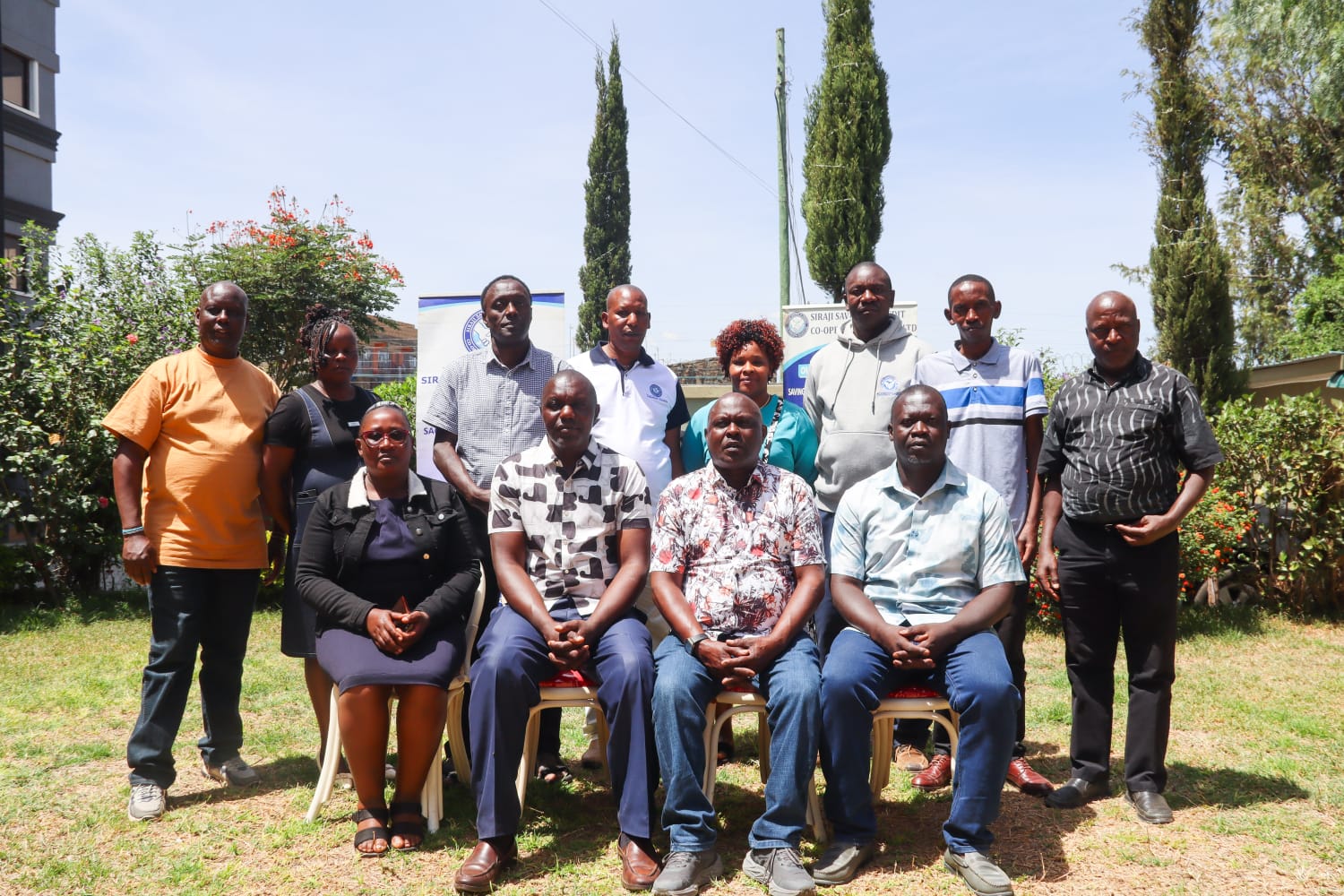
The occasion was the handing over of an offer letter for Sh170 million in funding from a World Bank-supported programme.
It was channelled through the Kenya Development Corporation and structured by the AVLC Group. But the focus for members goes far beyond the numbers. For them, this is about access to affordable capital, resilience and rebuilding after the economic shock of the Covid-19 pandemic.
Globally, the World Bank has increasingly relied on locally rooted financial institutions, such as saccos and microfinance providers, to ensure development funding reaches ordinary citizens.
By working through regulated cooperatives, World Bank–supported programmes can lower the cost of borrowing, expand access to credit for underserved communities and strengthen local financial systems.
In Kenya, these channels have been particularly effective in reaching rural
households, farmers and informal businesses that are often excluded from
traditional banking, ensuring development financing translates into tangible
household-level impact rather than remaining concentrated in urban centres.
LIFELINE FOR RECOVERY
For many small business owners and farmers in rural Kenya, getting a loan can feel like scaling a mountain.
Traditional bank loans are often out of reach. Interest rates can be high. And many lenders require paperwork and collateral that few smallholders have.
That’s where Siraji Sacco comes in.
Founded in 1996, Siraji Sacco has grown from a small local cooperative into a regulated financial institution providing savings and credit services to employees, farmers, traders and community groups across the region.
Its mission is simple: to facilitate savings and offer affordable products that support members’ welfare and sustainable development.
But the past few years have been hard for members. The pandemic triggered lockdowns and disrupted businesses. Poultry farmers saw markets collapse. Traders struggled to restock. Farm inputs became harder to afford.
“We had poultry farmers with 22,000 birds ready for supply,” Siraji Sacco CEO Felix Ochieng recalls. “But lockdowns stopped movement and contracts were cancelled.”
This hit families hard. Many relied on their small businesses and farm income to put food on the table, pay school fees and meet daily needs. The new funding, says Ochieng, could change that.
“This facility is going to support MSMEs and farmers who were really affected by the Covid pandemic,” he says.
The Sh170 million facility isn’t being handed out willy-nilly. It will be used to provide loans to members through Siraji Sacco’s lending structures. For a small business owner, this can be a game changer.
Across the region, similar stories are common.
Dairy farmers speak of recovering lost markets. Tailors say they need loans to buy sewing machines again. Farmers want affordable loans to buy quality seeds and fertiliser, and to scale production.
Siraji Sacco already provides a wide range of credit products, from quick loans, business finance and development loans to group lending and agricultural loans.
It also offers savings products tailored to different member needs.
But the pandemic made it clear: members needed more flexible, affordable funding, one that doesn’t trap them in high interest rates or short repayment windows.
The World Bank-backed facility, with what many expect will be competitive terms, could offer just that.
“The whole idea is to stimulate the economy again,” AVLC Group CEO Andrew Kanyutu says. AVLC is the consultancy that guided Siraji Sacco through the application process.
FROM APPLICATION TO IMPACT
Accessing international financing isn’t easy for many saccos. Paperwork, compliance and lender expectations can be daunting. That’s where AVLC Group steps in.
“We walk the journey with our clients,” Kanyutu says. “From application to the whole process, bringing together stakeholders and ensuring everything meets the lender’s requirements.”
AVLC has experience in structured financing and advisory services, working with institutions to connect them with global funds.
Their involvement helps smaller saccos like Siraji navigate complex procedures and increase their chances of success.
For Siraji Sacco, the journey began two years ago, when leadership approached AVLC for support.
“We started the journey and today, we are pleased to confirm that we have completed the process,” Kanyutu says.
The offer was handed over in a ceremony in Naivasha on January 23, attended by government officials, sacco leaders and members’ representatives. The next step, and the one members are waiting for, is disbursement.
Kanyutu says the first tranche, which will be half the total, is expected in the next few weeks, with the remainder coming after monitoring processes are met.
This phased approach allows careful implementation and adjustment where needed, he says.
At the centre of this process is the Kenya Development Corporation, which has
in recent years intensified its engagement with saccos and microfinance
institutions as vehicles for economic recovery. KDC’s approach focuses on
partnering with well-governed local lenders, strengthening their capacity and
ensuring funds reach viable MSMEs across diverse regions.
By working closely with cooperatives and MFIs, KDC is able to expand outreach beyond major towns, promote responsible lending and ensure development financing supports enterprise growth, job creation and long-term resilience at the grassroots.
Siraji Sacco already has success stories to its name.
One such story came in 2016, when the sacco worked with a dairy group of 50 members. Through training and consultancy support, the group increased milk production from about Sh1 million per month to more than Sh6 million today, with membership growing four-fold.
“That success touches very small farmers with one or two cattle,” Ochieng says.
Imagine scaling that model across dozens or hundreds of enterprises with the new funding.
“We want to help more farmers like that,” the Siraji Sacco CEO says.
Members see this as more than loans; it’s about capacity building, skills, networks and long-term resilience.
SUSTAINABLE GROWTH
While the immediate goal of the funding is to help members recover from the shock of Covid-19, leaders at Siraji Sacco see the opportunity for something bigger: sustainable growth.
“We are not just giving money,” Ochieng says.
“We are building an environment where members can grow businesses, build assets and invest in their futures.”
That vision aligns with Siraji Sacco’s own mission: to provide affordable credit and services that improve members’ welfare.
It also aligns with its values of integrity, professionalism and social responsibility.
The impact of affordable credit doesn’t stop at individual members. When businesses flourish, they create jobs.
When farmers expand production, local markets thrive.
When more people earn steady incomes, school fees are paid on time.
At the end of the day, families eat better. Communities grow.
“MSMEs are the backbone of our economy,” Kanyutu says. “Strengthening them means strengthening the country.”
For Siraji Sacco members, the future is starting to look brighter.
And that, many believe, is exactly what this funding aims to provide: a chance to rebuild, renew and grow.