


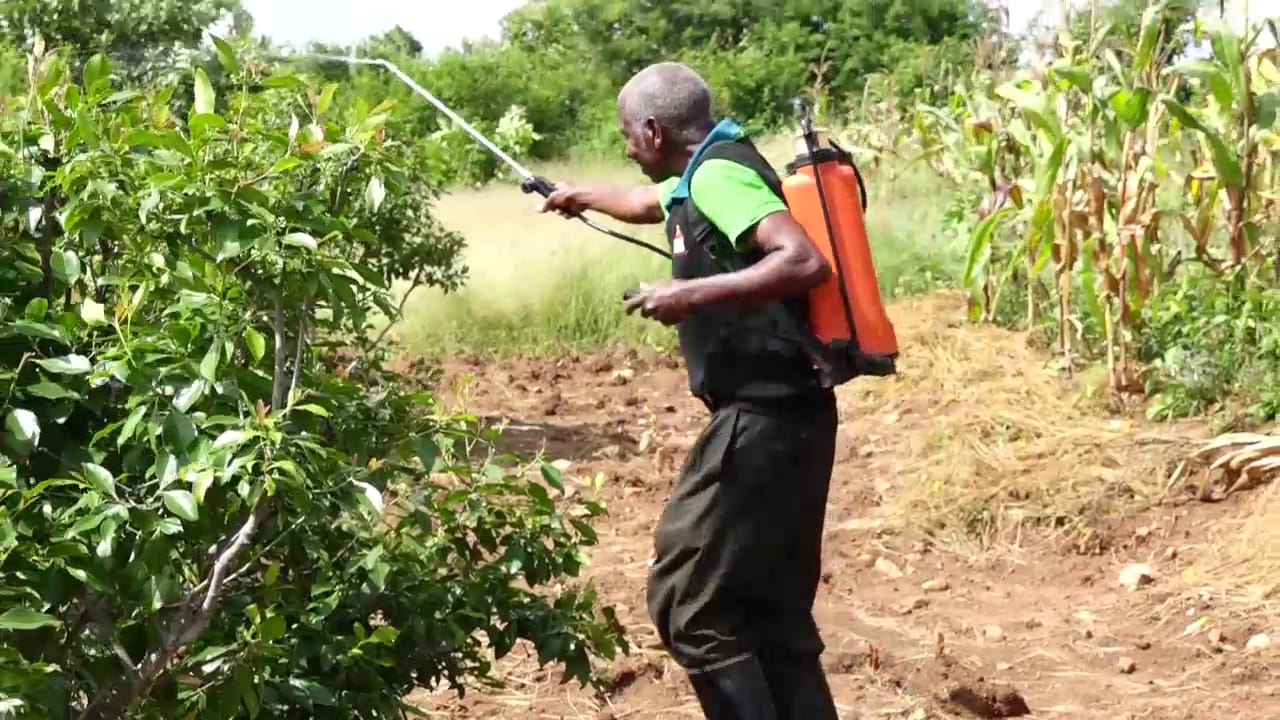
For decades, the rolling green hills of Mbeere, Embu county have been synonymous with muguka, the mild stimulant that drives the local economy and sustains many households.
But behind the cash crop’s success lay a silent crisis: school absenteeism. Many children, drawn by quick money and family obligations, would skip classes to help in harvesting and selling the lucrative crop.
Most of those who absconded classes for muguka farming found a challenge in understanding what they were being taught.
They also failed to pass exams due to inability to remember what they have been taught.
However, a quiet revolution is taking place in the region’s classrooms, one driven not by cash, but by curiosity and creativity.
The introduction of competency-based education has transformed the learning landscape, reducing absenteeism and rekindling children’s interest in schooling.
“We used to struggle to get our children to school,” Njeru Nyaga, a parent from Gikiiro in Mbeere South, recalled.
Before CBE, many preferred to spend their time in muguka farms, helping their parents and earning a few coins.
Njeru says they felt they were not understanding what they were being taught because of its technical nature.
“Now, they are excited to attend school because learning feels practical and connected to real life,” he said.
PRACTICAL LEARNING
Under the old 844 system, learning was largely theoretical, exam-centred and rigid. Children were drilled to memorise facts, not to apply knowledge.
Jane Karimi, a parent from Kanyuambora, says many rural learners, especially those from farming communities like Mbeere, found it hard to relate classroom lessons to their daily lives.
“Most of them felt alienated,” she said. “They did not see the relevance of what they were learning, and that is why many dropped out or skipped lessons to engage in muguka farming.”
CBE changed that narrative. It was designed to equip learners with practical skills and values.
The curriculum emphasises what a child can do rather than what they can recall. It integrates agriculture, environmental studies and technology in a way that speaks directly to the learners’ lived experiences.
“Now, when we talk about soil management, irrigation or crop rotation, the pupils understand it because they practise it at home,” Karimi said.
“They can even demonstrate how to manage a small garden or keep simple records of harvests. Learning has become meaningful.”
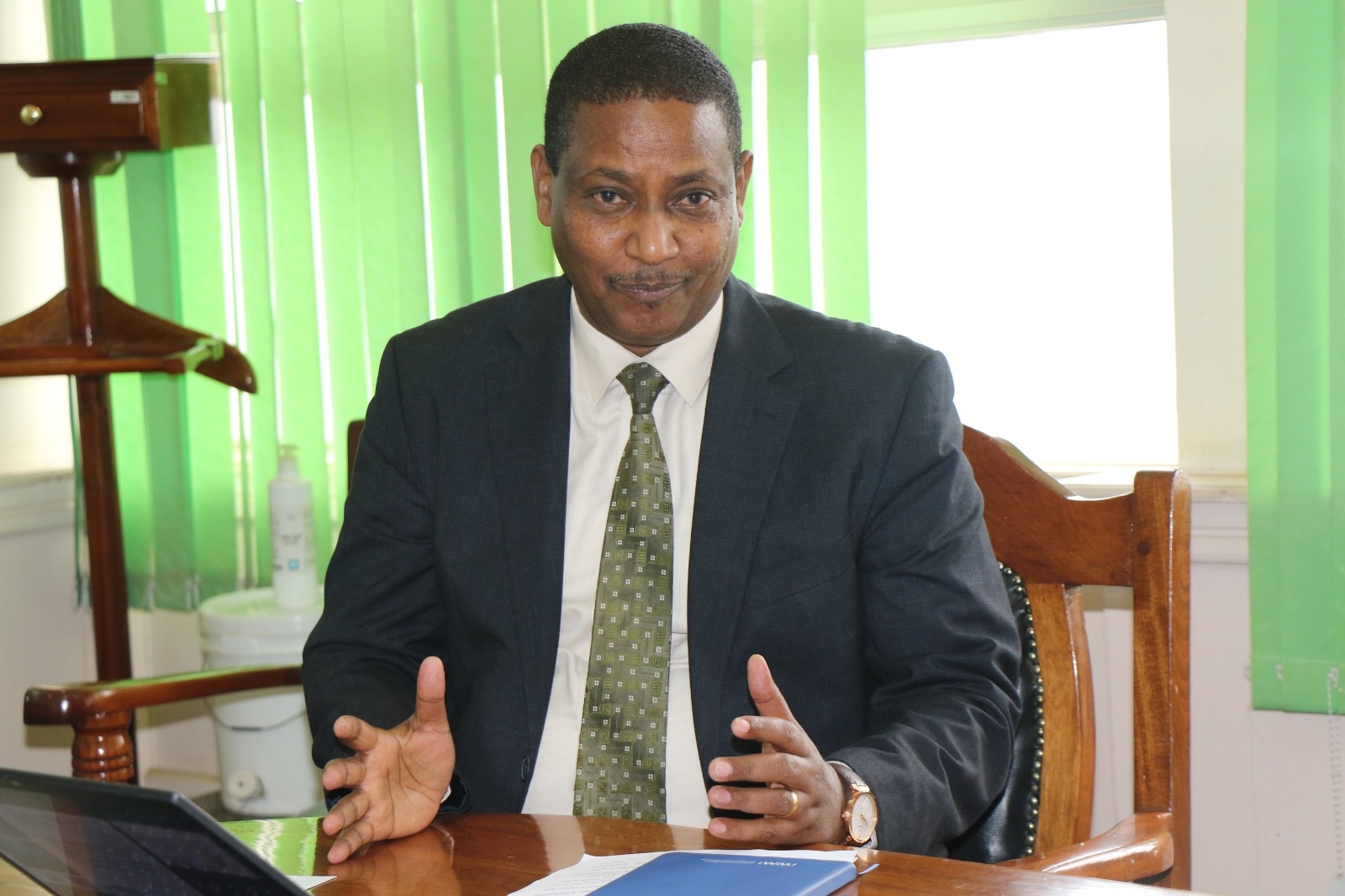
Mbeere South subcounty director of education Robert Mwiti says absenteeism rates have dropped drastically since CBE was introduced.
“We have observed a consistent rise in attendance among learners. Parents are also more supportive because they can see the direct impact of learning on their children’s skills and behaviour,” he says.
The system had started as Competency Based Curriculum [CBC] but later it changed to Competency Based Education after the government realised that it was focusing more on curriculum, which cannot be used as a tool to gauge education.
''CBE is embracing and developing competencies of the learner,” Mwiti said.
He said art and sports science is among the new pathways introduced under the CBE curriculum, a major
shift from the traditional 844 system.
NURTURING TALENT
CBE recognises that creativity and athletic ability are natural competencies that must be identified early and developed progressively through the school system, from ECDE all the way to the PhD level, Mwiti said.
''Our young children have realised that they are not being measured through what they can easily recall and remember,” he said.
“They are also being assessed on what they can do with their own hands, their muscles, their mouth.
“And they feel more motivated to be in school and where they are not so much required to memorise many things.”
Mwiti says with CBE, they can retain more learners in schools compared with 844 because many learners feel they have a potential to exploit.
The shift has also opened up a path for embracing Science, Technology, Engineering and Mathematics.
Schools are using locally available materials to teach innovation and problem-solving, linking theory to practice.
In some schools, for instance in Mbeere region, learners have created simple irrigation models using recycled bottles, an innovation inspired by the region’s semi-arid conditions.
Mary Wambui, a science teacher in Mbeere South subcounty attests to the innovativeness.
“STEM is not about expensive labs or imported equipment. It is about encouraging critical thinking,” she says.
“Our pupils are learning to design solutions for challenges they see daily, such as water scarcity or soil erosion. Parents are also noticing the change in attitudes.
Nelson Munene, a parent in Mbeere South, says children now coming home with ideas on how to improve farms or conserve water.
“Before, school felt like a punishment,” he said. “Today, it feels like a partnership between education and community.”
CHALLENGES FACED
The CBE’s hands-on approach is reshaping perceptions of education itself.
Instead of viewing school as a distant, theoretical space, children in muguka-growing areas in Embu county are beginning to see it as a place that builds life skills, from farming to communication, innovation to teamwork.
This relevance has been key in reducing the allure of muguka farms.
Still, the journey has not been without challenges. Teachers admit that adapting to the new curriculum required retraining and access to resources that were initially lacking.
“It has been a learning curve for everyone,” Mwiti said.
“But the results are visible. Learners are more engaged and absenteeism has become rare.”
The Ministry of Education, through the Teachers Service Commission, has been conducting continuous training for teachers on CBE implementation.
There is also growing emphasis on digital literacy to ensure rural schools are not left behind as STEM integration deepens.
Mwiti says in Mbeere South subcounty, they have been retooling teachers through in-service arrangement to ensure all the teachers are conversant with the CBE system.
Parents are increasingly concerned about the rising cost of the CBE system.
While the curriculum has been praised for its practical approach to learning and its focus on nurturing skills and creativity, many families say the financial demand is high.
From buying numerous learning materials to supporting continuous assessments and projects, parents argue that education is slowly turning into a luxury rather than a right.
In areas like Kiritiri Siakago, where most parents depend on muguka farming for their income, these costs are felt even more sharply.
“Our children are learning well, but every week we are asked to buy something new so that our children can use it for learning,” lamented one parent in Evurore, reflecting the frustration of many others.
Teachers also have mixed feelings. They acknowledge that the new system is yielding positive results. Learners are more engaged, confident and skilled in hands-on work qualities that traditional exams could not measure.
However, they feel that without adequate government support, CBE may deepen inequality, as only a few parents can afford to fully support its requirements.
Some schools have tried to improvise with locally available materials, but this has not been enough to ease the burden completely.
In Gikiiro and neighbouring villages, the sound of children’s laughter now echoes more from classrooms than from miraa plantations.
The region’s transformation tells a story of how education, when rooted in relevance and competency, can shift mindsets and futures.