It has also emerged the government spent Sh1.56 trillion on debt repayment alone during the period.
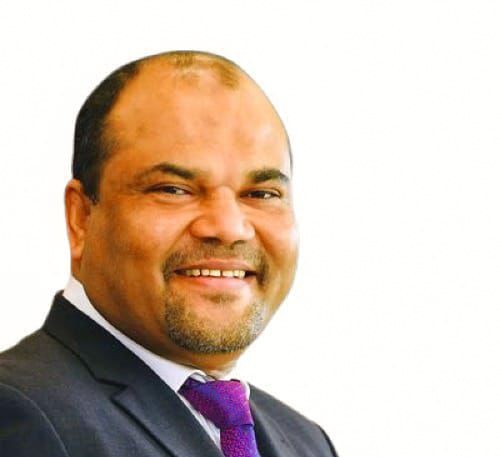
The report by Controller of Budget Margaret Nyakang’o lifted the lid on the cost of the ballooning debt and the deep financial hole the country has landed as a result.
The Budget Implementation Review Report for the National Government for 2023-24 revealed the state borrowed Sh280 million during the year, translating to Sh23.33 billion per month.
This pushed the country’s debt stock to Sh10.56 trillion from Sh10.28 trillion the year before, a three per cent increase.
“As of June 30, 2024, the public debt stock stood at Sh10.56 trillion, comprising Sh5.15 trillion (49 per cent) from external lenders and Sh5.41 trillion (51 per cent) from domestic lenders,” the report states.
External debt declined by five per cent, while domestic debt recorded 12 per cent growth.
The decline in external debt is due to the strengthening of the Kenya shilling against major currencies.
Kenya’s debt has been described by experts as unsustainable with the government forced to spend up to 65 per cent of its ordinary revenues towards repayment, starving development and other programmes.
Previously, the President had promised to tame the borrowing by cutting down on non-essential expenditures and expanding the tax base.
However, recently the head of state hinted at more borrowing following the withdrawal of the Finance Bill, 2024 that projected to raise more than Sh300 billion.
“I have been working very hard to pull Kenya out of a debt trap... It is easy for us, as a country, to say: 'Let us reject the Finance Bill.' That is fine," Ruto said in July.
"And I have graciously said we will drop the Finance Bill, but it will have huge consequences,” he added.
During this period, the government spent Sh1.56 trillion or 72 per cent of the tax revenue on debt repayment.
Of the total amount, Sh834.85 billion went towards principal redemption and Sh750.41 billion towards interest payments.
This represents an increase of Sh410 billion, compared to Sh1.15 trillion incurred on debt repayment in 2022-23.
The government spent Sh1.58 billion as commitment fees for negotiated loans yet to be disbursed, while Sh361.71 million will go towards other charges.
External debt servicing gobbled Sh757.08 billion, consisting of Sh538.84 billion for debt redemption, Sh216.30 billion for interest payment, Sh1.58 billion as commitment fees and Sh361.71 million as other charges.
The total domestic debt payment was Sh830.22 billion, comprising of Sh296.01 billion and Sh534.22 billion for redemption and interest payments, respectively.
Other domestic debt charges include commission for stock brokers (0.15 per cent), Central Bank of Kenya (1.5 per cent), withholding tax, Capital Markets Authority approval fees and Nairobi Securities Exchanges listing fees.
“Analysis of the cost of debt shows that domestic debt accrued high-interest payments compared to external debt.... which is attributed to the favourable rate on government securities attracting more investors and commercial banks’ lending to the government due to high returns and minimal risk,” Nyakang’o said.
In sharp contrast, the government spent Sh516.43 billion on development – three times less compared to debt repayment costs.
“Gross ministerial development expenditure in FY 2023-24 amounted to Sh516.43 billion, recording an absorption rate of 73 per cent, compared to 81 per cent (Sh473.55 billion), recorded in FY 2022-23,” the report states.
Nyakang’o revealed that several development projects suffered funding strains, most of them stalling due to non-provision of budgets.
“A review of project implementation reports submitted by MDAs to the Controller of Budget indicates delays in project completion ..... time-lapse on the expected completion date, and inconsistent data on funds released and expenditures recorded between quarterly reports,” the report says.
The cost of external debt includes various items such as interest rates, commitment fees, penalties paid, exchange rates and other charges.
“The cost of public debt is influenced by many factors, including the type of debt, interest rate being charged, exchange rate, commitment fee and maturity period,” Nyakang’o said.
The country’s budget boss advised the National Treasury to minimise the cost of public debt, by reviewing the above factors and how they influence the cost of internal and external debt from time to time.
“It will also be essential to review public debt's need, urgency and sustainability and ensure it adheres to Section 15 of the Public Finance Management Act, 2012,” the report states.