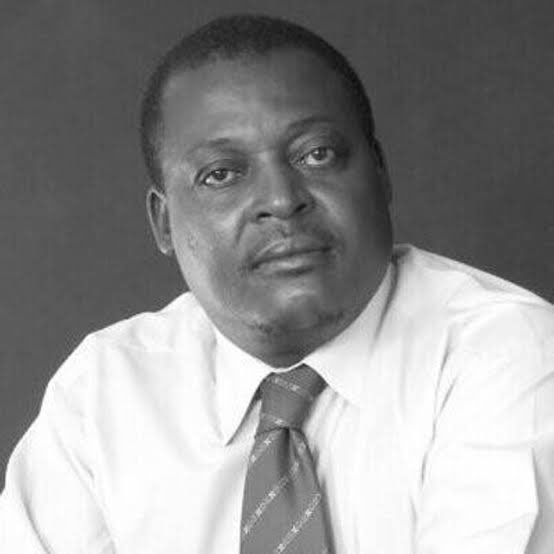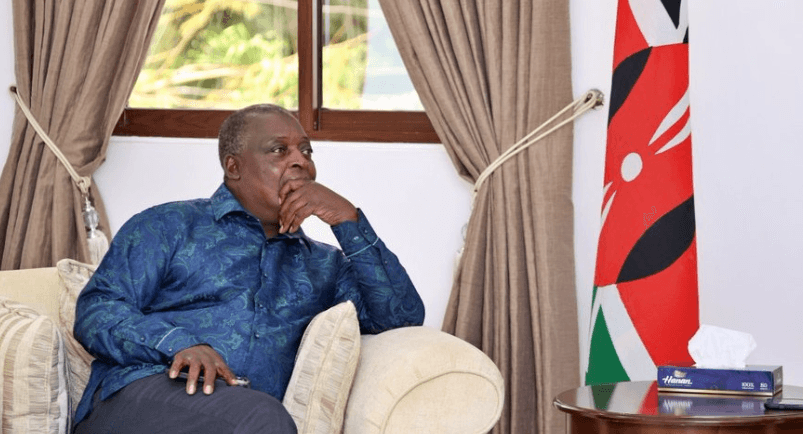


Eric Theuri rose to the national psyche substantively when he took up the job of the then-president of the Law Society of Kenya Nelson Havi in early 2022. And two years on, at the twilight of his term, he is not going anywhere.
Theuri’s drama-free leadership of the statutory advocates’ lobby is winding down in February 2024, and unlike his predecessors in recent memory, who’ve moved on to their quiet private practices, the soft-spoken advocate wants to remain in the legal leadership cycles, this time putting his eyes on the male representative seat at the powerful Judicial Service Commission.
The tenure of Macharia Njeru, who is the current male representative, is clocking out in May 2024, but the election to find his replacement will take place on February 22, 2024, alongside a vote for all other LSK executive seats.
Njeru has served since his election in 2019. With his six-year term expiring, he is eligible for re-election but has declined, telling this writer in a previous interview that he had promised lawyers that he would only serve one term if elected and that he was upholding that commitment.
“I’m a decent man who keeps his word, and that is what I will do by not running again, even though I believe I’m popular among advocates and would win decisively if I chose to run,” he said.
The campaign to get his replacement is nearing fever pitch, with Theuri battling it out against city advocate Omwanza Ombati, both lawyers of long standing with diverse experiences.
For the two, it is a rematch of some sort because they faced each other in the 2022 LSK’s presidential race, and Theuri carried the day.
Theuri sat down with this writer to assess his term so far, why he won’t “retire” into the night at the end of his tenure, and what he has in store for the advocates should he clinch the seat.
I have managed to steer the LSK council in a drama-free manner that ensures every member is accorded enough room to ventilate their points of view and seek amicability
Q: How has experience at the helm of LSK prepared you to represent lawyers at the JSC?
The Judicial service Commission is an extremely important institution of the judiciary, and it is key to uphold its independence as it in turn safeguards the independence and effectiveness of the judiciary.
I have been involved in leadership in the legal circles for a long time, in various committees that serve the interests of lawyers, courts and the public as well as leading the Nairobi branch of the LSK as elected chairman.
But perhaps the key attributes I have honed as president of the society for almost two years now are the ability to manage a boardroom to deliver for the constituency on whose behalf we sit there.
I have managed to steer the LSK council in a drama-free manner that ensures every member is accorded enough room to ventilate their points of view and seek amicability. Where we have not been able to agree, I have been successful in ensuring that the same is kept behind closed doors so that we remain with a united front.
Most critically, I now have robust experience in not just building consensus but also identifying the goals to pursue in the boardroom and how to caucus in advancing those interests. This is very important because at the JSC, lawyers and indeed the public have only two voices that are not appointed by any single person and hence cannot be held hostage.
So, the ability to identify strategic objectives to pursue and the skill to posture for them to ensure they are achieved in the interest of the advocates and the broader concept of delivery of justice is hugely imperative.
Lastly, at LSK, we have fought various battles in strategic ways to deliver for lawyers and the public, and this has given me experience on the priority of the advocates, their teething issues that can be addressed at the JSC level, and the right contacts even in the executive that can be useful.
Q: What are some of the key objectives you would want to deliver for the lawyers while at JSC?
Like I have said, JSC is monumentally important in the operations of the judiciary and administration of justice. It requires a solid person with experience and who is no pushover. I am that person.
Being one of the only two independent voices at the commission, it is important to get someone who knows how to negotiate with a heavy hand when necessary and to forge compromises.
Using this independence is critical because it means players like the executive or other interests cannot push you around, and then you form the gravitating force around which key decisions revolve. I intend to pursue this path in the interest of advocates and the public.
Another key goal is ensuring the judiciary is well resourced. You know there is Judiciary Fund in the Constitution, which is a charge on the Consolidated Fund. But despite the various rhetoric, including that of the President, that he has operationalised the fund, the opposite is true.
The judiciary still has to carry a begging bowl to the Treasury to get funds. I intend to leverage on my independence and experience to push for real operationalisation so that the judiciary bis truly independent. There is no independence if the executive still has some leverage on the judiciary by way of the monies, such that the Chief Registrar has to call the executive if the judiciary wants to buy cars, hire people or carry out other interventions.
Still on funds, we have seen funds allocated to the executive, like the office of the President and Parliament consistently go up, but that for the judiciary either remain stagnant or marginally decline. It will be my objective to work with colleagues around this matter.
Funding of the judiciary is key even for advocates because an independent system ensures that a lawyer does not have to have a name or know someone to get matters handled professionally, and they get what is rightly their due. A formidable judiciary that is not held hostage by whatever forces is dependable to deliver for the administration of justice for everyone and is a win-win outcome for the public and advocates.
Besides funding, I’m also keen on seeking to improve the efficiency of the existing mechanisms for accountability. Currently, there are concerns that corruption and unethical conduct are deep-seated in key aspects of functionality of the judiciary, like hiring where there are claims that there is inbreeding involving some people allocated quarters of who to bring on board and get jobs.
This has fanned ethnically skewed hiring and nepotism and bribery. I will be interested in opening up the hiring processes, infusing transparency in disciplinary processes so that those with transgression, including judges and magistrates, are subjected to fair processes that do not shield them and does not disadvantage their accusers.
Still on hiring, I want the recruitment of judges to not just focus on technical expertise of the candidates but also their soft skills, like their interpersonal relation abilities, their emotional intelligence, ability to be tolerant and restrained. Because what we have now is an overfocus on technical qualification, and we end up with judges who cannot control their tempers, are rude in dealing with advocates and litigants, can get to emotional outbursts and are hostile in their dealings. Also important is ensuring a healthy mix of practising advocates and insiders of the judiciary.
I’m also looking at the process of hiring other cadres of judicial staff, and my interest is seeing serving officers at lower levels being given reasonable chances of progressing from. Say, research clerks to be magistrates onwards, should they be trained and equipped to qualify. This rigid formula that is at play is not fair, hence the need to review their scheme of service.
Moreover, I will be keen on how JSC manages the human resource. Most judicial staff suffer from depression, stress and drift in alcoholism and the like because the commission has not done enough to make its human resource management robust and cognisant of the realities of our time. I will want reforms in this area because we have seen the JSC lose many cases in the labour court, where employees bring suits against them, yet the commission should be the epitome of fairness and justice. It needs to redeem itself.
Furthermore, e-filing is another key area because I’m interested in the entire edifice of technologising the administration of justice. Pushing for the full recording of court proceedings and auto-transmission to ensure that typing and writing of proceedings by judges or judicial staff is done away with because this is a big area of corruption, as a page from the recording can easily go missing mysteriously.
In addition, fighting corruption must also start in the registry of our courts because that is another toll station, and advocates and litigants are a frustrated lot in this respect. I’m keen on pushing for full e-filing and digitising everything so that advocates do things remotely, put in the files, pay the fees and get their dates without any human interface to eliminate the impropriety here.
Q: Tell me more about tackling corruption in the judiciary. Someone said why do you instruct an advocate when you can hire a judge? How do you deal with it?
Lifestyle audit should be mainstreamed for the judges and all judicial staff so that we compare what they have and their wealth declaration forms. There should be a call for explanation when someone whose earnings are known and their wealth declaration known seems to live a life beyond the reach of their declared pockets. It means there are other ways monies are getting to them.
Besides lifestyle audit, we should institutionalise peer review among judicial officers because these people know each other. There are magistrates and judges known for taking bribes themselves or through proxies, and people in their stations know. The judiciary should act by seeking to investigate and see if it’s a genuine case of suspicion or a matter of sour grapes because maybe someone lost a matter and is now out to tarnish the name of the judicial officer.
Q: Young advocates will likely be kingmakers in this election. What do you have for them?
Maybe how we are reaching them in our outreach efforts is a matter of strategy that I may not speak to, but it is true that young lawyers are the ones with the greatest stake at the law society. The future belongs to them and the operation of the society and judiciary at large is in their hands not so long from now.
The biggest gift you give to such a constituency is an independent, professional, predictable judiciary that is blind to name and godfathers. Having led the LSK and seen advocates harassed, some arrested and other require to know someone to get a matter sorted, I intend to use my seat at the JSC to ensure professionalism and have the judiciary make the courts and systems friendly to lawyers and litigants.
Q: Macharia Njeru, the person you are seeking to replace, is now standing down because he had committed to during his campaigns. Will you see a second term should you win? Also, will you stop private practice when at JSC like Macharia did as a way of warding off conflict of interest?
No, I have no intension of seeking a second term. If lawyers give me the opportunity, I will serve a single term and move on to other things. On the private practice, I don’t see how that encourages or wades into conflict of interest because I believe the judiciary is working to be independent, and so if I claim that my sitting in the JSC will influence the judges I appear before, then we are admitting that the judges are not of integrity; that they cannot make independent decisions based on law and evidence, and instead pander to personalities appearing before them. That is a premise that I find to be shallow.