The plastic smell lingered in the air and the orange flames danced to the tune of the afternoon wind in Korogocho slums, Nairobi.
While on his knees, Wilfred Omondi, 70, stacked more pieces of gunny bags into the fire and edged closer to make sure it was burning. One cough triggered a series, interrupting his speech.
“Everyone in Korogocho knows marondo even if they haven’t used it. It is a very common cooking fuel,” Omondi said.
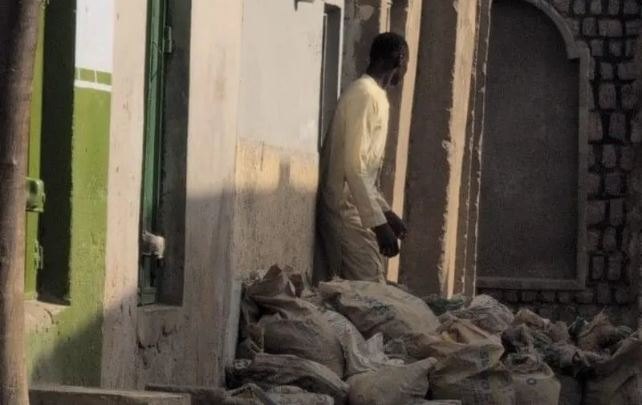
Marondo, as the pieces of gunny bags are commonly referred to in the area, are usually picked from companies that make sacks in Industrial Area.
They are then stuffed in sacks and sold along the streets of the vast Korogocho slums and parts of Dandora estate.
“A sack of marondo retails at Sh50, and many families use it; it lasts about a week,” Omondi said.
“Mine lasts between three weeks and a month because I live alone and cook only once or twice a day.”
Omondi told the Star he understands the danger of using dirty fuel to cook. In fact, he attributed his recurrent respiratory infections to the use of marondo, but it is a choice between a meal and a cough.
“It is a small price to pay to stay alive. When you live in the slums, you have to decide how you want to die,” he said, laughing.
When you live in the slums, you have to decide how you want to die
TOLERATING INCONVENIENCES
Another way to die, inevitable for Omondi, is inhaling fumes from chang’aa being brewed in the neighbourhood, or the choking stench from Dandora dumpsite, if not a concoction of everything.
“Here, we have to deal with stench from the dumpsite, burst sewers, chang’aa breweries, or burning marondo if we want a roof over our heads and some food in our bellies,” he said.
Omondi depends on Restore Dignity, an organisation in Korogocho, to give him food every month, which he survives on.
“I cannot even afford to buy marondo, which costs Sh50 a bag. A well-wisher brings me some for free. I cannot recall the last time I used charcoal to cook,” he said.
A spot check in Korogocho showed that charcoal packed in two kilograms containers retails at between Sh80 and Sh100. A sack goes for between Sh2,500 and Sh2,800.
Roseanne Mucogo sews gunny bags for sale and the waste, she sells as marondo. She said the demand is usually very high, though she does not get as much waste.
“I use marondo myself so I keep a stock for myself before selling what is left. Usually, it is about three to five bags a day,” she told the Star.
Mucogo said the residents make holes on the iron sheet roofs of the poorly ventilated houses to let the smoke out, a makeshift chimney.
During rainy seasons, the task gets harder. While cooking, another person must hold an umbrella for you, to stop the rains from leaking through the makeshift chimneys. Sometimes, the rain leaks into the house and soaks the gunny bags.
“We are used to it (the smoke), but the children and older people suffer from frequent coughs and chest congestion,” she said. “Charcoal is too expensive an alternative.”
Villagers here are sandwiched between two hazardous fumes: air pollution from Dandora dumping site, and unconventional fuel that they use to prepare food
CHEAP IS EXPENSIVE
Ndirangu Chege, head clinician at Korogocho Health Centre, told a local TV station most illnesses reported at the government facility are upper respiratory infections.
Chege says in a single day, out of 10 patients who report at the health centre, six are treated for upper respiratory tract infections.
“Villagers here are sandwiched between two hazardous fumes. Outside, they battle air pollution from Dandora dumping site. Inside their houses, they are choked by unconventional fuel that they use to prepare food,” he said.
Most food businesses in the area also prefer marondo to charcoal in an effort to increase their profit margins.
Kevin sells chicken heads whose necks have been stuffed with potatoes. The delicacy is referred to as mushogi and is loved by many residents. He, too, uses marondo to cook.
The Star caught up with him at around 4pm as he prepared to start deep-frying the mushogi. His marondo supplier had arrived and was filling up Kevin’s sack with the gunny bags.
“Mushogi costs Sh30. We buy the chicken heads from factories that supply chicken to restaurants. We also buy cooking oil and potatoes for staffing. If we were to buy charcoal, too, we would make no profits,” Kevin said.
Cooking using marondo is cheap, he said, because the gunny bags burn for long and are readily available.
He said though the cost of living has gone up substantially, in the slums, business people know that increasing the cost of the product is the beginning of the end.
“Here you cannot increase the cost of mushogi unless you want to close business, especially if it is not a basic need. People will either do away with the product altogether if they can live without it,” he said.
TAKING A TOLL
The Ministry of Health 2019 study estimates that household air pollution in Kenya claims 21,560 lives annually. Other estimates are between 14,000 and 17,000 lives annually, which is more than five times the number of lives lost to traffic accidents annually.
Lower respiratory infections, such as pneumonia and acute bronchitis, have been the greatest contributor to household air pollution-related deaths in Kenya.
In fact, acute lower respiratory infections are considered the second-largest cause of death and are linked to 26 per cent of all deaths reported in hospitals in Kenya. Other diseases include ischemic heart disease, chronic obstructive pulmonary diseases and stroke.
In the 2019 Kenya Household Sector Cooking Study, Energy CS Charles Keter said, “It is expected that clean cooking will reduce the country’s annual disease burden attributable to Household Air Pollution from 49 per cent to 20 per cent.”
But as the poor in Nairobi’s informal settlement continue to choke on dirty cooking fuel, the prices keep rising, making it impossible for people to take up LPG and pushing out those who were already careworn with the gas bills.
According to the household survey, 75 per cent of Kenyan households use charcoal and firewood for cooking. This number is even higher in rural Kenya, where nine out of 10 people use charcoal and firewood.
This translates to 36 million Kenyans who are adversely affected by unclean cooking.
The KNBS report showed that the average household using LPG as their primary cooking fuel spends 17 per cent less than a household relying on kerosene, and 28 per cent less than one relying on charcoal.
The use of charcoal and kerosene has shot up as Kenyans turn to dirty fuels following an increase in cooking gas prices by nearly 50 per cent since January last year.
The latest data from the Kenya National Bureau of Statistics shows that kerosene consumption rose to a five-month high of 10,070 tonnes from the 8,730 tonnes earlier recorded.
Charcoal prices have also increased from Sh60 for a 2kg tin to Sh80 for the same quantity, indicating a rise in demand for the carbon-based fuel.
Approximately 70 per cent of households in Kenya still use wood stoves as either their primary or secondary cooking stoves, with a prevalence of 92 per cent in rural areas.
This corresponds to 64.7 per cent (equivalent to 8.1 million) of households in Kenya using wood as their primary cooking fuel.
Of the 21,560 lives lost annually from the household air pollution, 50 per cent are children less than five years old.
Considering that more than two-thirds of Kenyan households rely on traditional biomass stoves for their primary cooking needs, and that most they use the three-stone stove and the rest charcoal, the need for an urgent transition to cleaner cooking fuels cannot be overemphasised.