A new regional push to place young people at the forefront
of climate action has taken shape following the launch of the IGAD Climate
Change Coalition Network, with leaders emphasising youth-led innovation,
technology and policy influence as critical to tackling the escalating crisis.
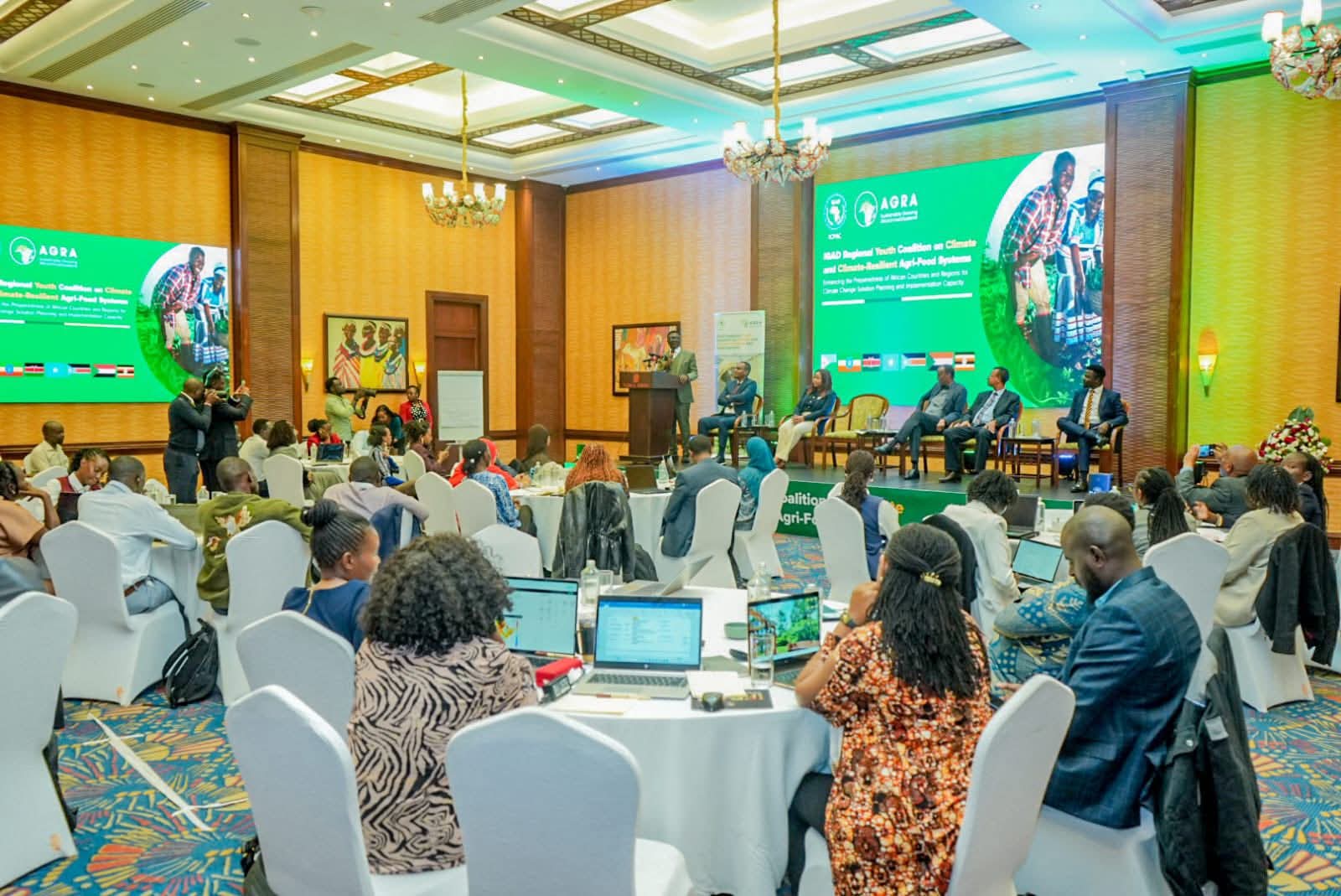
The initiative, unveiled at a high-level forum bringing
together policymakers, youth leaders and development partners, signals a
strategic shift toward structured youth engagement in climate governance across
the Intergovernmental Authority on Development (IGAD) region.
IGAD Youth Envoy Sam Ogwal said the coalition marks a
turning point from scattered youth initiatives to a unified regional mechanism
designed to amplify impact.
“This coalition is meant to respond to the dual reality we
face—young people being disproportionately affected by climate change, yet also
being the most capable drivers of solutions,” Ogwal said.
He noted that the region continues to bear the brunt of
climate shocks, with millions displaced and food systems under strain due to
recurring droughts and erratic rainfall.
“Our region is among the most climate vulnerable globally.
Agriculture, which is the backbone of our economies, relies heavily on rain-fed
systems. This exposes millions to food insecurity,” he said.
The coalition aims to bridge longstanding gaps in
coordination, financing, and policy inclusion that have limited the
effectiveness of youth-led climate responses.
A key focus will be mobilizing young people across IGAD
member states, strengthening access to climate data and services, and promoting
climate-resilient agriculture alongside green entrepreneurship.
Kenya’s Principal Secretary for Youth Affairs and Creative
Economy, Fikirini Jacobs, framed the initiative within the broader context of
Africa’s demographic advantage.
“If we are to realize meaningful change, then we must
leverage the creativity, innovation, and technological awareness of young
people,” Jacobs said. “Africa is the only continent with a youthful population
advantage, and that must translate into solutions.”
He emphasised that youth participation must go beyond
symbolic inclusion to active leadership in shaping development pathways.
“The people must always come first, and prioritising young
people in development processes will make a significant and lasting impact,” he
added.
Technology emerged as a central pillar of the coalition’s
strategy, with IGAD Climate Prediction and Applications Centre Director Abdi
Fidar urging youth to position themselves at the cutting edge of climate
science and innovation.
“It is a world of technology. If you are not tech-focused,
you will be left behind,” Fidar said. “We must empower our young people to use
technology to generate accurate data and solutions for our region.”
He stressed that strengthening local capacity would reduce
reliance on external expertise and enhance the region’s ability to respond
independently to climate threats.
The coalition also seeks to elevate youth voices in global
climate platforms, ensuring representation in key forums such as African
climate summits and United Nations negotiations.
Chief Executive Officer of the National Youth Council of
Kenya, Gloria Wawira, described the initiative as a practical tool for
advancing youth influence in both policy and enterprise.
“This platform is not symbolic—it is strategic. It creates
space for young people to shape policy, build enterprises, and influence the
future of our region,” she said.
Wawira pointed out that while youth-led innovations are
widespread, many remain underfunded and disconnected, limiting their
scalability.
“Many of these initiatives are fragmented and
under-supported. This coalition comes at the right time to consolidate efforts
and unlock opportunities,” she said.
Speakers at the launch repeatedly highlighted the urgency of
coordinated action as climate projections indicate worsening conditions across
the region, including rising temperatures, water scarcity, and heightened risks
to livelihoods and stability.
Ogwal called for stronger partnerships among governments,
institutions, and development actors to ensure the coalition delivers tangible
outcomes.
“No single institution can address these challenges alone.
Collective action is our strongest tool,” he said, urging stakeholders to
commit resources and support youth-led solutions.
He further stressed the need to address funding gaps that
continue to hinder youth innovation.
“Most youth initiatives lack financing. As we build this
coalition, we must ensure resources reach those with ideas and solutions,
including those beyond this room,” he said.
The launch concludes with a clear message: young people in
the IGAD region are no longer on the margins of climate discourse but are being
positioned as central actors in shaping resilience and sustainable development.
As the coalition begins its work, attention will now turn to
implementation—particularly how effectively it can translate ambition into
action and deliver measurable impact across one of the world’s most
climate-exposed regions.