


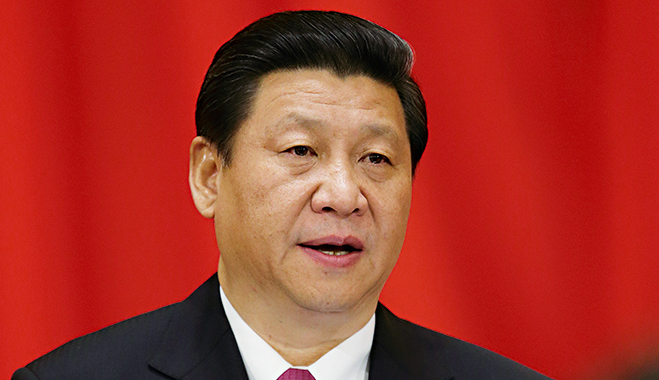
 President Xi Jinping
The policy, a central pillar of China's 15th Five-Year
Plan (2026-2030), presents a critical juncture for African economies seeking to
diversify their trade partnerships and accelerate industrial growth.
The evolving partnership comes at a time of significant
global economic uncertainty and shifting international alliances, placing
African nations in a position to strategically negotiate their place in a
multipolar world.
In the ensuing dynamics, the depth of China-Africa
economic cooperation provides a substantial foundation for this new phase.
Over decades, the partnership has transitioned from
primarily resource-based exchanges to encompass broad infrastructure
development, digital transformation, and industrial capacity building.
China has financed and constructed nearly 100,000
kilometres of roads, over 10,000 kilometres of railways, and close to 100 ports
across the African continent.
In Kenya, flagship projects like the Mombasa-Nairobi
Standard Gauge Railway and the Nairobi Expressway are tangible testaments to
this decades-old collaboration.
Beyond concrete and steel, cooperation has expanded into
the digital realm, with Chinese companies supporting the development of data
centres in nations like Kenya, Nigeria, and South Africa.
China is also facilitating the rollout of 5G networks in
urban centres of most African capitals, creating the very pathways necessary
for increased trade and integration promised by China's market opening.
China's current economic strategy, termed
"high-standard opening up," aims to move beyond the sheer volume of trade
to improve its quality and sustainability.
Chinese President Xi Jinping, in his Vol 5 of the
Governance of China book series, emphasises the commitment.
“China will build new mechanisms for a higher standard
open economy and continue to share China’s development opportunities with the
world,” the Chinese leader said.
Since the start of 2024, China has lifted all restrictions
on foreign investments in manufacturing.
For the first time, it also established a nationwide
negative-list system for cross-border trade in services.
This is a rule that defines which service sectors are
off-limits or restricted for foreign companies, like those critical to
national security.
China thus opened up telecoms, internet, education, culture,
medical services, and other sectors to foreign entities.
The Asian economic powerhouse also expanded the coverage
of the 144-hour visa-free transit policy to facilitate inbound visits.
Last November, President Xi pledged at the APEC CEO
Summit in Lima, Peru, that China would introduce more policies.
He cited voluntary and unilateral opening up, an
“expanded globally oriented network of high-standard free trade areas, and opening
its doors wider to the world.”
A key component is the expansion of its pilot free trade
zones and the reduction of tariffs on a wider range of imported goods.
For African nations, this policy direction aligns with
longstanding requests for greater access to the vast Chinese consumer market
for value-added products.
While China has already granted zero-tariff treatment to
many goods from least-developed countries, the new opening seeks to
streamline standards, ease customs procedures, and encourage imports of
high-quality agricultural products, processed goods, and other non-resource
commodities.
The shift could help address the persistent trade
imbalance, exemplified by Kenya's 2024 trade with China, where imports from
China vastly exceeded Kenyan exports.
Increased shipments of Kenyan tea, coffee, avocados,
sardines (omena), and cut flowers directly to Chinese consumers represent a
direct economic opportunity from this policy shift.
The measure is regarded as “a shining hallmark of China-Africa
cooperation in the new era and an important step taken by China to voluntarily
expand unilateral opening up.”
As quipped by Foreign Ministry spokesperson Mao Ning, following Foreign Minister Wang Yi's successful tour of Africa - a first for the 37th consecutive year, “China’s
huge market will truly become a great opportunity for Africa.”
“We welcome African countries to board the express train
of China’s development and work together to achieve modernisation.”
China's engagement is often framed within the context of
South-South cooperation and is explicitly stated to be aligned with the African
Union's own Agenda 2063 development blueprint.
Initiatives like the Luban Workshops, which provide
vocational training in over a dozen African countries, aim to build local
capacity. Kenya’s workshop is in Machakos.
The challenge for African governments is thus to translate
the infrastructure and market access provided by China into sustainable,
inclusive economic growth that benefits local economies beyond the political
elite.
This requires robust national policies, transparent
negotiations, and strengthened regional integration under the African
Continental Free Trade Area to ensure African nations do not merely become
consumers of Chinese goods but competitive exporters and industrial partners.
China's high-standard economic opening, therefore,
presents a significant opportunity for Kenya and its African neighbours.
It offers a potential pathway to reduce trade deficits,
attract diversified investment, and gain deeper access to a leading global
consumer market.
The ultimate measure of success will not be the signing
of agreements, but the tangible uplifting of African industries and workers.











![[PHOTOS] Red carpet in Pretoria as Ruto begins South Africa visit](https://cdn.radioafrica.digital/image/2026/06/abe3e750-6e5a-4394-a45c-899768be6240.jpeg)