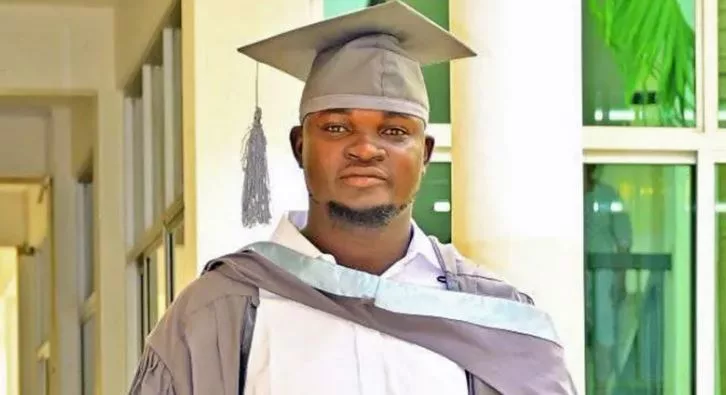
 Albert Ojwang./FILE
High Court Judge Diana Kavedza has addressed reports circulating online linking the ongoing murder trial over the death of blogger and teacher Albert Ojwang to Karura Forest.
This comes after counsels raised concerns over the report's circulation.
Speaking when the hearing resumed on Wednesday, Justice Kavedza stressed that the official court record should remain the primary source of information on the proceedings.
She said she had reviewed coverage of Tuesday's proceedings and had not come across the claims in mainstream media that had generated discussion online.
"I did not see that," the judge said.
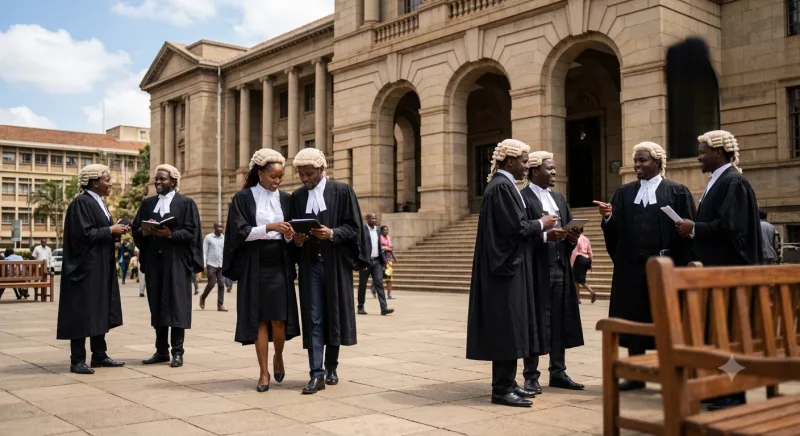
She questioned where the reports had originated from, noting that the court had taken steps to identify accredited journalists covering the proceedings.
"That's why I asked the media people to introduce themselves. I know you are accredited; you cannot make those mistakes, can you?" she said.
Justice Kavedza acknowledged that information shared on social media often differed from what transpired in court, but maintained that the official court proceedings remained the authoritative account.
"You've seen me on TikTok looking 'horrible,' but I'm here still working. You will ignore because what is on record is the court records," the judge affirmed.
She further urged advocates present during the proceedings to help correct inaccurate information whenever it emerged.
"As an advocate, say I was in court and this is wrong. Yes, you have the right to correct a mistake," she said.
Justice Kavedza also responded to concerns over the use of edited CCTV footage that has formed a central part of the prosecution's case.
She recalled testimony from an Independent Policing Oversight Authority (IPOA) forensic expert, who told the court that investigators recovered hundreds of gigabytes of CCTV recordings from Central Police Station but prepared a shorter compilation for presentation during the trial.
The judge said playing every minute of the original footage in court would be impractical.
"If we were to sit here and watch the original footage, we will watch for one week," she said.
She explained that the court had adopted an approach intended to make the evidence easier to follow without requiring parties to sit through days of uninterrupted surveillance recordings.
"That is why the court recommends international-based practices. Can you shorten that footage so that people can understand?" she said.
Justice Kavedza observed that surveillance cameras continuously record everything happening within their range, making it necessary to extract the portions relevant to the issues before the court.
"You know the problem with CCTV? It captures everything that is going on.So he (Ipoa expert) tries to bring in what is relevant to the court," she said.
The judge also appealed for patience as the court continued hearing the extensive digital evidence, saying the condensed footage was intended to assist the court and the parties in understanding the sequence of events while preserving the integrity of the proceedings.
The trial continues before the Kibera High Court.