There is a decision I make more often than any cut in theatre. A test exists, I could order it, and the machine will find something; it almost always does. The only question that earns its place is this: if I find it, will it change what happens to the person in front of me?
Sometimes the answer is yes, and someone lives who would not have. Sometimes it is no, and the finding would frighten without helping, cost without saving. On those days, the skill is not in using the tool. It is in putting it down.
Last month, my government forgot there was a question to ask.
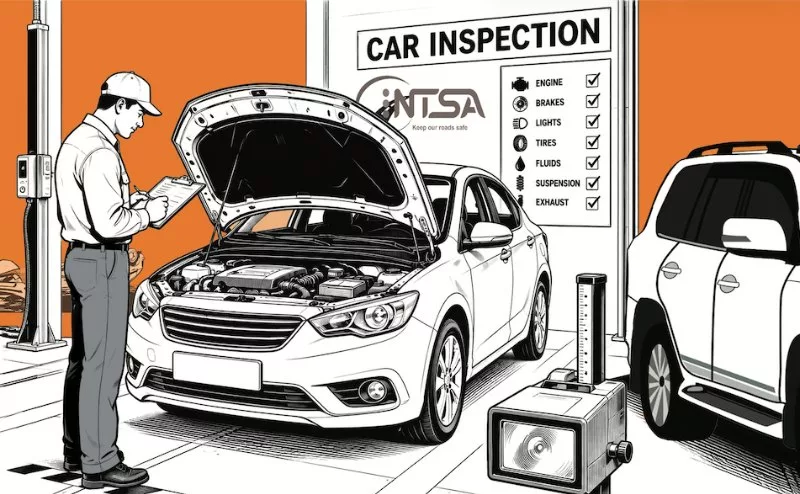
In February, it gazetted the Traffic (Motor Vehicle Inspection) Rules, 2026. For the first time in our history, every private car older than four years was to sit an annual roadworthiness test, the same one we already impose on matatus. Fail, and you cannot drive. Drive without the sticker, and you face Sh20,000 fine, six months in a cell, or both.
Strip away the queues and the fees, and what the state built is a national screening programme. It screens every ageing car for a condition, mechanical faults, to prevent an outcome, death on the road. So judge it the way medicine has learned to judge any screening programme. Not by its intentions. By whether it works.
The first test is whether the thing you screen for is actually causing the harm. Here, the case falls at the first hurdle. NTSA, the very body that wrote these rules, attributes about 95 per cent of road deaths to human behaviour, chiefly speeding and drink-driving.
In the detailed police breakdown of what causes crashes, mechanical defects account for roughly one in 20. Even a flawless regime, catching and fixing every worn brake and bald tyre in the country, would be reaching for that one twentieth while the speeding and the drink drove on untouched. We are being made to queue and pay to screen for a disease that is not the one killing us.
Grant the state its premise anyway. Say the mechanical sliver is worth chasing. Does inspection actually shrink it? The best global evidence, a 2021 review of every rigorous study, could not show that it does. Some found a small benefit, around nine per cent. Some found none. A few found that more heavily inspected cars crashed more, not less. The only randomised experiment ever run assigned vehicles to no inspection, one inspection, or annual inspection, and found no difference in how often they crashed.
A large Danish study found no case for inspecting older cars more often, because the inspected fleet was already sound enough that defects barely mattered. The reviewers’ own conclusion belongs on every regulator’s wall: mandatory inspection must be justified by evidence that it reduces crashes, not by the theory that it detects defects. That is the entire argument. Detecting a fault is the mechanism. Fewer funerals is the outcome. The mechanism is not the outcome.
And we already run the experiment. We inspect our matatus. We inspect our lorries. They are the vehicles we watch overload, speed and kill, week after week, sticker on the windscreen. We already inspect the vehicles that actually kill us. They still kill us.
Now connect the dots, because one bad rule is a mistake and a pattern is a habit. In March, the same authority launched an automated instant-fines system, a camera and an algorithm issuing penalties by text message, no officer, no hearing, seven days to pay. A High Court judge suspended it within days on due-process grounds, and the authority pulled its go-live notice.
In late May, a day before it was to begin, a second judge suspended the entire 21-year deal behind the new Sh3,050 smart driving licences and a planned thousand-camera enforcement network, over absent public participation and no protection for the biometric data it would harvest.
On the first of July, the very day these inspection rules came into force, a third judge froze their private-car provisions, days after a Senate committee, reading the same evidence I have, recommended the whole thing be annulled.
Along the way, the authority admitted it has 17 inspection centres for a country of millions of vehicles. One agency, one year, three rollouts, three courts. Each time the sequence is identical, and identically backwards. A fee is designed, a system is switched on, the citizen is billed, and only then does someone ask whether it works. The fee arrives before the evidence.
This is the error I fight on the other side of the fence. In health technology, the pitch for a decade was capability: the model reads the scan, the app triages the patient. We deployed on the strength of the demo and assumed the benefit would follow. It often did not. Capability is not benefit. Availability is not need.
The inspection mandate is that same error in a hard hat. The one document meant to show the working, the Regulatory Impact Statement, never justified why annual, never modelled the cost, never showed the scheme moves the only number that counts. It asserted a mechanism and skipped the outcome.
When a mandate cannot show that it works, but can show to the shilling what it collects, ask what it is really for. Sh2,000 per car across millions of vehicles is a large, dependable number. Safety is the story. The number is the point. A safety programme that cannot show it saves one life is not a safety programme. It is a fee with a story.
This is not an argument against roadworthy cars, or against a state that wants its people to stop dying. It is narrower. Before you compel a nation, at real cost and under threat of jail, show that the thing you compel delivers the safety you promise and does more good than harm.
In clinic, the skill that separates a good doctor from a dangerous one is knowing when to put the tool down. A state that reaches for every lever it can operate and bills us for the privilege is not keeping us safe. It is practising on us.
A
sticker on your windscreen was never going to save your life. The evidence for
that is not missing by accident. Nobody went looking, because looking was never
the point. First, prove it works. Then, and only then, ask us to pay.