The Kenya
Kwanza duo has embarked on a series of rallies, empowerment meetings and
development tours across Kakamega, Bungoma and Trans Nzoia counties.
The two are
seeking to consolidate support for President William Ruto’s re-election, while
countering the momentum being generated by the opposition.
Political
observers say the heightened activity is a response to what supporters have
dubbed the ‘Sifuna wave’, a growing movement centred around the outspoken
Nairobi senator.
Democratic
Action Party-Kenya (DAP-K) western coordinator Caleb Burudi said the region,
long regarded as the political backyard of Wetang’ula and Prime CS Musalia
Mudavadi, is now emerging as one of the country’s most contested battlegrounds
ahead of the 2027 polls.
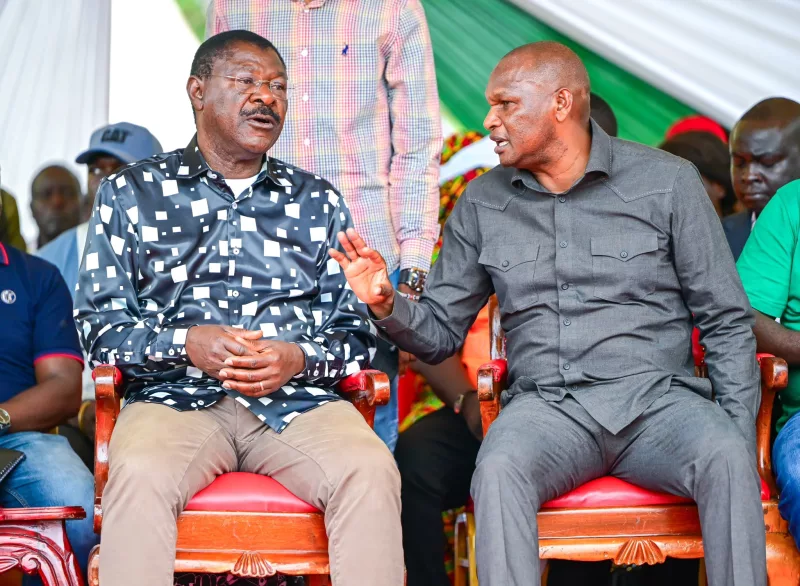
He points
out that Farouk has become a regular visitor in the region alongside
Wetang’ula, leading political mobilisation aimed at rallying the Mulembe nation
behind Ruto’s second-term bid.
“With both
Kenya Kwanza and the opposition stepping up mobilisation nearly two years
before the next General Election, Western Kenya is rapidly emerging as one of
the country’s most fiercely contested political theatres,” Burudi added.
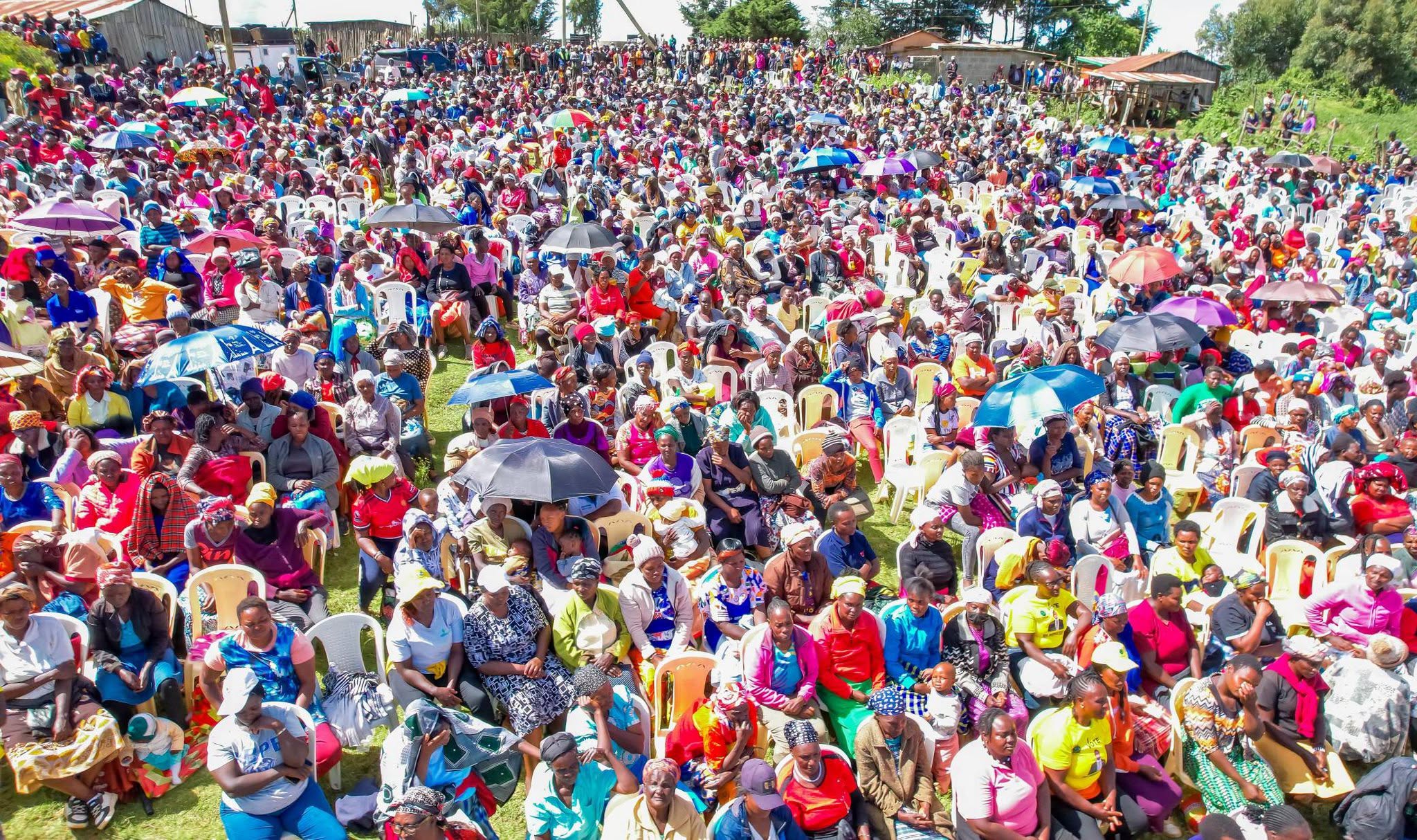
During
their meetings, the two leaders urge residents to remain within what they
describe as the government’s broad-based political framework, arguing that
continued support for Kenya Kwanza will accelerate development projects and
secure the region’s place in national leadership.
Their
campaign has focused heavily on encouraging voter registration and persuading
residents to back Ruto’s re-election to ensure the completion of infrastructure
projects, industrial revival programmes and economic reforms.
Wetang’ula
has repeatedly cited the revival of Mumias Sugar Company, Nzoia Sugar Company
and other government interventions in the sugar sector as evidence that the
Kenya Kwanza administration has delivered tangible benefits to Western Kenya.
“We have
some young people who have joined politics. However, their politics is that of
insults. But ours talks about unity, development and moving forward,”
Wetang’ula told residents during a meeting in Matungu, Kakamega county.
Farouk has
also used the gatherings to urge residents to reject the opposition, insisting
that their interests are best served by remaining in the Kenya Kwanza
coalition.
“The
opposition has no agenda for you. Your interests are safe with Kenya Kwanza
under President William Ruto,” Farouk said during a women empowerment meeting
in Bungoma attended by Wetang’ula.
He went
further to ask residents to rally behind Ruto’s re-election, while laying the
groundwork for Wetang’ula’s future national ambitions.
“Support
President Ruto now, and he will support you when your turn comes,” Kibet told
the gathering.
Beyond the
2027 campaigns, the political messaging has increasingly shifted towards
positioning Wetang’ula as Western Kenya’s preferred presidential candidate in
2032.
Several
leaders from the region, including Kakamega Governor Fernandes Barasa, have
publicly endorsed Wetang’ula for the deputy presidency in 2027, while arguing
that the presidency should eventually come to Western Kenya after Ruto
completes his constitutional two terms.
“As the
people of Western Kenya, we have identified our own leader, and that leader is
Moses Masika Wetang’ula. He is equal to the task,” Barasa said during a meeting
on June 27.
“After we
re-elect President William Ruto in 2027, we expect the presidency to come to
Western Kenya in 2032.”
Wetang’ula
himself has suggested that Western Kenya has several capable leaders who could
deputise Ruto.
“Western
Kenya has Prime CS Musalia Mudavadi, CS Wycliffe Oparanya, and me as Speaker of
the National Assembly. President Ruto can pick any of us as Deputy President
and groom the person for the 2032 presidential race,” he said during a meeting
in Sirisia, Bungoma county.
However,
recent Infotrak surveys indicate Deputy President Kithure Kindiki remains the
most preferred running mate for Ruto, with Wetang’ula and Mudavadi trailing
behind.
The growing
political activity by Kenya Kwanza comes as Sifuna increasingly positions
himself as one of the country’s leading opposition voices.
His
repeated criticism of the government and insistence that leaders should
prioritise accountability, governance and the cost of living have earned him
growing support, particularly among younger voters and sections of the
electorate dissatisfied with the government’s performance.
Political
analyst Fred Sasia says the increased presence of Wetang’ula and Farouk in
Western Kenya reflects growing concern in Kenya Kwanza over Sifuna’s rising
influence.
“The region
is expected to play a pivotal role in the 2027 elections, making early
mobilisation and grassroots engagement a priority for both sides,” Sasia said.
According
to the analyst, the rivalry is expected to intensify further in the coming
weeks as both camps seek to consolidate support.
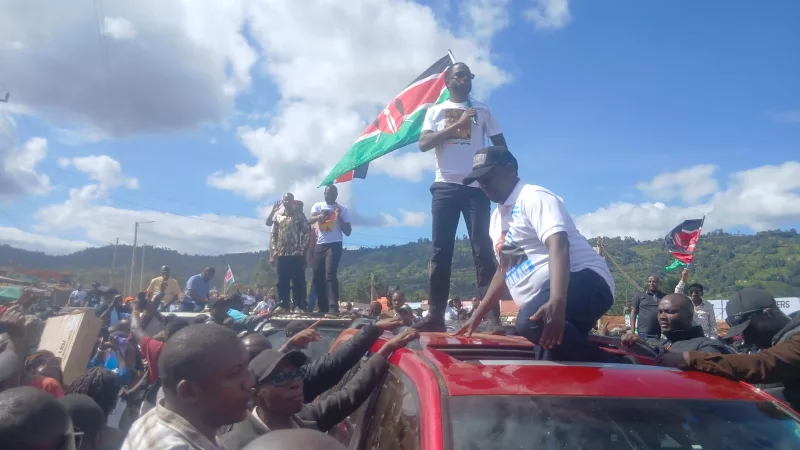
He pointed
to Sifuna’s planned political rally in Bungoma on July 26 as one of
the most significant political events in the region this year.
Organisers
have branded the gathering the as “mother of all rallies” and say it will bring
together opposition leaders and supporters from across Western Kenya.
Sources
familiar with the preparations say Sifuna and his allies are expected to unveil
the political party they intend to use in the 2027 elections after reportedly
abandoning plans to register a new party because of the limited time remaining
before the polls.
The meeting
is also expected to endorse Sifuna as a leading political voice in the Luhya
community before launching what organisers describe as a nationwide political
mobilisation campaign.
Sasia
believes the rally could become an important test of political influence in
Wetang’ula’s home turf.
“The
meeting could further test the political influence of established figures in
Western Kenya, including Wetang’ula, whose dominance in the region is
increasingly facing renewed scrutiny,” he said.
The Bungoma
rally comes against the backdrop of growing political pressure on the Speaker.
In recent
months, Wetang’ula has been heckled at several public meetings in Bungoma
county, with sections of residents repeatedly interrupting his speeches through
chants of “Sisi ndio Sifuna”.
The slogan
has been interpreted by political observers as a reflection of the Nairobi
senator’s growing popularity among sections of the region’s electorate.
Political
commentator Joseph Mutua says Wetang’ula cannot afford to ignore the changing
political dynamics.
“Wetang’ula
cannot afford to sit pretty while Sifuna builds political momentum in Western
Kenya,” he said.
“Politics
abhors a vacuum, and any sign of growing support for a rival demands an
immediate response.”
He expects
the Speaker to significantly increase his political engagements in the region
in the months ahead.
“We should
expect to see Wetang’ula holding even more meetings across Western Kenya. The
objective will be to consolidate his support base and prevent Sifuna from
turning his growing popularity into an organised political movement capable of
shifting the region’s political balance,” he added.
The
commentator added that the coming weeks, particularly Sifuna’s highly
anticipated Bungoma rally, are expected to provide a clearer indication of
whether the emerging ‘Sifuna wave’ can translate into sustained political
influence or whether Wetang’ula and Kenya Kwanza’s intensified grassroots
campaign will succeed in reasserting their dominance in the region.