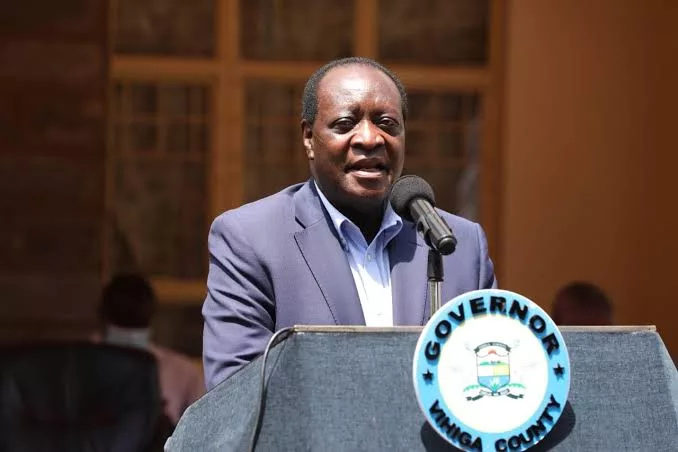
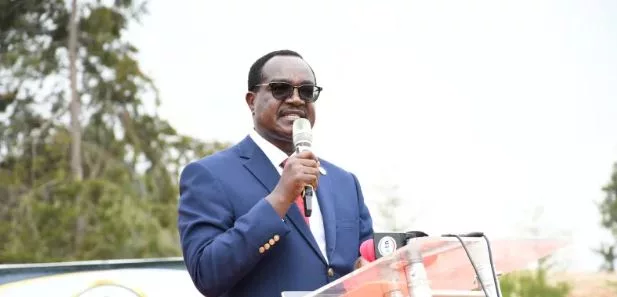
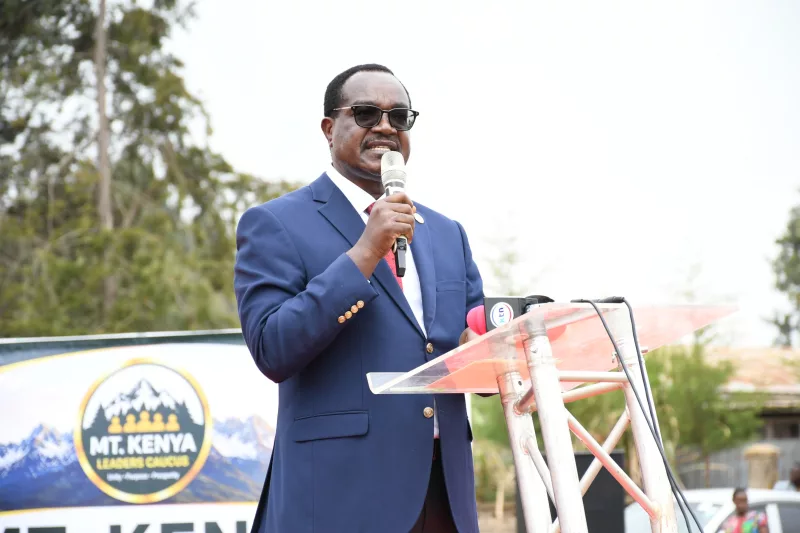
 Education Cabinet Secretary Julius Ogamba addresses parents and learners of Mbiriri Comprehensive School in Kieni, Nyeri County, during the school’s Education Day on July 18, 2026./KNA
Teachers are set to receive enhanced salaries by the end of July after the government allocated Sh8.4 billion to the Teachers Service Commission (TSC) to facilitate the second phase of salary reviews under the 2025-2029 Collective Bargaining Agreement (CBA).
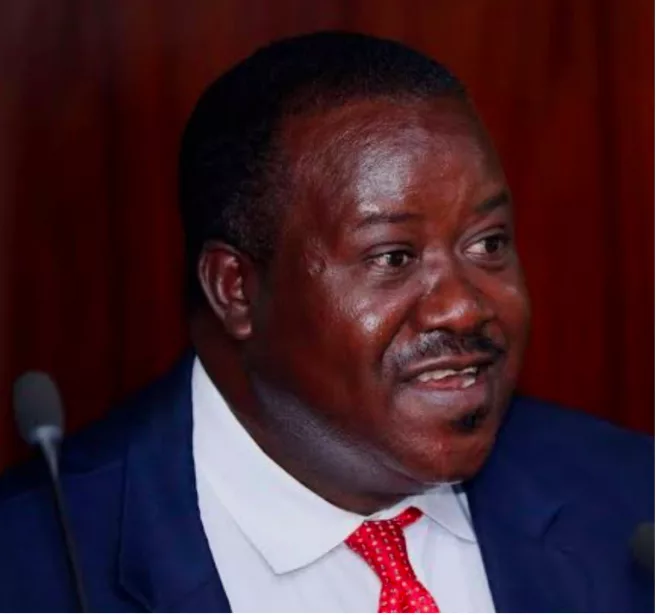
TSC Chairman Dr Jamleck Muturi said teachers should expect the additional earnings to reflect in their bank accounts from July 20, following the implementation of the revised salary structure.
Dr Muturi said the salary increase marks the beginning of the second phase of the four-year CBA implementation schedule signed in July 2025 between the TSC and teachers’ unions, including the Kenya National Union of Teachers (KNUT), Kenya Union of Post Primary Education Teachers (KUPPET) and Kenya Union of Special Needs Education Teachers (KUSNET).
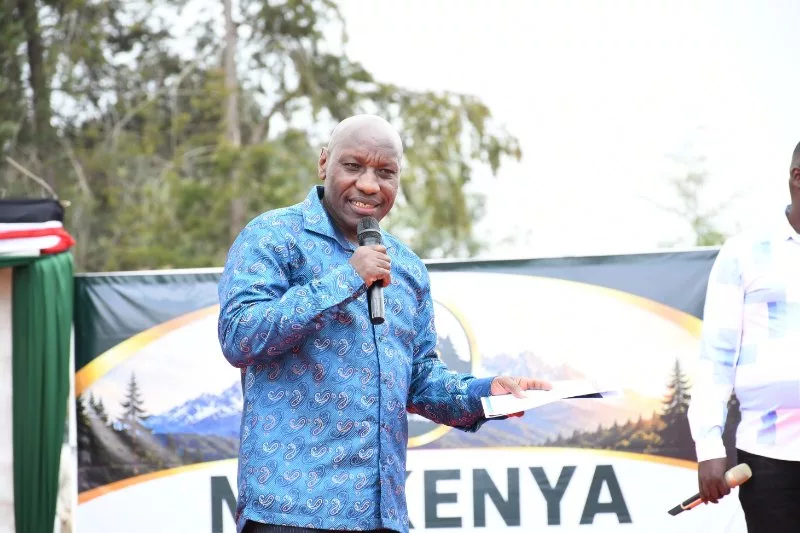 Teachers Service Commission Chairman Dr Jamleck Muturi addresses parents and learners of Mbiriri Comprehensive School in Kieni, Nyeri County, during the school’s Education Day on July 18, 2026./KNA
Under the new salary structure, the lowest-paid teacher, a Primary Teacher II in Grade B5, will earn between Sh26,225 and Sh33,444 per month, while the highest-paid teacher, a Chief Principal in Grade D5, will receive between Sh133,351 and Sh164,977 monthly.
Dr Muturi said the salary adjustment was a major step towards improving teachers’ welfare and motivation, noting that better remuneration would enable educators to focus on improving learning outcomes.
“When the teacher is paid well, they stay motivated to teach the learner well and ensure they excel,” he said.
The TSC chairman said the commission was also taking additional measures to improve teachers’ career progression through promotions.
He revealed that more than 270,000 teachers had been promoted in the last three years and that the commission would advertise promotion opportunities for more than 35,000 teachers in August this year.
According to Dr Muturi, the government has allocated Sh2 billion to support the promotion exercise, which will cover teachers across different job groups.
“The government has promoted 270,000 in the last three years. In Nyeri, 2,395 teachers were promoted. The government has set aside money for more promotions, and we are urging all eligible teachers to apply for the promotions which will be advertised next month,” he said.
Dr Muturi also announced that TSC had received Sh4.8 billion to facilitate the conversion of 20,000 junior school intern teachers into permanent and pensionable employment.
He said the move would address concerns among junior secondary school teachers who have worked under internship arrangements since 2023.
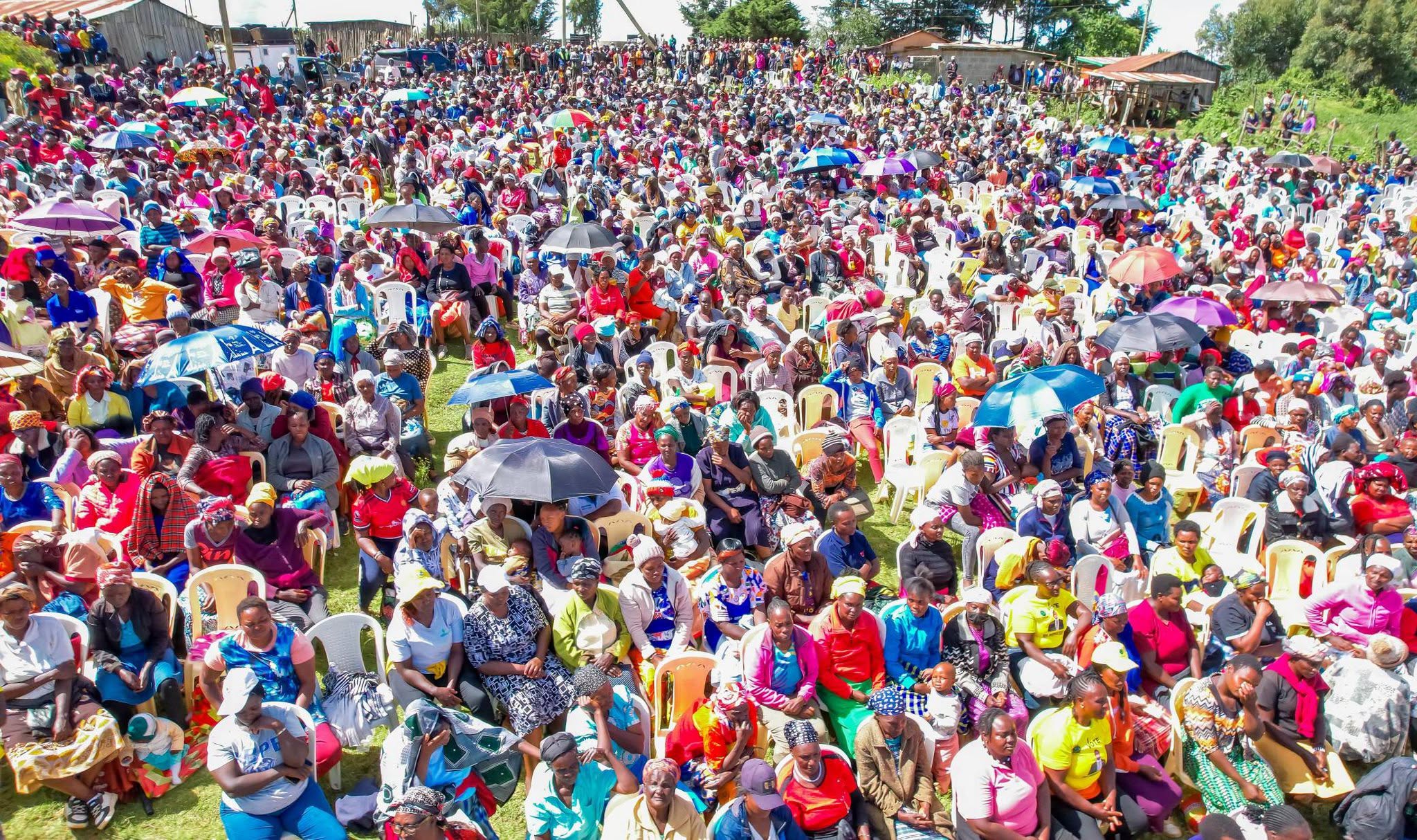
The TSC chairman spoke at Mbiriri Comprehensive School in Kieni, Nyeri County, where he joined Education Cabinet Secretary Julius Ogamba during the school’s education day celebrations.
The event was attended by Principal Secretary for Energy Alex Wachira, PS for Gender Anne Wang’ombe, PS for Correctional Services Salome Muhia, Inspector General of Police Douglas Kanja, Government Spokesperson Dr Isaac Mwaura and other professionals from the Central region.
Speaking during the event, CS Ogamba defended the government's increased investment in the education sector, saying education remains central to Kenya’s social and economic transformation.
He said the government had invested heavily in addressing human resource needs while also improving infrastructure to support the implementation of the Competency-Based Education (CBE) system.
Ogamba said more than 23,000 classrooms had been constructed across the country in the last three years to reduce congestion in schools and provide learners with safe and modern learning environments.
“Across all areas of our country and during the last three years, we have constructed over 23,000 classrooms to support the implementation of the CBE, to decongest schools and provide learners with safe, modern and conducive learning environments,” he said.
He added that the government was also constructing 1,600 laboratories in senior schools during the current financial year to strengthen practical learning, particularly under the Science, Technology, Engineering and Mathematics (STEM) pathway.
“These investments will help accommodate a growing learner population, improve learner welfare and provide an even more conducive environment for teaching and learning,” Ogamba said.
The CS said education had received 30 per cent of the national budget allocation for the 2026/2027 financial year, describing it as the highest allocation to the sector since independence.
He said the government would continue investing in human capital, infrastructure and curriculum reforms to prepare learners for future opportunities.
“This administration believes in education as an equaliser, and that's why we are putting in resources, in human capacity, and infrastructure; we are reforming the sector, and we are looking at the curriculum so that we produce future-ready citizens,” he said.
Ogamba also warned heads of learning institutions against imposing illegal and unauthorised levies on parents.
He said the Ministry was working with TSC to take action against principals found charging fees that had not been approved through the required procedures.
“Unless the levy is approved or it has gone through the process and it has been accepted by the parents or the levy has gone through the Ministry protocols and approval has been given, making it legal, then that can be charged,” Ogamba said.
He said any school head found violating regulations would face disciplinary action to ensure smooth operations in learning institutions.
The CS also dismissed claims that enrolment in Technical and Vocational Education and Training (TVET) institutions had declined, attributing the perception to the introduction of the modularised training system.
He explained that the new model allows trainees to complete short courses within a few months, unlike the previous system where learners took two to three years to complete training.
Ogamba said the number of TVET trainees had actually increased significantly, rising from 397,000 before the 2023/2024 academic year to more than 850,000 by May 2026.
“There isn’t a drop, trainees have just finished their certification and gone. Pre 2023/2024 we had 397,000 TVET trainees in our institutions. As at May 2026, we had over 850,000 because of the change in the modularised system,” he said.
He assured TVET trainees that the government was working with Parliament to streamline the funding system to ensure students do not drop out due to financial challenges.