The National Assembly's Finance Committee has rejected a proposal by the
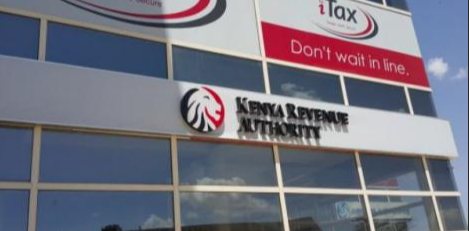
Kenya Revenue Authority to increase its share of the national revenue basket,
dealing a blow to the taxman's push for additional resources to improve tax
collection.
The House team declined KRA's request to raise its budgetary allocation
from the current 1.5 per cent of estimated annual revenue collections to at
least two per cent.
The proposal had been contained in amendments to the Kenya Revenue
Authority Act currently before Parliament and, if approved, would have handed
the authority billions of shillings in additional funding every year.
In its report, the Finance and National Planning Committee chaired by
Molo MP Kuria Kimani said the request required wider engagement before
lawmakers could approve such a significant shift in KRA's funding model.
"The committee noted the stakeholder's
proposal but was of the view that the proposal needed further
consultation," the MPs said.
The decision means the taxman will
continue operating under the existing arrangement under which the authority
receives one and a half per cent of the revenue projected in the annual
financial estimates to be collected by the agency.
KRA had sought to amend the provision to read: "At least two per cent of the revenue estimated in the financial
estimates for each financial year."
The tax authority argued that additional funding was necessary to
strengthen its operations and address persistent challenges in meeting revenue
collection targets.
The agency has repeatedly fallen short of its collection
goals in recent years amid slower economic growth, increased tax resistance
from Kenyans, and difficulties in expanding the tax base.
In submissions to the committee, the authority argued that the constitution allows Parliament to authorise a state organ to retain part of the revenue it
collects for purposes of financing its operations.
KRA said the proposed changes were intended to modernise the authority's
financing structure and align it with constitutional principles governing public
finance management.
"The proposal seeks to overhaul the funding model and align KRA
financing with Parliamentary appropriations and constitutional principles of
public finance management," the authority told MPs.
The taxman further argued that parliamentary appropriation of its
funding would strengthen accountability, democratic oversight and alignment
with national priorities.
"Parliamentary appropriation enhances accountability, democratic
oversight and alignment with national priorities," KRA says in its submissions.
Besides seeking a larger budgetary allocation, the taxman had also proposed the creation of a reserve fund
to hold unspent balances from previous financial years.
The authority additionally sought legal backing for employee welfare
schemes and transitional provisions to cushion staff and ongoing projects
during the transition to the new financing structure.
KRA management argued that the measures were intended to protect staff
emoluments and multi-year contractual obligations during the proposed shift.
While lawmakers rejected the proposal for additional funding, they
approved the rest of the Bill, which largely seeks to remove obsolete
provisions and align the KRA Act with existing legislation and constitutional
requirements.
The committee said its decision followed public participation exercises
conducted in 13 counties, including Nairobi, Kiambu, Vihiga, Mombasa and Wajir.
Although most participants supported the technical amendments contained
in the Bill, concerns were raised over KRA's broad enforcement and
investigative powers.
Residents in Wajir called for stronger safeguards to protect taxpayer
privacy and urged Parliament to enhance oversight mechanisms over the
authority.
Participants in Nairobi acknowledged the taxman’s struggle to meet revenue targets but argued that
the agency's extensive powers should be subjected to stricter checks and
balances.
In Turkana, residents recommended stronger taxpayer protections and more
robust parliamentary oversight, while participants in Mombasa warned against
possible conflicts between enforcement measures and citizens' privacy rights.
The committee also adopted technical amendments proposed by the Office
of the Attorney General and the Department of Justice.
Among the changes are provisions clarifying the distinction between
appointive and ex-officio board members.
The AG also want it stipulated that the KRA board chairperson, who is
appointed by the president, should submit
resignation directly to the head of state.







![[PHOTOS] Ruto hosts Bungoma delegation at State House](https://cdn.radioafrica.digital/image/2026/07/38c18064-4bd7-4a52-9171-4dcce631a74b.webp)