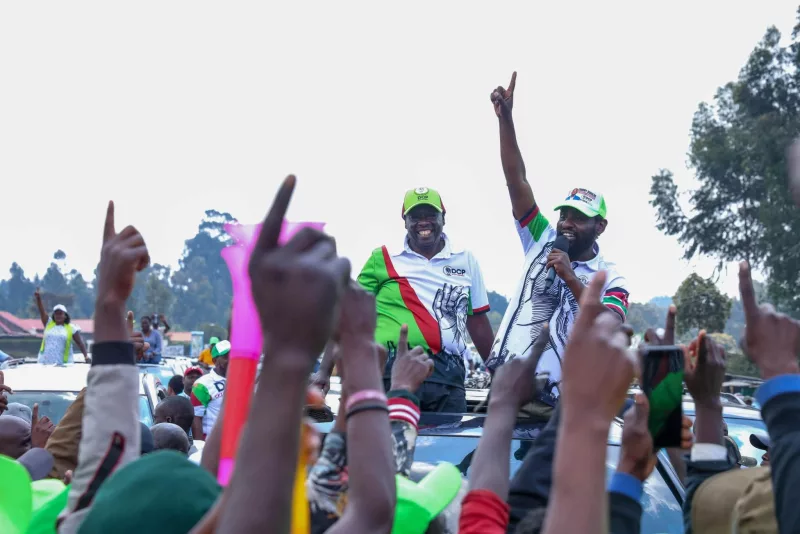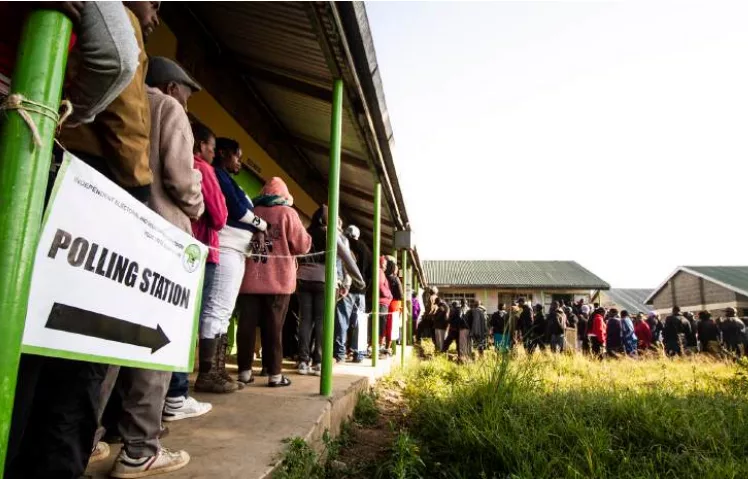
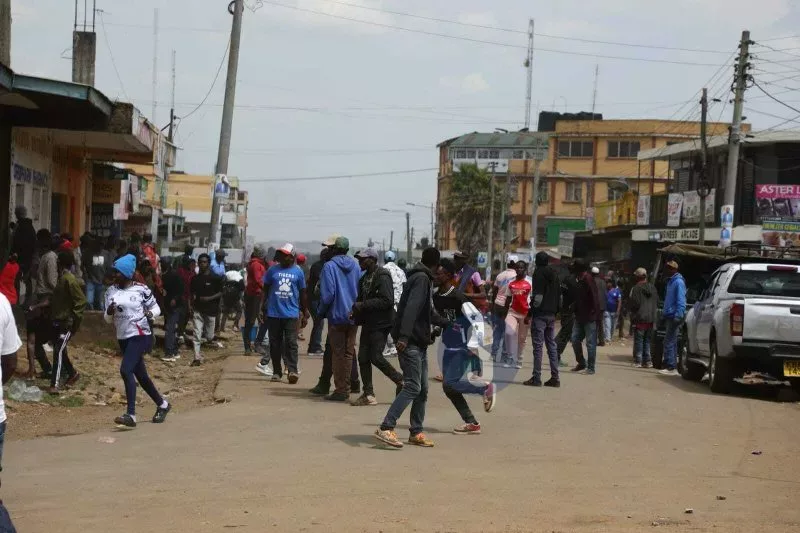
 Residents in running battles with security officers in Ol Kalou town on July 16, 2026/FILE
The Kenya Human Rights Commission (KHRC) has claimed there were incidents of violence, voter intimidation and electoral malpractices during the Ol Kalou parliamentary by-election.
This, as it warned that similar trends could undermine the credibility of the 2027 General Election if left unchecked.
In a report released after the July 16 by-election, the rights lobby said its findings were based on observations by 12 election monitors and four staff members deployed across the constituency before polling, during voting and throughout the counting process.
KHRC said the incidents it documented mirrored concerns previously raised during the Malava and Mbeere North by-elections, suggesting an emerging pattern of electoral misconduct.
"Measured against Article 81 of the Constitution, the conduct of the by-election did not meet the standards required for a free and fair election," the commission said.
According to the report, what began as a peaceful voting exercise degenerated into chaos after armed, masked men moved across the constituency in marked and unmarked vehicles, allegedly attacking residents and journalists and dispersing crowds using tear gas.
The organisation claimed it documented at least 10 unmarked vehicles, including Toyota Prado and Volkswagen models, carrying heavily armed men around the constituency.
Some of the officers were allegedly dressed in civilian clothing with their faces covered.
KHRC further alleged that the operations created fear among voters and disrupted polling in several stations, including Huruma, AC Primary School, Ol Kalou Comprehensive School, St Joseph Primary School and Mundi Polling Station.
The commission said one person, aged 30, died from injuries allegedly sustained during the violence, while dozens of others suffered injuries, assaults, robberies and destruction of property.
It also alleged that at least 10 journalists were attacked while covering the election, raising concerns over media freedom and the public's constitutional right to access information during elections.
On the conduct of the poll, KHRC said it documented numerous incidents of voter bribery, including allegations involving public officials.
It further claimed women were used to distribute cash and other inducements on behalf of political actors.
The rights body also raised concerns over the administration of assisted voting, saying that although many elderly persons and persons with disabilities received lawful assistance, some cases appeared to involve attempts to influence voters' choices.
It noted that many voters remained outside polling stations after casting their ballots, saying they lacked confidence that their votes would be secure once they left despite electoral regulations requiring voters to leave after voting.
KHRC warned that unless institutions responsible for elections and security undertake reforms before the next General Election, public confidence in the electoral process could continue to decline.
The report comes amid competing accounts of the by-election from state agencies.
The National Police Service has dismissed claims that rape incidents and deaths occurred during the election, saying no such reports were made before, during or after polling. Police have, however, confirmed that the Inspector General directed the Directorate of Criminal Investigations to investigate reports of unidentified individuals moving around the constituency during the election.
The Independent Electoral and Boundaries Commission (IEBC) has also defended the conduct of the by-election while acknowledging reports of voter bribery and isolated security incidents. The commission has maintained that electoral offences should be investigated by the relevant agencies and has urged all stakeholders to use established legal mechanisms to pursue complaints.
KHRC called for decisive action to address electoral violence, misuse of state resources, voter intimidation and declining public confidence, warning that failure to do so could have serious implications for electoral integrity and constitutional governance in 2027.