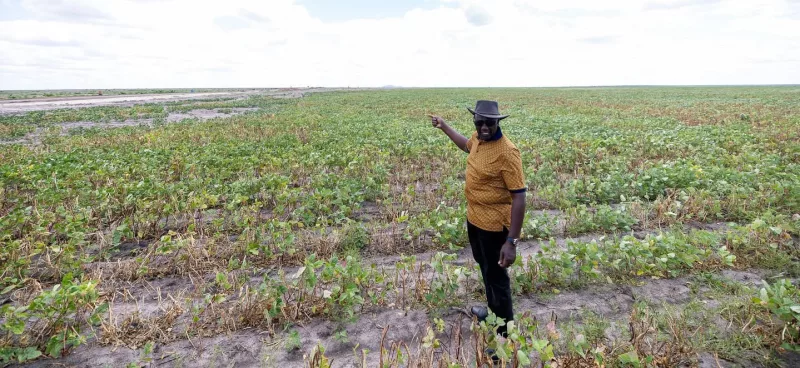
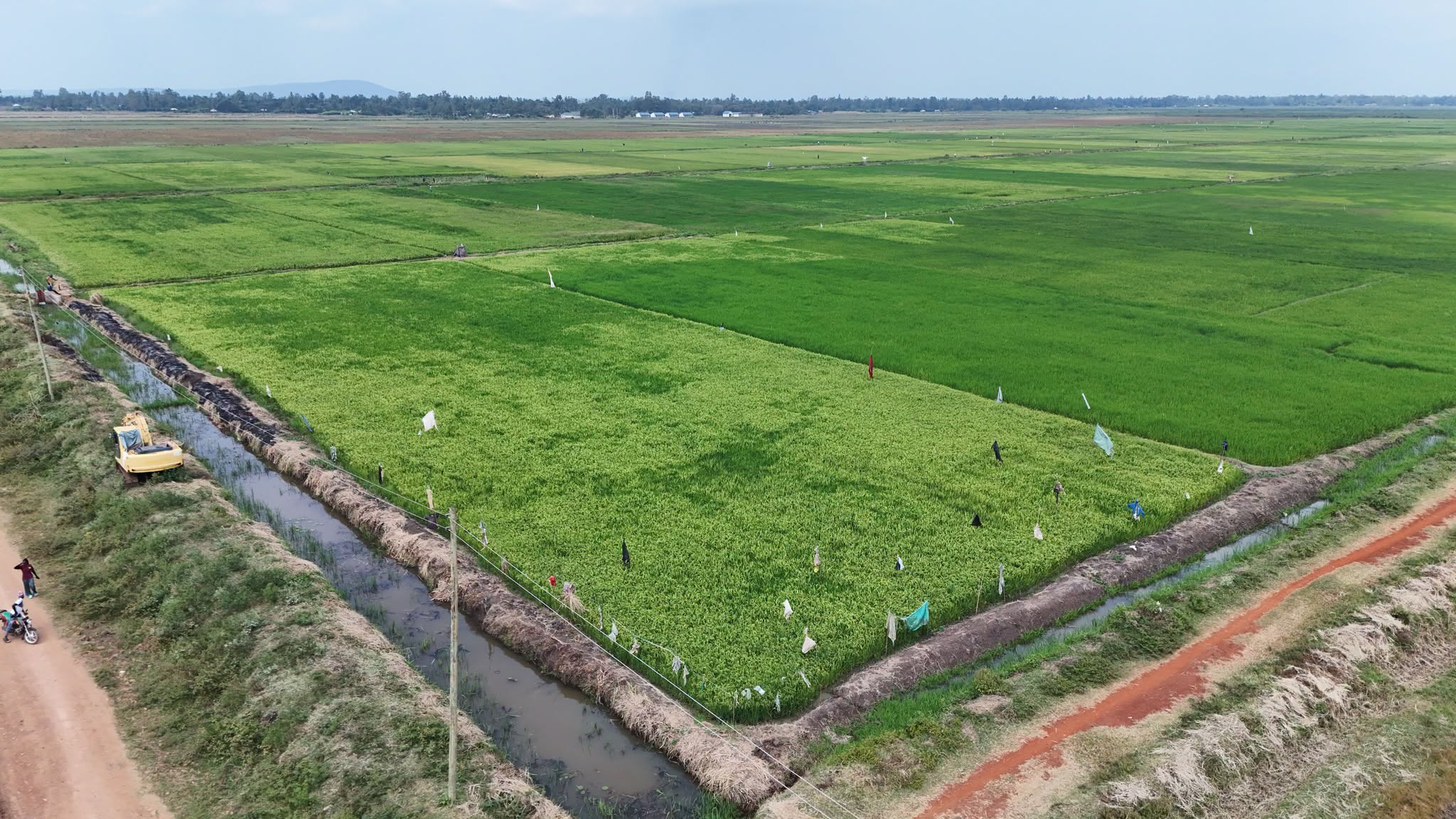
Abdi Madobe is a farmer and water management official in the Bura irrigation
scheme in Tana River county. He grows rice, maize, onions and watermelons on 10 acres.
“In the past, we used to suffer due to inadequate water. Now, we have a
government that cares and has supplied us with enough water,” he told the Star.
“The crops I grow feed my family. I sell my produce and use the
money to meet my many responsibilities, like paying school fees for my children.”
Madobe is among 2,245 registered farmers in Bura. The government has in
the last three years spent more than Sh1.5 billion to construct the Korakora gravity
intake and a 26km canal to irrigate about 86,000 acres.
“Throughout the associated value chains, Bura directly or indirectly
benefits 70,000 to 100,000 people. With planned expansions, the scheme will serve over 10,000
farmers irrigating about 25,000 acres,” Irrigation Principal Secretary Ephantus Kimotho told the Star.
But something much bigger is unfolding in Bura. The government is
expanding commercialisation of the scheme through public-private partnerships.
Gulf Energy has commissioned the first 75-acre centre pivot, with six
more being installed. An irrigation pivot, or centre
pivot system, is a large machine that waters crops with elevated sprinklers rotating
in a massive circle around a central pivot.
Land preparation to irrigate another 700 acres has been completed.
“Private investors have already been awarded 35,000 acres for rice
production and 50,000 acres for sugarcane development, while Gulf Energy has commenced establishment
of seed cane under irrigation,” Kimotho said.
“The project is expected to create jobs, increase agricultural
production, support agro-processing and stimulate economic growth in the
region.”
Transforming agriculture is a key pillar of the Bottom-Up Economic
Transformation Agenda of President William Ruto’s administration, which aims to strengthening
food security, create jobs and increase rural incomes.
Jacinta Wambui’s two-acre farm could previously barely sustain her
family. But the Nyanjigi irrigation project in Kangema, Murang’a county, has transformed her life
and those of hundreds of other farmers.
The project, which draws water from River Mathioya, covers about 500
acres occupied by nearly 1,000 households growing bananas, tomatoes, French beans, sweet potatoes
and kales.
“After the National Irrigation Authority (NIA) completed the community-initiated project that had stalled for seven years, I
diversified into horticulture and now earn a steady income from bananas and tomatoes, while
producing enough food for my family,” Wambui said.
In Meru county, the Mweru Umoja irrigation project commissioned in
January 2024 has equally transformed farming by supplying water from River Mutonga to about 1,000
acres.
Farmers have shifted from rain-fed agriculture to continuous production
of high-value crops.
“I grow cabbages throughout the year, taking advantage of favourable
market prices to support my family,” Virginia Mugwimi said.
Fellow farmer Joseph Gituma, who invested in drip irrigation after the
project was completed, said improved water availability has enhanced crop production and
livestock keeping.
“The State Department of Irrigation aims to connect over 100,000 farmers
through community irrigation schemes and over 10,000 farmers through farmer-led
irrigation,” PS Kimotho said.
About 8,000 farmers are benefiting from the smallholder irrigation
programme in Mt Kenya region. Thousands more farmers are benefiting through national schemes
such as Mwea, Ahero,
Bura, Hola, Lower Kuja and Lower Nzoia.
“The smallholder irrigation programme is one of our most successful
irrigation interventions. Phases I through IV have been implemented in the Mt Kenya region,
developing 24 projects, benefiting 7,628 farmers, and
expanding irrigation by 6,760 acres for Sh1.863 billion.
“This has led to increased
agricultural productivity, improved household incomes, and strengthened food security,” the PS
said.
More than 300,000 households have directly benefited from rice
irrigation programmes. The rice value chain alone has created about 280,000 jobs, Kimotho said.
Rice production increased from about 192,000 tonnes in 2022 to 305,000
tonnes last year, a 59 per cent increase. Mwea alone increased production by almost 24,000
tonnes. Ahero increased by over 16,500 tonnes.
The Bunyala irrigation scheme is unlocking more land for farming across
Busia and Siaya counties.
Established in 1969, the scheme has expanded from an initial 540-acre
pilot project to more than 3,200 acres currently
under cultivation, supporting more than 14,000 farmers.
“Ongoing expansion works, currently at 62 per cent completion, form part
of a broader plan to increase the irrigated area and strengthen Kenya’s domestic rice
production capacity,” Interior PS Raymond Omollo said during a
tour of the scheme two weeks ago.
In the sprawling one-million-acre Galana Kulalu irrigation scheme straddling
Tana River and Kilifi counties, phase I of 1,500 acres
has been completed, with the first harvest recording about 30 bags of maize per
acre. Phase II (1,800 acres) is under land preparation.
Al Dahra of the United Arab Emirates has completed preliminary studies,
including soil sampling, and is completing detailed feasibility studies under the MoU signed with
NIA and the Agricultural Development Corporation to
support large-scale commercial investment.
“We have also introduced another strategic investor, who intends to begin
with an 8,000-acre pilot phase before progressing to a proposed 60,000-acre commercial
investment, subject to successful evaluation,” PS Kimotho said.
A two megawatt solar power plant is nearing
completion and is expected to be ready by July 15, significantly reducing
irrigation pumping costs.
The construction of Galana Dam, which will unlock 200,000 acres, is
progressing after the contract was signed in December 2025, with financing being processed
through the UAE partnership.
The government has spent Sh1.068 billion in the last three years on
Galana Kulalu for completion of the 10,000-acre model farm and reservoir.
The long-term goal is to produce more than 14 million bags of maize
annually, with potential to reach 18 million bags
under full commercial development.
“We intend to put an additional 300,000 to 400,000 acres under
irrigation to sort out the deficits, and this country will be food secure. Then we start
exporting,” NIA chief executive Charles Muasya said.
“In the next five years, Kenya will become an exporter of rice,
sugar and maize to neighbouring countries.”
The government has identified 50 priority dams across the country to
support irrigation, water security, hydropower generation and climate resilience.
Of these, the State Department for Irrigation is directly implementing
19 strategic irrigation dams that will transform agricultural production.
Galana Dam is the flagship priority. Other key dams include Thuci
(Embu), High Grand Falls (Tana River), Magwagwa (Nyamira), Isiolo, Gogo (Migori), Lowaat
(Turkana), Yatta (Machakos), Radat (Baringo) and Soin-Koru (Kisumu).
The 19 dams are planned to support about 1.5 million irrigated acres,
while also providing water supply and, where feasible, hydropower generation.
The government’s long-term vision is to expand the area under irrigation
to more than 2.5 million acres.
NIA’s Muasya said the major challenge facing irrigation development is
inadequate funding.
“That is why we are now turning to the private sector to attract funds for
investment,” he said.
Another challenge is acquiring land for irrigation infrastructure, which
sometimes delays projects.

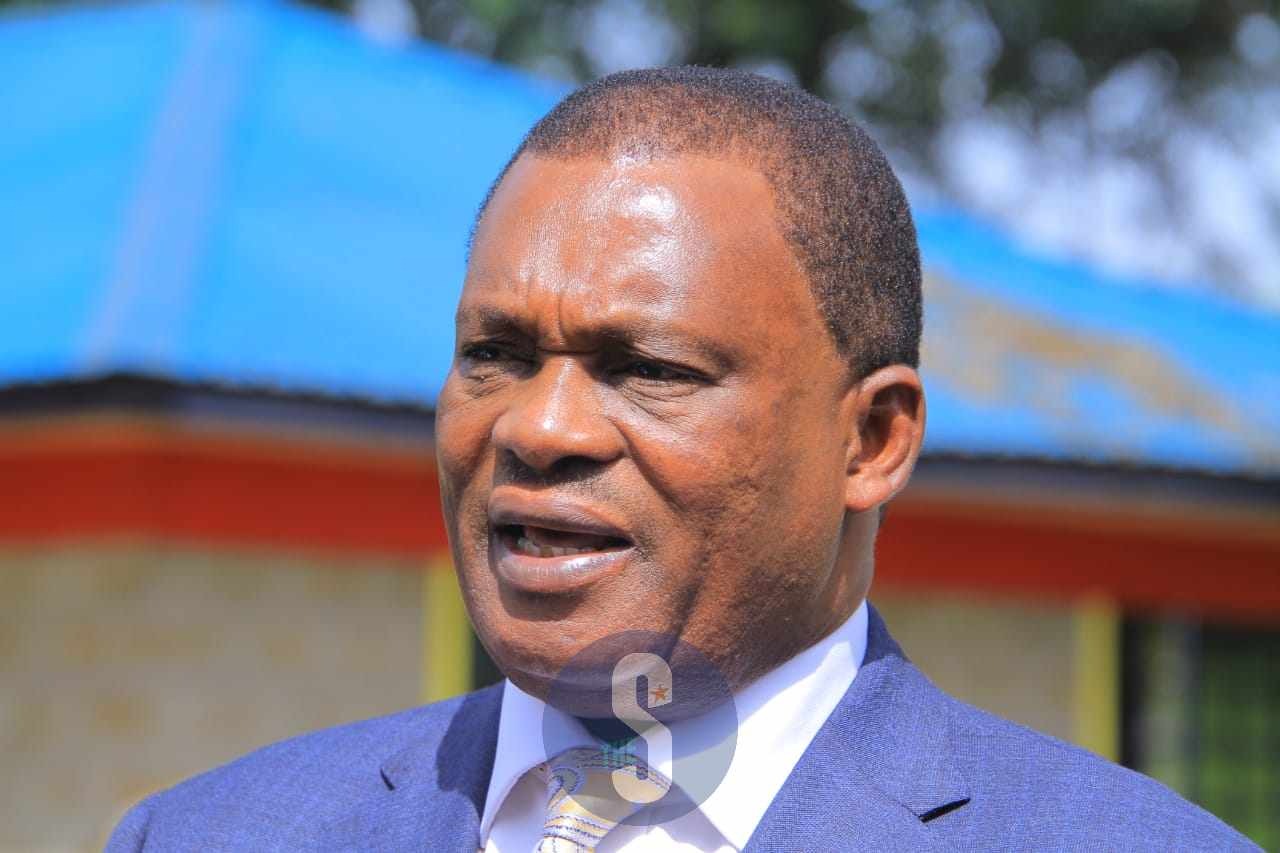
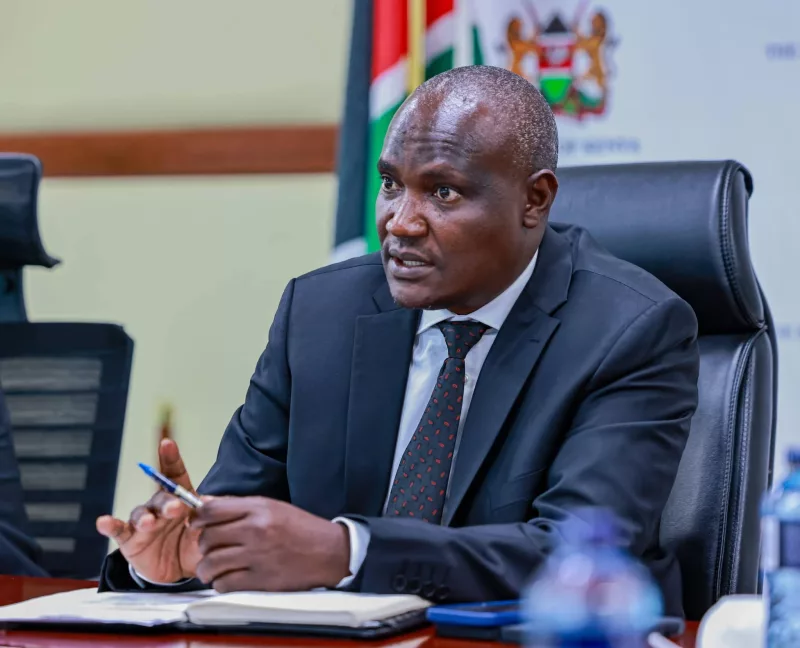
 Irrigation PS Ephantus Kimotho speaks during an interview at his office in Maji House /EZEKIEL AMING'A