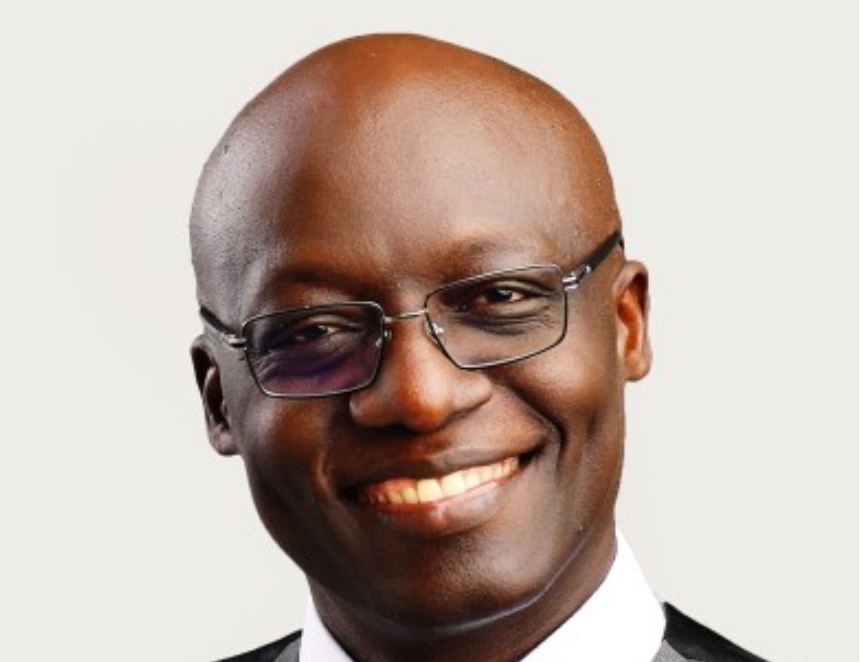
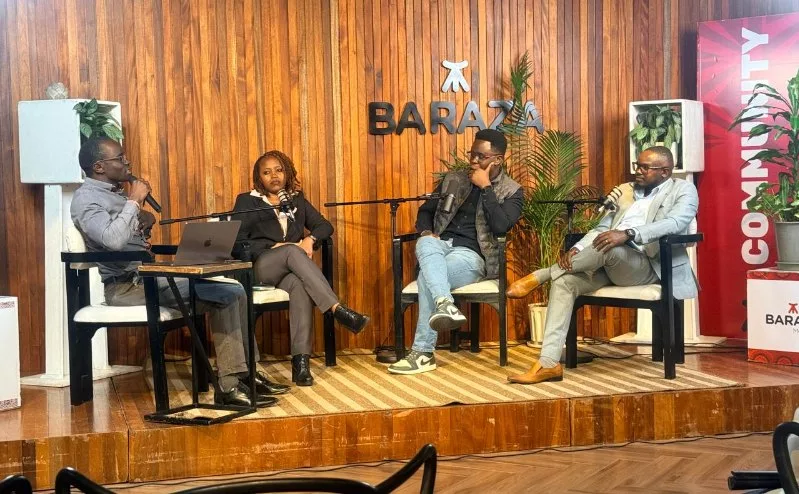
 From Left: Maurice Otieno, Executive Director of Samawati Collective; Tina Mkara, MISK — Industry Manager, Natural Resources, Esri Eastern Africa; Immanuel Momanyi — Head of Acceleration, Villgro Africa; and Javan Waita — Director, Kenya Programs, Jacaranda Health./HANDOUT
Stakeholders in technology, healthcare, agriculture, government and civil society have called for the development and adoption of artificial intelligence (AI) systems that respond to the needs of Kenyan communities rather than being driven solely by technology.
The call was made during a panel discussion on AI in Agriculture and Health convened by Samawati Collective and SemaBOX at Baraza Media Lab in Nairobi.
The event also marked the launch of a partnership between the two organisations aimed at promoting what they described as public-interest AI in line with Kenya's National AI Strategy 2025–2030.
Participants discussed the growing use of AI in healthcare and agriculture, two sectors regarded as critical to Kenya's economy and public wellbeing.
Agriculture contributes about one-third of Kenya's Gross Domestic Product (GDP), while smallholder farmers account for an estimated 80 per cent of the country's agricultural production.
Speakers noted that many farmers still lack access to timely data, weather forecasts and advisory services that AI technologies can provide.
The panel also heard that about 90 per cent of maternal and neonatal deaths in Kenya are preventable, with around one-third linked to delays in seeking healthcare after danger signs are missed.
Maurice Otieno, Executive Director of Samawati Collective, said communities should be involved in shaping how AI is deployed.
"AI is already making decisions in Kenya's clinics and farms. The only question is whether the people whose decisions affect them have a seat at the table," said Otieno.
"This convening is our answer. Public-interest AI must be built with communities, such as farmers, mothers, clinicians, citizens, not simply deployed on them. We are not here to admire the technology; we are here to decide, together, what it must deliver."
The discussion featured Javan Waita, Director of Kenya Programs at Jacaranda Health, Tina Mkara, Industry Manager for Natural Resources at Esri Eastern Africa, and Immanuel Momanyi, Head of Acceleration at Villgro Africa.
Dan Aceda, Founder of SemaBOX, said African communities should play a central role in shaping the development and use of emerging technologies.
"Africa's story about technology is too often told about us rather than by us," said Aceda.
"SemaBOX exists to put the microphone in African hands. Through this partnership, the mothers, farmers and clinicians who live with these technologies every day will be the ones shaping the narrative and, ultimately, the tools themselves."
During the discussions, Waita highlighted the use of AI in maternal healthcare through Jacaranda Health's PROMPTS platform, which he said has reached about four million mothers and enrols about 800,000 more annually.
"When we started, our nurses could answer a hundred questions a day. Today, PROMPTS receives around fifteen thousand, and AI triages every one of them, identifying the roughly seven per cent that signal danger signs, such as severe headaches or bleeding, and escalating them to our clinical nurses. That is what has driven a 27 per cent increase in health-seeking behaviour, at a lifetime cost of about two and a half dollars per mother."
On the sustainability of technology innovations, Momanyi said long-term success would depend on greater government investment.
"At a recent Council of Governors convening in Kisumu, not one of the 47 county governments in the room had a budget line for innovation. And yet, if you want true scale, government is the biggest client you will ever have. The startups that survive are the ones that build their models into the systems that already exist."
Waita said some counties had already adopted cost-sharing arrangements for the PROMPTS platform.
"If Jacaranda were to shut down tomorrow, the priority is that the solution survives," he said.
Speaking on agriculture, Mkara said AI should support decision-making beyond weather prediction.
"An experienced farmer often already knows when it will rain. The real value of AI is in the aftermath, linking that farmer to insurance, getting drought-resistant seeds to where they are needed, and turning satellite, drone and weather data into decisions governments can act on."
She added that AI could also strengthen accountability in public spending.
"If the government invested 100 million shillings in AI to audit health insurance claims, it could save 900 million from fraudulent claims."
Panellists also cautioned that AI could widen inequality if challenges such as the cost of internet data, literacy levels and limited smartphone access are not addressed.
They further called for AI systems to incorporate local knowledge alongside scientific data when developing solutions for communities.