 Croatia's stoppage time equaliser against Portugal was ruled out for offside.
The Video Assistant Referee (VAR) system has come under intense scrutiny following a series of controversial decisions at the ongoing World Cup, with many football fans arguing that incorrect calls at crucial moments have unfairly cost teams their place in the tournament.
VAR was introduced to reduce human error and eliminate the clear and obvious mistakes that for years fuelled controversy when refereeing decisions relied solely on match officials' real-time judgement.
The technology is designed to assist on-field referees in four key situations: goals, penalties, direct red cards and cases of mistaken identity.
However, several decisions made during this year's tournament have reignited debate over whether the system is achieving its intended purpose, with critics arguing that technology is only as effective as the officials interpreting it.
Among the most hotly contested incidents are decisions made during the knockout matches between Portugal and Croatia, and Senegal and Norway.
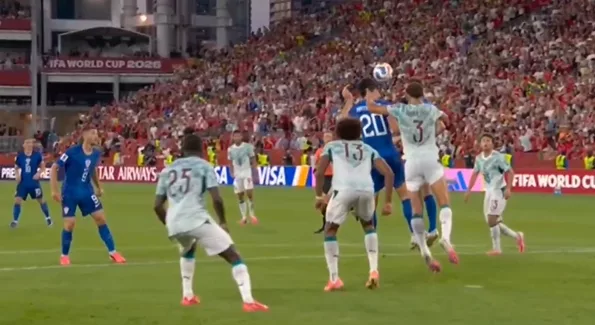
Croatia's hopes of staying in the tournament ended after VAR ruled out a dramatic stoppage-time equaliser that would have forced extra time in their 2-1 defeat to Portugal.
Croatia had taken the lead through Ivan Perišić's 53rd-minute strike before Cristiano Ronaldo levelled from the penalty spot in the 68th minute.
Substitute Gonçalo Ramos then put Portugal ahead in the 94th minute. Deep into stoppage time, Joško Gvardiol appeared to have rescued Croatia after finishing from close range following a goalmouth scramble.
Television replays showed Perišić's cross bouncing off Portugal defender Renato Veiga before reaching a Croatian player, who squared the ball for Gvardiol to score.
FOX Sports rules analyst Mark Clattenburg put it into context: What happens is, as the ball comes into the penalty area, No. 20 of Croatia jumps for the ball. If he touches the ball, he will then make an offside for No. 15 [for Croatia]. If [No. 20] doesn't touch the ball, then [No. 15] is onside. If he does touch it, it's offside."
However, following a recommendation from the VAR team for an on-field review, referee Espen Eskås disallowed the goal for offside.
According to the referee's explanation, Perišić's cross had first glanced off a Croatian teammate before reaching the eventual provider, meaning the receiving Croatian player was in an offside position despite the subsequent deflection off a Portuguese defender.
The decision sparked an immediate backlash from fans, many insisting the Portuguese touch should have reset the phase of play.
"I've never seen this kind of robbery. How is that Croatia goal offside?" one fan wrote on social media.
Another commented: "I'm a hardened supporter of Portugal and idolise CR7, but it seems like Croatia were robbed here."
A third asked: "When did the rules change? It touched a Portuguese player. Not offside."
Others were even more critical, with one writing: "Croatia got robbed last night. The ref and VAR aided fraud."
A similar storm erupted earlier in the tournament during Senegal's clash against Norway on June 1.
Norway were awarded a decisive penalty in the 120th minute after a lengthy VAR review, despite strong protests from Senegal.
The referee ruled that Senegal midfielder Lamine Camara had fouled Belgium captain Youri Tielemans inside the penalty area.
Replays showed Camara sliding in to clear the ball, but before making contact, Tielemans stretched a leg to poke the ball away and was then caught on the heel.
The penalty was awarded and converted by Tielemans, handing Norway a dramatic 3-2 victory and eliminating Senegal after the Lions of Teranga had led 2-0 until the 85th minute.
The decision divided opinion, with many fans arguing that Tielemans had initiated the contact and was no longer in effective control of the ball when the challenge occurred.
The two incidents have added to growing debate over the application of VAR, with supporters questioning whether the technology is delivering greater fairness or simply shifting controversial decisions from the pitch to the video review room.