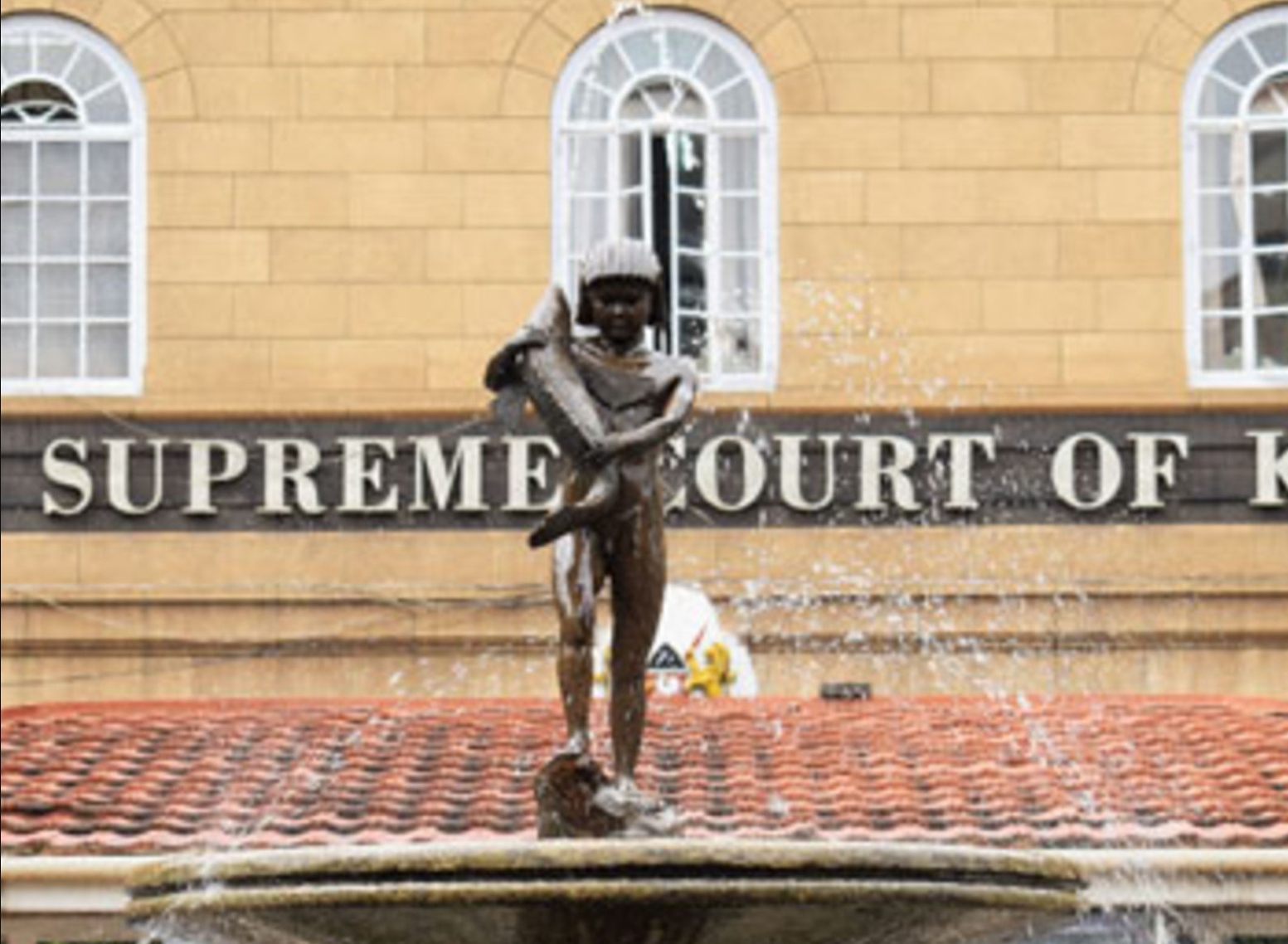
 Supreme court/FILE
The Supreme Court has ruled that a fatal police shooting does not, by itself, amount to torture, cruel, inhuman or degrading treatment unless there is evidence showing that the victim suffered pain or was subjected to such treatment before death.
In a judgment dismissing an appeal filed by the family of slain Pakistani journalist Arshad Sharif and two media organisations, the apex court held that while Sharif's right to life was unquestionably violated by the unlawful police shooting, the evidence presented did not establish a separate violation of the constitutional protection against torture.
Court records show that Sharif was shot dead by Kenyan police officers in Kajiado County on October 23, 2022, in what authorities described as a case of mistaken identity.
The Inspector General of Police later acknowledged that officers had fatally shot the journalist while pursuing another vehicle.
The High Court had previously found that the shooting violated Sharif's rights to life, dignity, equality before the law and security of the person, and also concluded that he had been subjected to torture.
However, the Court of Appeal overturned the finding on torture, prompting the family to challenge that aspect of the decision before the Supreme Court.
In upholding the appellate court's position, the six-judge bench said the mere fact that a person was fatally shot could not automatically support a finding of torture or cruel, inhuman and degrading treatment.
"To subject someone to torture, inhuman, cruel, or degrading treatment ordinarily presupposes that the victim is alive and under the custody, control, or influence of his or her tormentor," the judges said.
The court explained that a victim alleging torture must ordinarily present evidence, including medical or scientific evidence where appropriate, to demonstrate that they endured pain or suffering before death or while under the control of those responsible.
The bench further observed that no such evidence had been produced before the trial court in Sharif's case.
"Even if it can be said that the fatal shooting of the deceased subjected him to torture, cruel, inhuman and degrading treatment, the appellants ought to have produced evidence to that effect. For example, that death was not instantaneous and the deceased was exposed to pain and suffering before succumbing to the injuries inflicted by the shooting," the court held.
It added that because no evidence was presented to demonstrate prolonged suffering before death, it agreed with the Court of Appeal that the threshold for proving torture had not been met.
"No such evidence was tabled before the trial court, thus prompting the Court of Appeal to decline the invitation by the appellants to find as prayed. We are in agreement with the appellate court for the foregoing reasons," the judges stated.
Despite rejecting the torture claim, the Supreme Court reaffirmed that Sharif's right to life under Article 26 of the Constitution had been violated through the unjustified police shooting.
The judges said the incident resulting in the journalist's death was a clear violation of the Constitution, as well as Kenya's obligations under international human rights instruments, including the International Covenant on Civil and Political Rights and the African Charter on Human and Peoples' Rights.
The ruling provides fresh guidance on the evidentiary threshold required for constitutional claims alleging torture arising from police killings.