![[PHOTOS] Ruto unveils coffee revival programme](https://cdn.radioafrica.digital/image/2026/06/677c3369-4a2d-4102-aa6e-81681f661918.jfif)

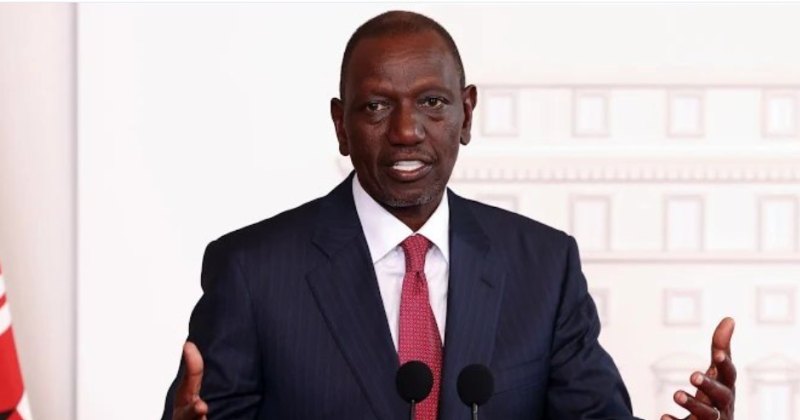
President William Ruto has announced an ambitious government plan to increase coffee farmers' earnings from the current Sh158 per kilogramme to between Sh250 and Sh300 in the coming years.
The plan is part of a broader government strategy to revive the country's coffee sector.
Speaking in Kianyaga, Kirinyaga County, during the launch of a coffee revival programme, the President said his administration had already made significant progress in improving returns to farmers but insisted that more needed to be done to ensure coffee farming becomes a profitable venture once again.
Ruto noted that when his government took office, coffee farmers were earning as little as Sh50 or Sh60 per kilogramme, a situation that had discouraged many growers and contributed to declining production.
"When we came to office, one kilogramme of coffee would earn a farmer Sh50, Sh60 or thereabout. But today, let us speak the truth, one kilo earns the farmer much more," Ruto said.
"It has increased to Sh120, to Sh130, Sh150 and now Sh158. Is that not true? It has been announced here."
The President, however, said the government was not satisfied with the current returns and had developed a comprehensive plan aimed at significantly raising farmers' incomes.
"I called this meeting because we are not there yet. More things are coming. This price, in the near future, God willing, will rise to Sh250 per kilo to even Sh300," he said.
"We have a plan to achieve this."
Ruto explained that the government's strategy would involve distributing improved coffee seedlings, modernising coffee factories and opening up new markets for Kenyan coffee to ensure farmers receive a greater share of the value generated by the crop.
"Every seedling that will be planted, every factory that will be modernised, every change and every new market that we will open must add to the income of farmers," he said.
The President emphasised that coffee farmers deserved better
returns because they bear the greatest burden in the production chain.
"The reason is because it is the farmer who tills the land, plants the seedlings, cares for the trees and harvests and carries the heaviest weight. He should be the one who benefits the most and not brokers," he said.
Ruto also highlighted reforms introduced to improve payment systems in the coffee sector. He said farmers had previously been forced to wait for months before receiving payments, while numerous deductions and a lack of transparency had eroded their earnings.
"Farmers used to wait for months before being paid. We have agreed now that farmers should get their money within five days. That is a must; we are not begging anyone," he said.
"Before, payments were delayed, there were many deductions and there was no transparency. This demoralised farmers and hurt the coffee subsector. Today we are opening a new chapter."
The President revealed that the government aims to triple national coffee production from the current 50,000 tonnes annually to 150,000 tonnes by 2028.
According to Ruto, the target will be achieved through the
introduction of improved coffee varieties, adoption of modern technology and
expansion of land under coffee cultivation.
"How will we achieve that? We have new seedlings, new technology and new varieties," he said.
"We want one tree to produce five kilos and not two as it is now."
He added that coffee farming has already expanded to 34 counties and that the government intends to bring an additional 100,000 acres under coffee production.
The President further pledged to lower the cost of production by reducing prices of fertiliser, herbicides and pesticides, measures he said would help improve farmers' profitability and encourage more Kenyans to invest in coffee farming.
In Kenya, coffee farmers currently earn between Sh110 and Sh160 per kilogramme for raw coffee cherries, although payouts can occasionally reach Sh200 depending on processing levels and prevailing market conditions.
The government's latest reforms are aimed at ensuring
farmers consistently earn higher returns while restoring coffee's position as
one of the country's leading cash crops.