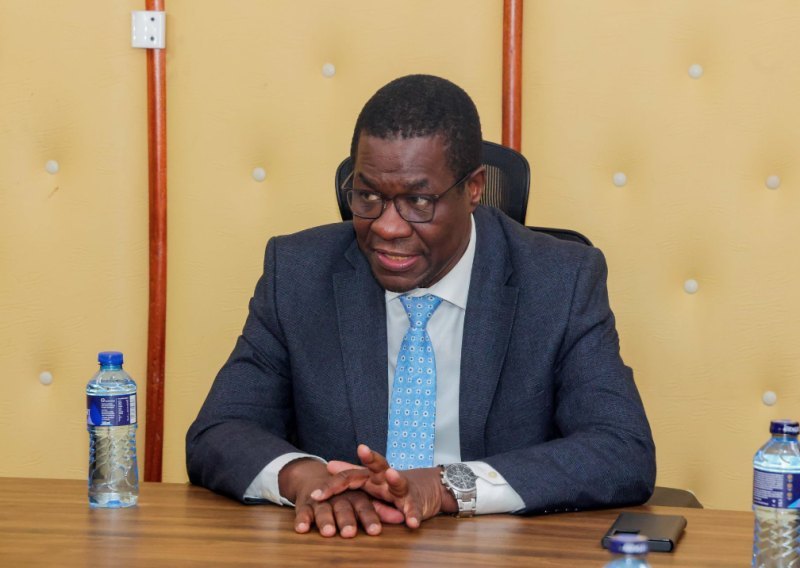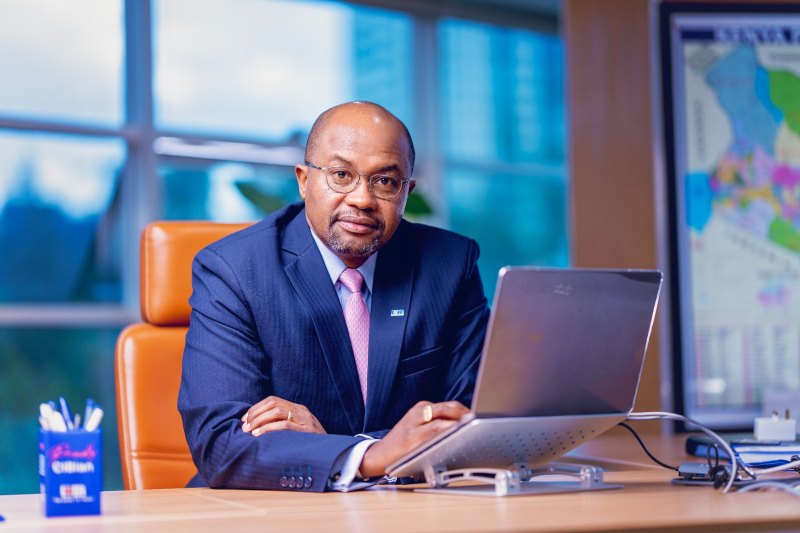
FRESH from securing regulatory approval, new CIB Kenya chief executive officer Tirus Mwithiga has unveiled an ambitious growth blueprint aimed at transforming the lender from a niche corporate bank into a major player in Kenya's banking sector.
CIB Kenya is targeting a leap from Tier III to a Tier II bank within the next few years, banking on aggressive expansion in retail lending, SME financing, technology upgrades and deeper trade links between Kenya and Egypt.
In an exclusive interview with the Star, e Star since taking over as Chief Executive Officer, Mwithiga outlines an ambitious growth strategy that could see the lender triple its market share while maintaining profitability.
The veteran banker, brings more than 35 years of experience across East Africa and international markets, having worked for NCBA and Barclays (now Absa).
The bank, a subsidiary of Commercial International Bank (CIB) of Egypt, posted its strongest-ever performance last year, growing assets by more than 40 per cent and expanding its loan book by 68 per cent.
CIB Kenya is coming off its strongest financial performance since entering the Kenyan market, having posted record profitability, strengthened its capital base to Sh5.3 billion, expanded its loan book by 68 per cent and grown total assets by more than 40 per cent in 2025.
CIB Kenya posted 40 per cent asset growth and 68 per cent lending growth last year. What drove that performance?
A major driver was our ability to leverage the strength of our parent bank in Egypt. Through our Africa Desk, we were able to structure deals, provide trade finance and access competitively priced dollar liquidity.
We grew strongly across manufacturing, trade, agriculture and financial services. Tea exporters were a particularly important segment because Egypt imports about 98 per cent of its tea from Kenya.
At the same time, we reduced exposure to some government securities positions and redirected that liquidity into productive lending opportunities.
The bank wants to triple its size and move into Tier II status. How realistic is that target?
Our market share is currently about 0.3 per cent. To qualify as a Tier II bank, we need to exceed one per cent market share.
If we maintain the pace of growth we achieved last year, it is possible to triple the size of the business within two years. Of course, the market is also growing, so we must continue expanding faster than the industry. For now, our focus is on organic growth rather than acquisitions.
What are the main pillars of your growth strategy?
There are four. First is retail banking, particularly consumer banking and SMEs. Second is corporate banking, where we already have a strong position. Third is technology, including investment in a new core banking platform. Fourth is our people, ensuring we attract and retain top talent. These pillars will be supported by stronger brand visibility and social impact initiatives.
Many banks see retail banking as crowded and highly competitive. Why is CIB doubling down on it?
We believe there is still significant opportunity, particularly in SMEs and the middle-income consumer market. For SMEs, we are focusing on cash-flow lending. Many businesses struggle to access credit because they lack traditional collateral. Our approach is to look more closely at cash flows and business performance rather than relying solely on physical security.On the consumer side, we believe we can compete through innovative products, digital services and competitive pricing.
Which retail segments are most attractive to the bank?
SMEs remain the biggest opportunity because they drive much of Kenya's economy and continue to face a financing gap. We also see opportunities in payroll lending, affordable housing finance and consumer banking. Mortgage penetration remains very low in Kenya, but affordable housing programmes are creating a new opportunity for banks to provide financing at more accessible price points.
Kenya's non-performing loan ratio remains elevated. Doesn't expanding retail lending increase risk?
Not necessarily. Today, lending decisions are increasingly data-driven. Credit referencing, analytics and risk assessment tools allow us to understand customer behaviour much better than before.We also intend to build lending relationships through ecosystems. If we bank a corporate client, we can serve its employees and distributors, creating a lower-risk lending environment than lending to unknown customers.
What role does
the Kenya-Egypt trade corridor play in your strategy?
It remains a major focus. Trade between Kenya and Egypt is worth approximately Sh71 billion annually. Kenya exports tea, coffee and flowers, while imports include steel, paper, sugar and manufactured goods.Trade finance is an area where we believe we can create significant value because it is efficient for both the customer and the bank.
Is the bank planning to expand its branch network?
Selectively. We currently operate seven branches and may increase that to between 10 and 15 over the next few years. However, the future is clearly digital. Branches will primarily serve as relationship and business development centres rather than transaction hubs. Most new investment will be directed towards digital channels.
What technology
investments are planned?
We are implementing a new core banking system that aligns with the platform used by our parent bank in Egypt. This will be the largest technology investment the bank has made since entering Kenya. The upgrade will improve customer service, product innovation, operational efficiency and system stability. It will also support digital account opening and faster onboarding of customers.
How is the bank
approaching artificial intelligence?
AI is already becoming embedded in banking operations, whether in fraud monitoring, transaction analysis or customer service. The real opportunity is using AI to improve efficiency and decision-making while maintaining strong controls around data privacy and governance. As we modernise our technology stack, we will be better positioned to leverage AI-driven insights to improve customer experience and risk management.
CIB Kenya recently exceeded regulatory capital requirements. Does that mean further capital injections are unnecessary?
We ended last year with capital of about Sh5.3 billion, ahead of regulatory requirements. Our preference is to fund growth through profitability and retained earnings. However, we have a committed shareholder with the capacity to inject capital whenever necessary to support expansion. Any future capital injection would be intended to accelerate growth, not to rescue the business.
What would success look like three years from now?
I would like to see CIB Kenya move from Tier III to Tier II status and establish itself as a much stronger player in the market. If we can achieve that while continuing to grow profitably and serve customers better, I would consider that a significant success.