Senate rejects bid to allow citizens to recall President
The lawmakers ruled that such a move would violate the Constitution
by JULIUS OTIENO
Audio By Vocalize
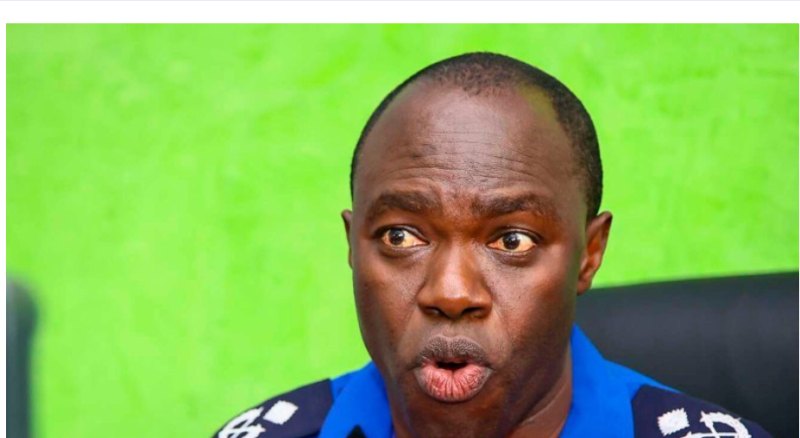
Senate JLAC Committee chairman Hillary Sigei
A Senate committee has rejected a proposal seeking to
empower Kenyans to directly recall the President and county governors through a
citizen-initiated process.
The lawmakers ruled that such a move would violate the
Constitution and could only be introduced through a constitutional amendment
approved by a referendum.
The Senate Justice, Legal Affairs and Human Rights Committee
dismissed a petition by Nakuru-based activist Laban Omusundi seeking the
recall.
Omusundi had urged Parliament to enact legislation creating
a legal framework allowing citizens to remove a sitting President or governor
through a recall vote.
The committee, chaired by Bomet Senator Wakili Sigei, concluded that Parliament lacks the legal authority to introduce such a
law because the Constitution already provides an exhaustive framework for
removing the holders of the two executive offices.
"The proposed legislation would contradict and
undermine the constitutionally prescribed removal procedures for the two
offices," the committee said in its report, recommending that the Senate
reject the petition.
The activist had argued that while the Constitution allows
voters to recall Members of Parliament and Members of County Assemblies, it
does not provide ordinary citizens with a similar avenue to remove the
President or governors.
He further claimed that the existing impeachment process has
become susceptible to political influence, patronage and party interests,
leaving citizens without an effective mechanism to hold the Executive directly
accountable.
The petitioner proposed legislation establishing clear
thresholds for collecting signatures, verification by the Independent Electoral
and Boundaries Commission, safeguards against abuse and recognition of
citizens' sovereign power to recall elected executives.
The committee received submissions from the Office of the
Attorney General, the IEBC, the Kenya Law Reform Commission and the
County Assemblies Forum.
Senators concluded that the Constitution
deliberately assigns the responsibility of removing the President and governors
to Parliament and county assemblies.
According to the committee, Articles 142 to 146 of the
Constitution provide an exhaustive framework governing the tenure and removal
of the President, while Article 181 and the County Governments Act prescribe
the removal of governors through impeachment.
"The Constitution establishes an exhaustive and closed
framework for the tenure and removal of the President," the committee
observed.
It added that introducing a citizen-led recall process would
fundamentally alter the country's constitutional architecture on executive
accountability.
The Attorney General's office told the committee that any
attempt to establish such a mechanism through ordinary legislation would be
unconstitutional.
Instead, it argued that the proposal would require amendment
of the Constitution under Articles 255 to 257, a process that includes approval
by Kenyans through a referendum.
The committee agreed, noting that introducing a recall
mechanism for the President would affect the constitutional structure of
executive authority and therefore falls among matters that must be subjected to
a referendum.
While supporting greater public accountability, the IEBC
acknowledged that the Constitution does not currently provide for recall of
executive office holders and observed that impeachment remains the only
constitutionally recognised avenue for removing a President or governor before
the end of their term.
The electoral commission nevertheless proposed that
Parliament consider enacting a comprehensive law harmonising impeachment
procedures and strengthening civic education to help citizens understand
constitutional accountability mechanisms.
The Kenya Law Reform Commission similarly maintained that
Parliament cannot create a recall law for the President through ordinary
legislation but suggested that lawmakers could consider amending the County
Governments Act to establish a citizen-initiated recall framework for
governors, subject to constitutional safeguards and public policy
considerations.
The County Assemblies Forum warned that allowing direct
citizen recalls without adequate safeguards could expose the President and
governors to endless political campaigns and destabilise government.
The forum argued that county assemblies and Parliament play
a critical constitutional oversight role and should not be bypassed on
the assumption that they are politically compromised.
While acknowledging that the petition raised important
questions about democratic accountability and citizens' participation in governance, the Senate committee concluded that the Constitution already provides sufficient mechanisms for removing executive officeholders through
impeachment.
It also noted that the Senate is currently considering the
Referendum Bill, 2026, which seeks to establish the legal framework for
conducting referendums in Kenya.
The committee has now recommended that the Senate formally
reject the petition, maintaining that any proposal to introduce a
citizen-initiated recall of the President or governors must first be pursued
through constitutional amendment rather than ordinary legislation.
This is premium content
Subscribe to Continue Reading
Help us continue bringing you unbiased news, in-depth investigations, and diverse perspectives. Your subscription keeps our mission alive and empowers us to provide high-quality, trustworthy journalism. Join us today to make a difference!