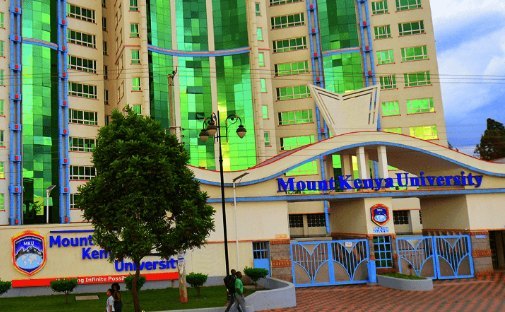
 Mt Kenya University/FILE
Mt Kenya University’s School of Medicine has emerged as the top-ranked medical training institution in Kenya following a rigorous regional inspection conducted by a joint panel of technical health experts drawn from across the East African Community.
The school scored 82 out of a possible 100 points, placing it comfortably ahead of its peers and earning an unequivocal declaration of compliance with the EAC’s demanding regional standards, a milestone that now entitles its graduates to reciprocal recognition across all EAC partner states.
The 3rd Joint Inspection of Medical and Dental Schools and Teaching Hospitals in Kenya was carried out between 2nd and 6th March 2020, following a directive issued at the 19th Ordinary Meeting of the EAC Sectoral Council of Ministers of Health, which convened in Nairobi in late October 2019.
Another inspection is set to be conducted later this year.
The concluded exercise brought together regulatory experts from national medical and dental practitioners’ councils across the partner states, tasked with assessing whether institutions meet the standards and guidelines governing medical and dental training in the region.
Maseno University School of Medicine came in a close second with 81 per cent, while Kisii University School of Health Sciences rounded off the top three with 80 per cent.
Together, these three institutions were declared fully compliant, meaning that upon graduation, their students shall be eligible for recognition and practice in any EAC member state, which is a significant achievement given the increasing demand for cross-border health workforce mobility in the region.
The report said the three minimum requirements for training of medical/dental students as provided in the East African Community, Regional Guidelines for Inspection and Recognition of Medical Schools and Teaching Hospitals in EAC Partner States.
"Therefore, upon qualification, their graduates shall be eligible for reciprocal recognition within the EAC Partner States as set out in the Mutual Recognition Agreement,” the report said in its recommendation for Mt Kenya University, School of Medicine .
The inspection assessed institutions across several critical areas, including governance and management, academic programme design, human resource capacity, student affairs, physical infrastructure, research and innovation, as well as monitoring and evaluation systems.
Prior to the physical visits, institutions were provided with standard self-assessment tools, which they were required to complete and submit before inspectors arrived.
On-site, the teams then held meetings with university management, teaching hospital administrators, academic staff, and students, cross-checking declared information against observable conditions on the ground.
Several prominent universities were found to have only partially complied with the required standards.
The University of Nairobi’s School of Medicine scored 58 per cent, while Kenyatta University’s School of Medicine achieved 54 per cent.
Moi University was assessed in two disciplines, attaining 61 per cent in its School of Medicine and 54 per cent in its School of Dentistry.
The University of Nairobi’s School of Dental Sciences fared comparatively better at 68 per cent, though still short of the full compliance threshold.
Other partially compliant institutions included JKUAT School of Medicine at 66 per cent, Kenya Methodist University School of Medicine at 59 per cent, Egerton University Faculty of Health Sciences at 54 per cent, and Masinde Muliro University School of Medicine at 53 per cent.
The starkest finding of the entire exercise, however, was reserved for Uzima University College Medical School, the only institution declared outright non-compliant, having scored just 49 out of 100 points.
The inspection team identified a catalogue of serious deficiencies: department heads did not meet EAC-prescribed qualifications; the programme relied predominantly on part-time lecturers, in direct violation of regional guidelines; lectures were being conducted in an incomplete building that posed active safety hazards for students and staff; key basic sciences departments had not been established; and student enrolment had exceeded the numbers approved by the Kenya Medical Practitioners and Dentists Council.
In light of these failures, the inspection team issued an unambiguous recommendation that Uzima University College Medical School should close its medical programme immediately, with continuing students to be redistributed to other compliant schools.
The Kenya Medical Practitioners and Dentists Council and the Commission for University Education were specifically charged with overseeing this redistribution to protect the academic futures of the affected students.
The results of this inspection are expected to prompt urgent reforms across the sector.