The other night, I received an unexpected M-Pesa deposit. This lump sum, which wasn’t accompanied by the usual text message saying where it had come from, paid off my almost depleted Fuliza, and more than quadrupled my net worth.
Of course, as I don’t believe in miracles or fairy tales, I was immediately suspicious. I had been out earlier that evening, chatting with an acquaintance about the increase in various types of fraud.
We had also been discussing how certain people appear to become multi-millionaires and billionaires overnight, but can’t show how their outrageous fortunes were arrived at.
At this point, I must mention that my pal is a very tech-savvy fellow. He kept dipping into his laptop and tapping away during pauses in our conversation. This point will become somewhat relevant shortly.
After our conversation, I went home and was reflecting on the various life choices that have brought me to my current sorry financial state, when the aforementioned, seemingly untraceable M-Pesa deposit appeared.
My first thought was that someone might have sent money to the wrong number, and that they would soon be in touch about a reversal.
If you have been around the block a few times, you surely have heard about the scam where a fraudster sends money to your line by mistake, then calls or messages you demanding a refund. If you send the money back manually, they instantly intercept the transaction, reverse the original funds through Safaricom, or steal your PIN.
I sat up for an hour or so, waiting for any message or phone call about the cash, but none came, so I decided to sleep on it and visit my local Safaricom office in the morning.
When I awoke the following morning, the cash was still on my phone, and I decided to stash it, minus the Fuliza amount, in my M-Shwari account. I did this after realising some debit orders had gone off in the middle of the night, and if I had to return the cash, I would have to come up with a few bob to manage the shortfall.
In the meantime, I checked my M-Pesa statement and found a reference to the cash that had come in the night before. However, this reference did nothing to illuminate the matter. If anything, it caused me more confusion.
The statement showed that the money had come from Pochi la Biashara and thanked me for using the service. The thing is, I don’t have a Pochi la Biashara. However, I found another message showing the cash had come from a bank where I have an account.
None of this made any sense to me, but I would get to the bottom of the story if it were the last thing I did. I even began to suspect my tech-savvy pal of having hacked my phone, seen the sorry state of my finances, and, in the spirit of a fairy godfather, decided to hack into my bank’s accounts and bless me with some cash.
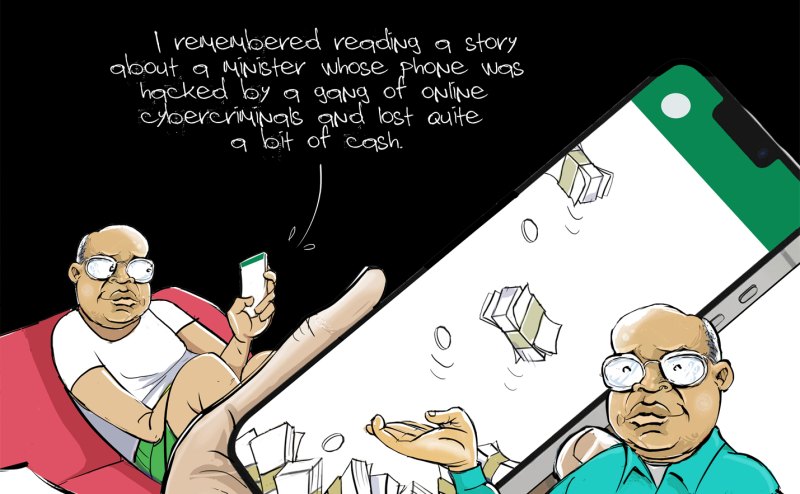
I jumped to this conclusion because I remembered reading a story about a minister whose phone was hacked by a gang of online cybercriminals and lost quite a bit of cash.
Anyway, just as I was getting ready to head to the bank to find out what was going on, I received another deposit in my M-Pesa, this time a smaller one than the night before. Fortunately, this deposit was accompanied by a message indicating it came from a friend of mine. However, as I wasn’t expecting money from them, I rang them up to ask what was happening.
When we spoke, my friend apologised for not having been in touch before sending the second tranche of cash. When I mentioned the earlier mystery injection, my friend explained that it came from a mutual friend who is our WhatsApp group treasurer and asked me to do some shopping for them here in Malindi. The second tranche was a top-up.
Finally, even though it was a bit of an anti-climax, the mystery of the ghost funds was cleared up. I had not been the victim of a manual refund scam, nor had I been the beneficiary of cybercrime. It was all just a simple breakdown in communication.
That said, if you have money to throw away, feel free to chuck it in my direction.