Currently, the
Kenya Kwanza government is implementing the CBE system that was initiated by
the Jubilee administration. The system is technology-oriented and promotes, as
well as relies on the IT skills of learners.
It is generally accepted that the
transition was rushed and not well planned by the Ministry of education then
under the leadership of Fred Matiang’i. The teachers were not retooled and
reoriented.
There was no concomitant investment in the necessary infrastructure
to deliver the curriculum. More painful is inadequate or total absence of
relevant instruction materials for use by teachers and learners.
Therefore,
access to quality education under this system is already compromised as before
and remains the biggest challenge. If not addressed effectively, the
instability in the education sector as witnessed by violent protests by
students will continue.
The current wave
of unrest in schools must push the country to reevaluate the system and
establish a policy for posterity instead of short-term solutions and interests.
President William Ruto has made some innovative decisions and taken bold steps
in addressing national challenges. The education system requires such
innovation and boldness.
The new policy should out of necessity offer a radical
shift rather than token revisionism. While there is nothing wrong in borrowing
from best practices, it must be homegrown and provide long-term tangible
solutions.
Otherwise, the inequalities will continue to fuel resentment and
reactionary responses. The inequalities and disparities have a historical
grounding through official policy orientation.
Formal education
as is known today was introduced into the country by the European missionaries
in the late 19th century. While at first within the Rabai Mission
community it was limited to evangelisation through Bible study, it was a
preparatory journey for the project of colonisation.
The Western powers had sat
among themselves to partition Africa into their respective spheres of
influence. The Berlin conference under the stewardship of Otto von Bismarck,
was convened to rationalise the distribution of the vast wealth in the
continent.
The invitations
were carefully and strategically made to make the process peaceful. The Scramble
for Africa had ostensibly been exciting and had the high potential of turning
into a bloody large-scale war.
It was held from November 15, 1884, to February
26, 1885 and the summit brought together 14 Western powers and the United
States to regulate European colonisation and trade in Africa, but pointedly
without any African representation.
Therefore, the attendant education system
provided to the natives was modelled on what existed in the metropoles but
modified to serve the expedient interests of the white settlers.
The colonial
system of education in Kenya in the period of 1895–1963 was a racially
segregated structure designed to serve British interests.
It provided well-funded,
academic education to Europeans and Asians, while limiting Africans to
vocational and agricultural training intended to produce a subservient labour
force for the colonial economy.
The Fraser
Commission of 1908 formally recommended the segregation of the education
system along racial lines. The education system was divided into three distinct
tiers. European children received high-quality, academically-oriented schooling
aimed at preparing them for leadership roles.
Asian (Indian)
children received technical and commercial training to fit into the middle-tier
of the economic hierarchy. African education was deliberately limited to basic
literacy (the ‘3Rs’ of reading, writing and arithmetic) and practical manual
skills such as carpentry, masonry and basic agriculture.
The provision of these
instructions were led by the church leaders in the hierarchy of the white
missionary assisted by subordinate African catechist.
This was later formalised
by the Phelps-Stokes Commission of 1924
that reinforced the push for vocational and industrial education for Africans,
aligning with colonial economic demands.
The colonial
education system thus had exploitative
intent. The colonial administration actively restricted Africans from
pursuing higher education or leadership roles, fearing that educated Africans
would threaten white settler dominance.
This planted the early seeds of revolt
to the education system in Kenya. Frustrated by the poor quality of mission
education and restricted access, African communities and independent churches
started their own independent schools.
These provided
unhindered academic and cultural education, which later formed a vital base for
political activism. Majority if not all of these independent schools were
within the white highlands.
The level of segregation and intensity of colonial
control in central Kenya was higher than in the rest of the country. It is
therefore not coincidental that the resistance to colonial administration and
agitation for independence in the region took to guerrilla tactics and virulent
warfare.
The quest for freedom in the region was more exclusive and
disruptively focused than cooperative and inclusive. The leaders who were
largely products of the independent schools were inward looking and least concerned
about the rest of the colony.
When
independence was attained, these three systems were fused into one national
system. However, the cultural differences remained distinct in the manner of
traditions and practices in these schools.
The new nation found itself with a
stratified system that promoted segregation by design in heritage and default
in practice. There existed three strands of schools in the country.
The
government schools which still practised covert racial exclusion, mission
schools which overtly practised faith segregation and harambee schools which
had emerged from the independent and community sponsored schools.
For boys,
Nairobi and Lenana schools were generally reserved for the sons of white
settlers who remained behind to continue with their businesses under the new
political leadership.
Others had been
requested to support the new government administrative structures since there
not enough qualified local Africans to take up the roles.
Jamhuri High
continued to be dominated by the Asian community. Nairobi
School was originally founded in 1929 as the Prince of Wales School. It was
renamed to its current name shortly after Kenya's independence.
Lenana School was established in 1949 as the
Duke of York School. It was renamed to its current name in 1969 to honour the
Maasai Paramount Chief, Laibon Lenana.
On the other hand, Jamhuri High School was founded in
1906 as the Railway Educational Centre.
It was later renamed the Government
Indian School and the Duke of
Gloucester School, before adopting Jamhuri (Swahili for republic) after
independence in 1963. For girls, Kenya High fit the purpose.
The communities
served by these schools were residents of Nairobi and the major administrative
and commercial towns of the country.
The other big
government schools became designated and given provincial status. These
institutions had been set up by the colonial administration in response to the
necessities that arose from the World Wars I and II. They were also non-denominational
and operated independently of any religious organisation, doctrine, or faith.
They promoted secular education and run curriculum that focused strictly on
academics, science and critical thinking. These schools did not require
religious affiliations for admission, staffing, or daily operations, which made
them inclusive for students from all belief backgrounds.
They were known as government
African schools and were established in each provincial region except
ironically in the Northern Frontier District.
Kapsabet School was established in 1908 as a primary school. It was
later transformed and expanded as the government African school in 1925.
Nakuru School
was founded in 1927. Kakamega School was established in 1932 as government
African school Kakamega same year as Shimo la Tewa, while Kisii School begun
operations in 1934 as government African school soon after Kagumo High School
which was established in 1933.
Kangaru
School opened in 1947. These institutions were not resourced at the same level
with their counterparts in Nairobi. Consequently, they could not compete favourably
in the labor market.
The boys who enjoyed better facilities were those under
missionary-sponsored schools. However, they faced discrimination in admission
on the basis of faith except for Alliance High School.
It is
instructive to note that the colonial government and the missionaries had no
school dedicated to African girls until 1947. Alliance Girls High School
originally called African Girls High School was founded in 1948 by the Alliance
of Protestant Missions. It was for the first time in Kenya's colonial history,
that African girls were admitted to a formal secondary.
This demonstrates that
the discrimination was not only racial but also gender-based. Maseno, Alliance
and Mang’u schools pioneered this cluster. The stature and status of mission
schools depended entirely on the denomination sponsor.
So much so that even
within the Catholic Church, the resource outlay of any of their school
reflected the wealth of the sponsoring order.
The sponsorship
would largely influence the support given to students in their respective
career placement and progression within the labour market. This has further
entrenched inequalities within the education system. Through commissions, the
successive governments have not halted this injustice.
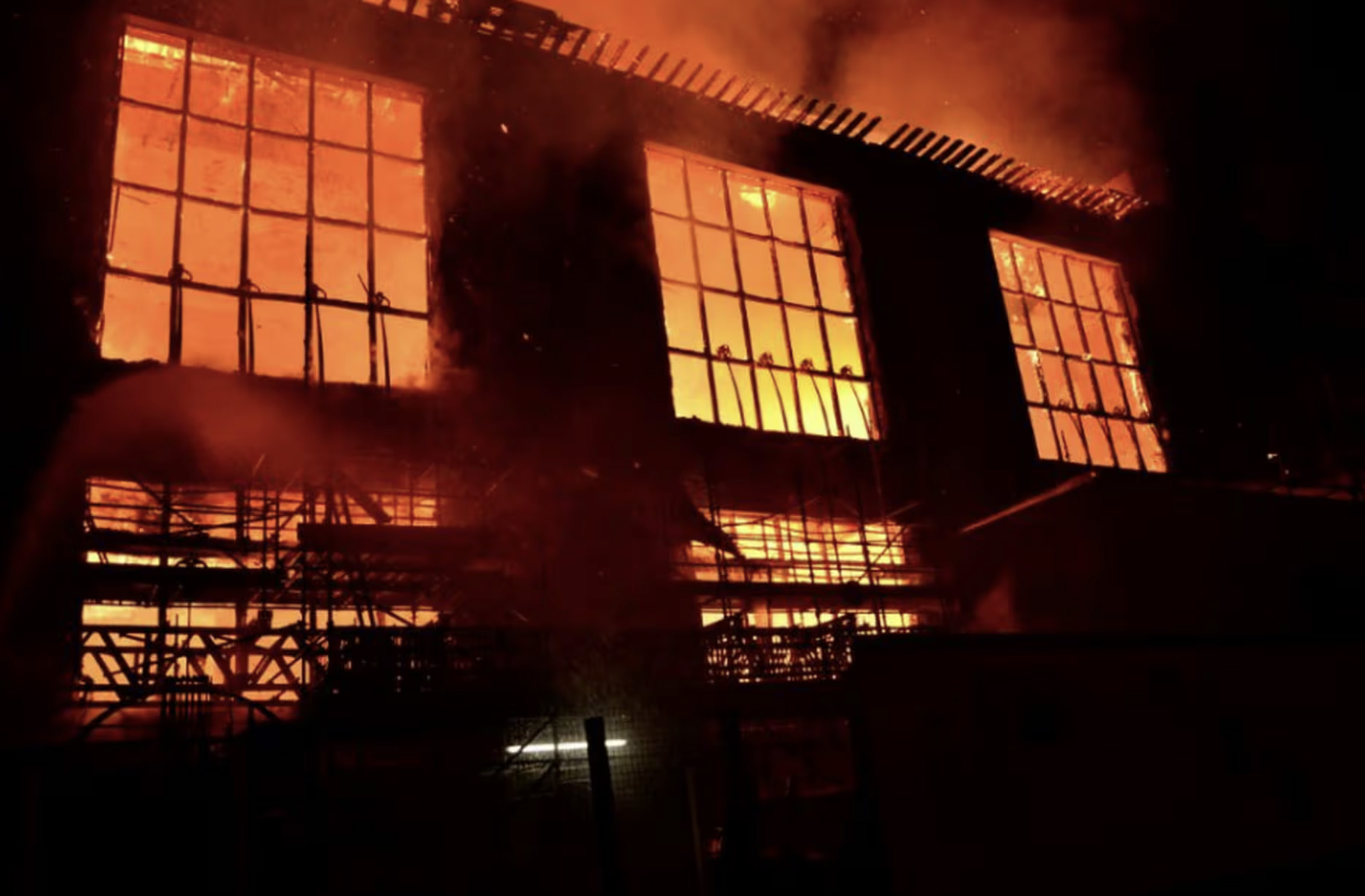
The education policies
after independence were guided by a reactionary philosophy rather than long-term
interests. The 7-4-2-3 system sought to provide skilled labour rapidly to
address the increasing demands of national development.
It also intended to
foster national unity and patriotism by ensuring that students had
opportunities to attend any schools of their choices across the country. The
8-4-4 continued in the same trajectory albeit with the infusion of modest
practical skills in the body curriculum.
The categorisation
that created national schools from the existing government and mission schools inadvertently
reinforced the social stratification and national inequalities.
By default, and
out of historical circumstances, majority of these elite schools were
concentrated around the Mt Kenya and Rift Valley regions. The government
funding policy favoured heavy investment in the professional human resource and
infrastructural capacity of these institutions.
Conversely, the
harambee and district schools which had majority of students relied almost
entirely on communities to finance development and staffing. The ensuing tribal-based
politics promoted policies of exclusion and discrimination in government
resource allocation.
When the government under Narc introduced the free primary
education, the communities with well-developed schools, witnessed higher
transition rates than the rest of the country.
The inequalities and injustices
continued to grow and the gaps in the social strata widened further. The
disparities became fodder for inflammatory politics and fuelled resentment to
the institutions by the students.


 The education policies after independence were guided by a reactionary philosophy rather than long-term interests /FILE