


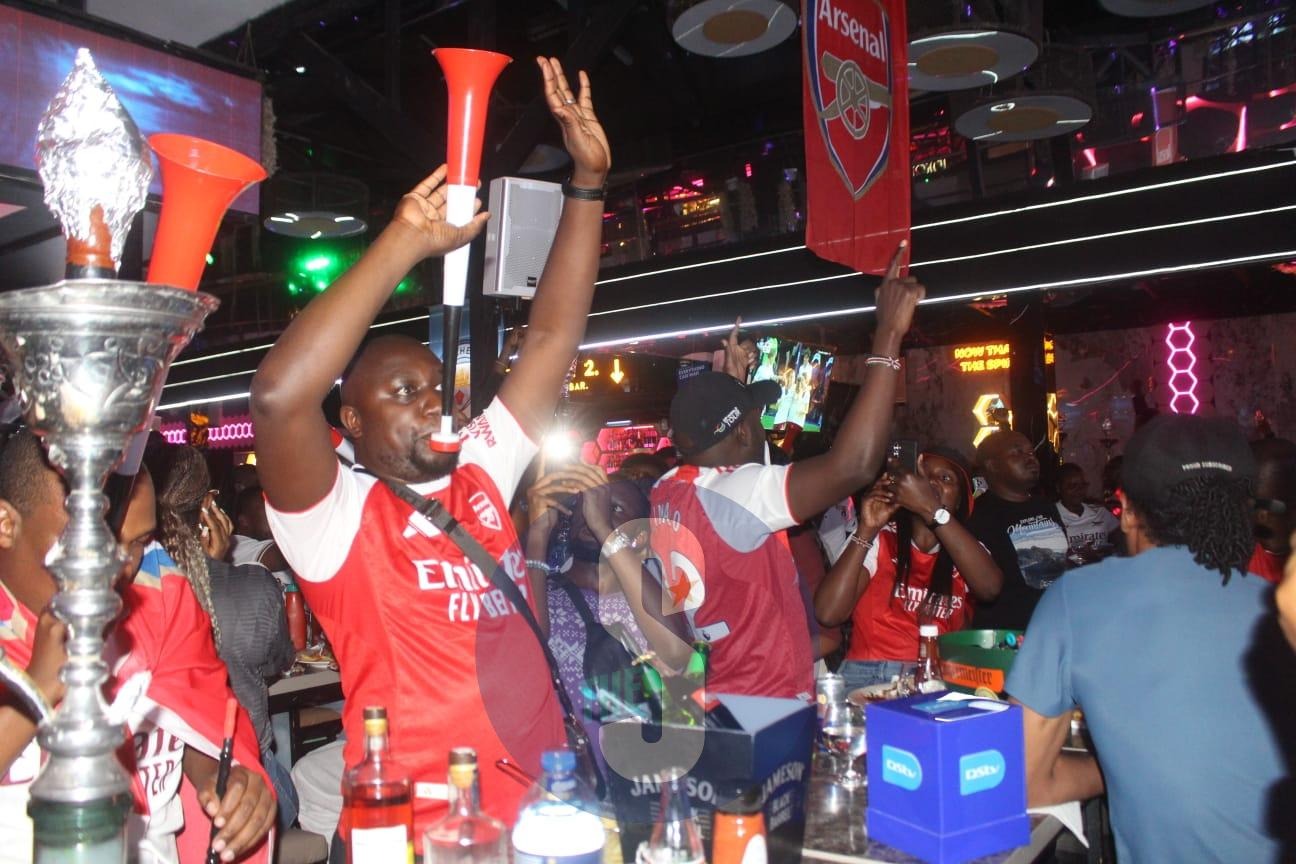
From wearing Arsenal jerseys in everyday life, to leading church services in club colours and proudly displaying branded merchandise on the streets, Arsenal Football Club has grown beyond being just a football team for many fans in Africa; it has become a cultural identity and a community.
Across countries such as Kenya, Uganda, Nigeria and Ghana, millions of supporters have embraced the English Premier League side, turning match days into social gatherings and shared emotional experiences that transcend sport.
Founded in 1886, Arsenal spent much of its early history as a predominantly white, English club. For decades, English football itself remained largely insular, with limited representation of African and black players at the highest levels of the game.
However, a major shift began in the mid-1990s following the arrival of Arsène Wenger as manager in 1996. Wenger transformed the club’s recruitment philosophy by scouting talent globally, including Africa and the Caribbean, bringing in players who would redefine both the team and its global appeal.
Among the early signings was Liberian striker Christopher Wreh, alongside other influential black players such as Patrick Vieira and Thierry Henry, whose success at the club helped reshape perceptions of African and black footballers in Europe.
As Wenger built a diverse and dynamic squad, Arsenal began fielding teams with multiple players of African descent or African nationality, something that resonated deeply with fans across the continent.
New School professor Sean Jacobs explained that visibility played a powerful social role for Arsenal in Africa.
He said football culture in countries such as Uganda and Kenya has created strong community bonds around the club, where fans collectively follow matches, contribute to shared viewing arrangements, and build social networks around their support for Arsenal.
“English football was very insular. England wasn’t a friendly place for immigrants. The idea was African players; you did not know who they were or their abilities. When Arsène Wenger became manager of Arsenal in 1996, he signed players like Christopher Wreh from Liberia. He also brought in players such as Patrick Vieira and Thierry Henry, among others. At times, Arsenal fielded teams where most players, except one or two, came from African countries or were black. Those changed perceptions,” he said.
Jacobs added that Arsenal’s popularity in Africa is also rooted in deeper social dynamics.
“People saw players who looked like them, who spoke like them, and shared similar styles and expressions. Football became a form of freedom and expression in contexts where people often lack other outlets, whether political or social,” he noted.
Beyond trophies, Arsenal’s long-standing presence in the Premier League and consistent participation in European competitions have helped sustain its visibility across African media and fan communities.
Today, the club’s influence in Africa extends beyond football performance. It is embedded in popular culture, fashion, and social identity, with fans using Arsenal merchandise as a symbol of belonging and pride.
For many supporters across the continent, Arsenal is no longer just a football club, it is a shared experience, a social network, and in many cases, a way of life.











![[PHOTOS] Red carpet in Pretoria as Ruto begins South Africa visit](https://cdn.radioafrica.digital/image/2026/06/abe3e750-6e5a-4394-a45c-899768be6240.jpeg)