


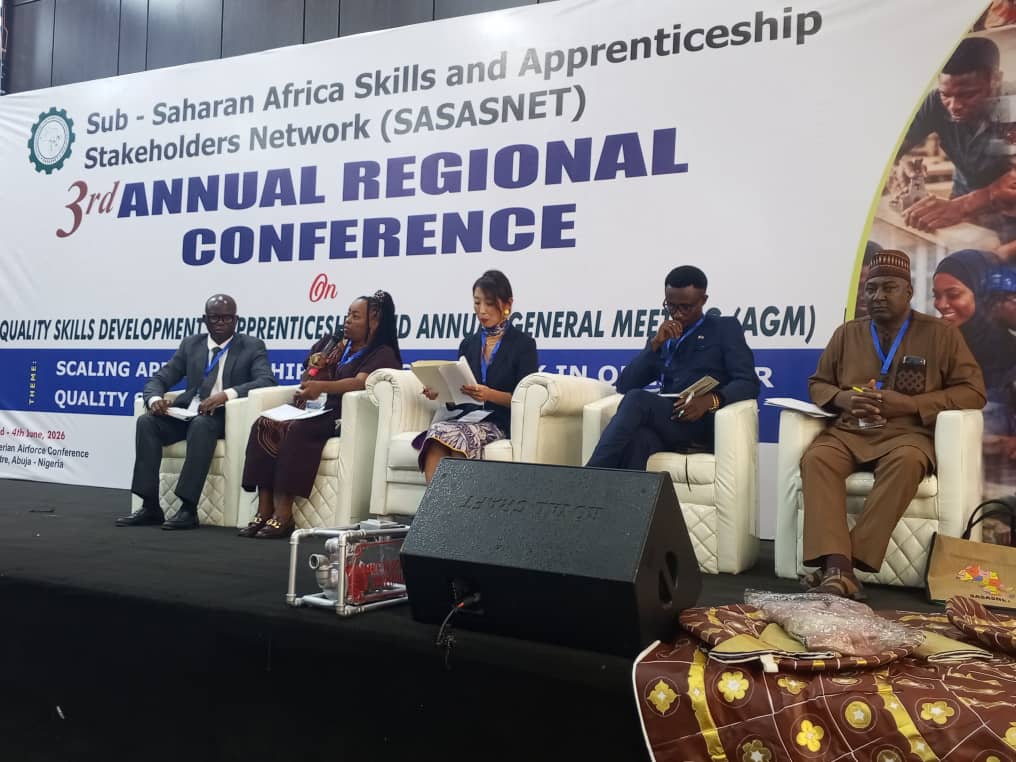
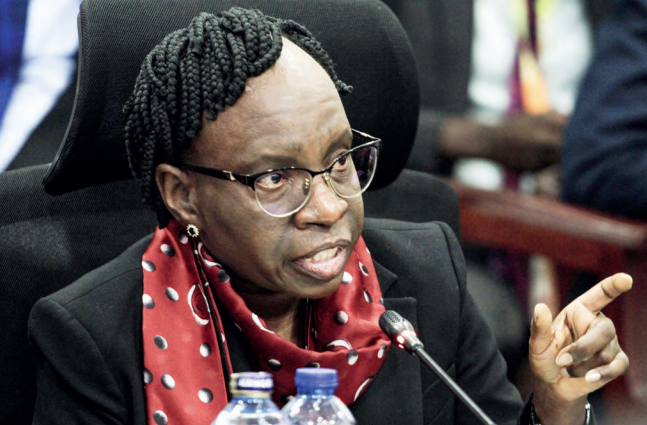
 Wanjiru Kariuki (second left) from State Department of Labour and Skills Development during the high-level ministerial panel session at the 3rd annual conference of SASANET in Abuja on June 3, 2026/COURTESY
Kenya has been elected to chair the Sub-Saharan Africa Skills and Apprenticeship Stakeholders Network (SASASNET), cementing the country's growing influence in skills development and apprenticeship reforms across the continent.
Labour Principal Secretary Shadrack Mwadime was unanimously elected chairman of the regional body during SASASNET's Annual General Meeting held in Nigeria on June 3, 2026.
His election places Kenya at the helm of efforts to strengthen apprenticeship systems, workforce development programmes and skills training initiatives across Sub-Saharan Africa.
Delegates from member countries endorsed Mwadime to lead the network as it seeks to promote quality apprenticeships and equip young people with skills needed to meet evolving labour market demands.
Kenya's delegation to the meeting was led by Secretary for Skills Development Wanjiru Kariuki and included Kenya National Federation of Jua Kali Associations (KNFJKA) Chief Executive Officer Wambua Nyamai.
As continental chair, Mwadime is expected to spearhead collaboration among African countries in advancing apprenticeship programmes aligned with International Labour Organisation (ILO) Recommendation 208, which provides a global framework for apprenticeship systems that are inclusive, demand-driven and anchored on decent work principles.
The election is expected to inject fresh momentum into ongoing efforts to strengthen apprenticeship pathways across Africa and ensure skills development programmes remain responsive to industry needs and the continent's broader socio-economic transformation agenda.
Speaking on the significance of the election, Kariuki attributed Kenya's elevation to a series of policy reforms that have positioned the country as a leader in skills development.
“It also reflects growing recognition of Kenya's leadership in promoting structured apprenticeships and reforms aimed at formalising the informal economy,” she said.
Among them is the National Work-Based Learning Policy, which seeks to transform traditional informal apprenticeships into quality apprenticeship systems that offer structured training and certification.
She also cited the National Policy on Recognition of Prior Learning (RPL), under which 48,383 individuals have so far received certification through formal recognition of skills acquired outside conventional education systems, including through informal apprenticeships and workplace experience.
Kariuki further highlighted the National Strategy for Transformation of the Informal Economy, a policy framework designed to gradually integrate informal enterprises into the formal economy.
The strategy targets a sector that currently accounts for nearly 84 per cent of Kenya's labour force and aims to promote decent work, improved livelihoods and inclusive economic growth.
The election took place alongside SASASNET's third regional conference, which brought together labour ministers, senior government officials, representatives of the informal sector, development partners and international organisations from across the continent.
According to Kariuki, the conference built on gains made during the Second Regional Conference hosted by Kenya in Mombasa in 2025.
The meeting attracted delegates from 24 countries and culminated in the adoption of the Mombasa Declaration, a landmark framework that continues to guide apprenticeship and skills development reforms across Africa.
Kenya's new leadership role is expected to strengthen its voice in shaping continental policies on skills development, youth employment and workforce readiness, while advancing efforts to build modern apprenticeship systems capable of supporting Africa's industrialisation and economic transformation ambitions.








![[PHOTOS] Red carpet in Pretoria as Ruto begins South Africa visit](https://cdn.radioafrica.digital/image/2026/06/abe3e750-6e5a-4394-a45c-899768be6240.jpeg)