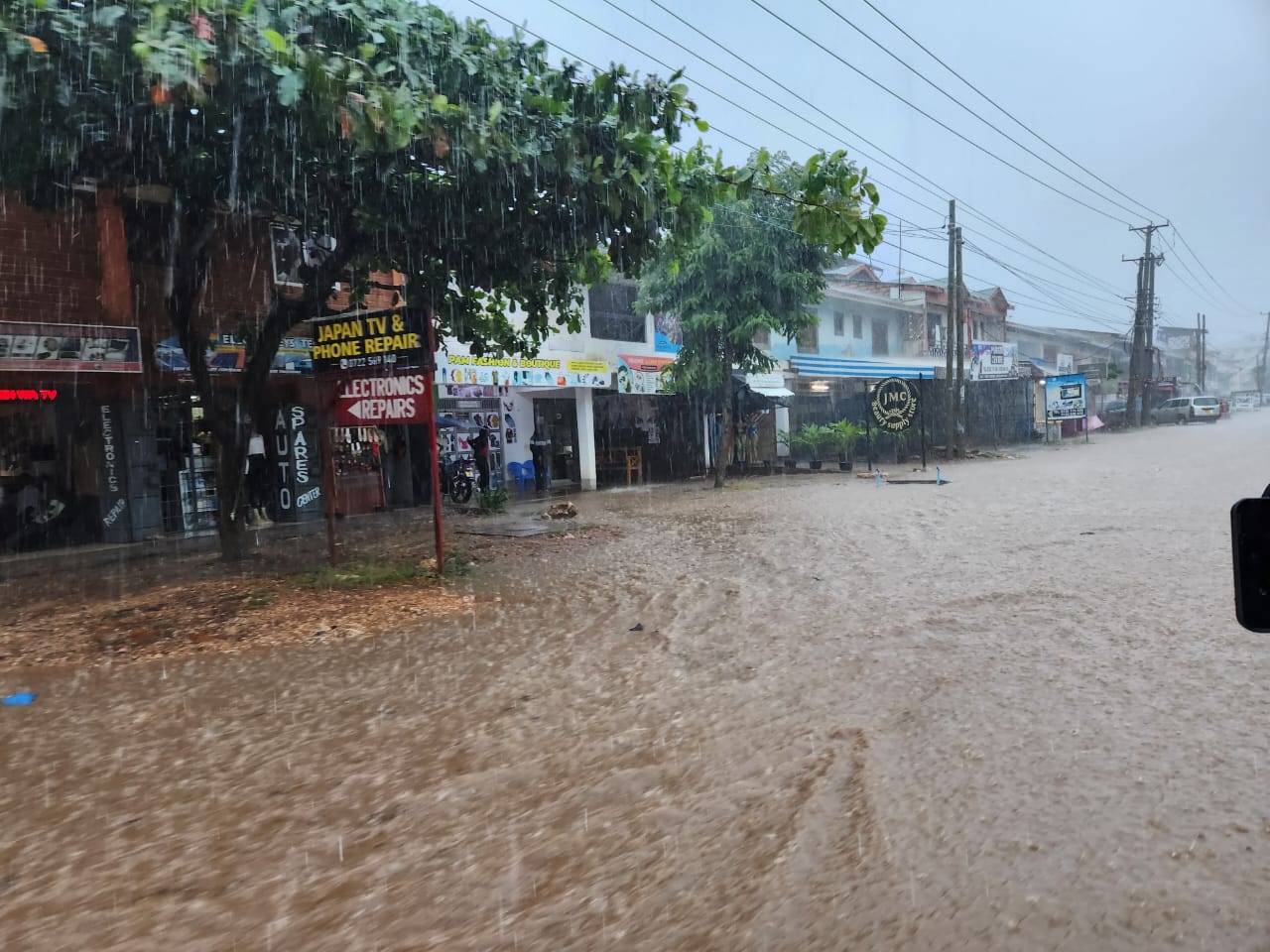
 The El Nino would cause flooding in Kenya/ FILE
The World Meteorological Organisation (WMO) has warned that El Niño conditions are developing in the tropical Pacific Ocean and could significantly increase the risk of extreme weather events around the world in the coming months.
In its latest El Niño/La Niña Update released in Geneva, Switzerland, the UN weather agency said there is an 80 per cent likelihood that El Niño conditions will emerge between June and August 2026, with the probability of the phenomenon persisting through November exceeding 90 per cent.
El Niño is associated with warmer global temperatures and disrupted weather patterns, including heavier rainfall and flooding in some regions and drought and heat in others.
For Kenya, El Niño is more commonly linked to enhanced rainfall and flood risk, particularly later in the year.
According to the WMO, unusually warm ocean waters in the tropical Pacific are fuelling the development of El Niño, a climate pattern known for increasing global temperatures and disrupting normal rainfall patterns.
“Warm ocean waters are fueling the development of El Niño. El Niño typically increases global temperatures and drives more extreme weather and rainfall patterns, and above-average temperatures are forecast nearly everywhere for June to August,” WMO said in a statement.
The agency said observations taken between late April and mid-May showed sea-surface temperatures in the central-eastern equatorial Pacific approaching El Niño thresholds.
Scientists also observed unusually warm subsurface waters, with temperatures exceeding 6 degrees Celsius above average, providing a substantial reservoir of heat that is driving surface warming.
Meanwhile, the Southern Oscillation Index, the atmospheric component associated with El Niño, is also showing signs consistent with the phenomenon's development.
United Nations Secretary-General António Guterres urged governments to treat the warning seriously, saying El Niño would intensify the impacts of an already warming climate.
"The science is clear: El Niño is arriving on our doorstep in the coming months with 90 per cent certainty. The world must treat it as the urgent climate warning it is," Guterres said.
"El Niño conditions will pour fuel on the fire of a warming world. Impacts will hit even harder, travel even farther, and cross borders with devastating speed."
He called for accelerated climate action, including a faster transition to renewable energy, protection of vulnerable populations and expansion of early warning systems.
WMO Secretary-General Celeste Saulo said the world should prepare for the possibility of a moderate to strong El Niño event.
"We need to prepare for a potentially strong El Niño event, which will exacerbate drought and heavy rainfall and increase the risk of heatwaves both on land and in the ocean," Saulo said.
Saulo noted that the most recent El Niño event in 2023-24 was among the five strongest ever recorded and contributed to record-breaking global temperatures in 2024.
"The WMO community will be carefully monitoring conditions in the coming months to inform decision-making by governments, humanitarian agencies and climate-sensitive sectors," Saulo said.
The organization said advance seasonal forecasts and early warning systems would be critical in helping countries reduce losses and protect lives and livelihoods.
While each El Niño event develops differently, WMO said the phenomenon is typically associated with increased rainfall in parts of southern South America, the southern United States, the Horn of Africa and central Asia.
Conversely, drier-than-normal conditions are often experienced in Central America, northern South America, the Caribbean, Australia, Indonesia and parts of southern Asia.
The agency said governments, humanitarian organisations, and sectors such as agriculture, health, energy and water management should begin preparations now to mitigate potential impacts as forecasts point to a strengthening El Niño in the months ahead.

![[PHOTOS] The new Ngong –Naivasha Road viaduct](https://cdn.radioafrica.digital/image/2026/06/64d4f771-4432-4aee-ba3c-2f304c4436ec.jpg)