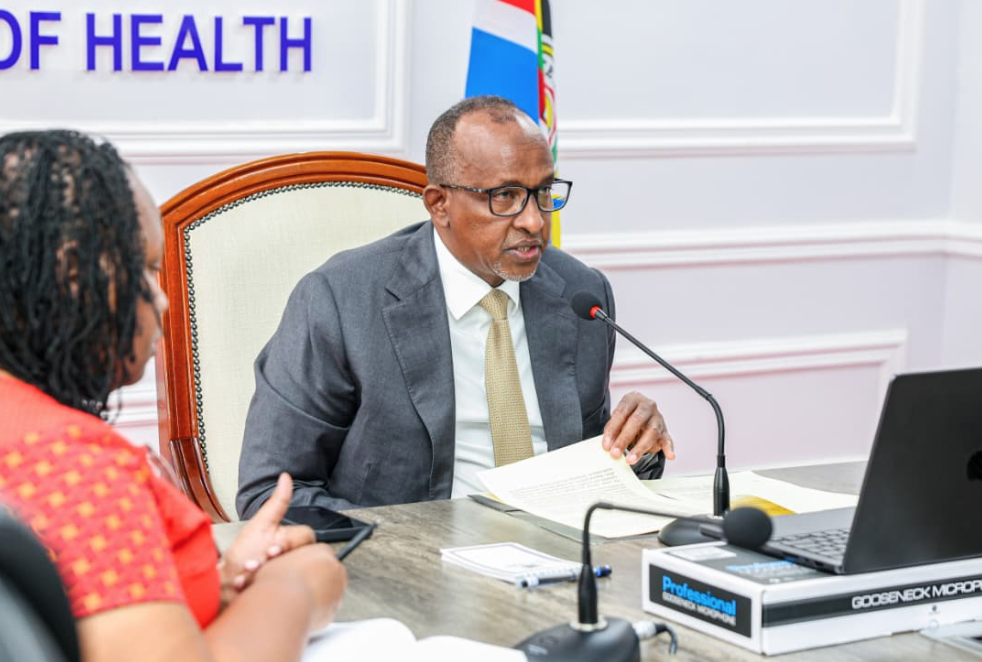
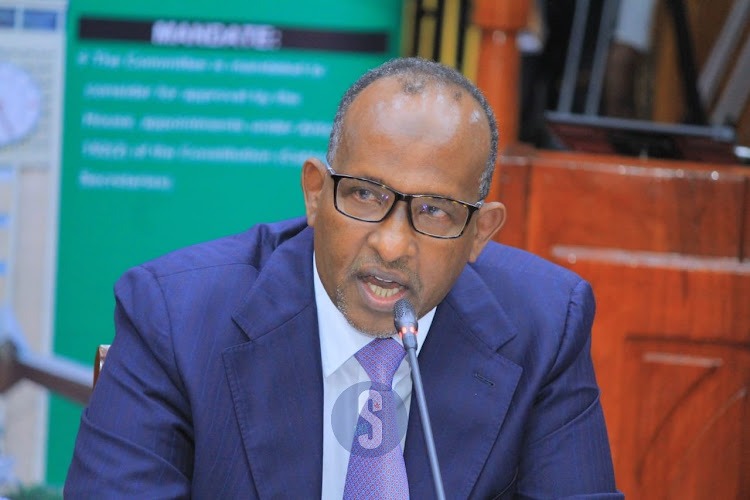
 Health Cabinet Secretary Aden Duale addresses Parliament on June 3, 2026/ SCREENGRAB.
Kenya has received 1,000 Ebola personal protective equipment (PPE) kits from the World Health Organization (WHO) as the government intensifies preparedness measures against a potential outbreak of the deadly disease.
Health Cabinet Secretary Aden Duale told Parliament on Wednesday that the kits have already been delivered to the country and are being strategically prepositioned to support emergency response activities.
"In infection prevention and control, the World Health Organization has provided 1000 Ebola PPE kits, which are available in the country and being prepositioned to support preparedness activities," Duale said.
He said the initial deployment is focused on key referral facilities and high-risk entry points across the country.
"Initial preposition is focused on strategic sites, including Kenyatta National Hospital, Kenyatta University Teaching Referral and Research Hospital, Mombasa, MTRH in Eldoret, and other high-risk points of entry," he said.
The announcement comes as the government strengthens surveillance and screening measures at airports and border crossings amid regional concerns over the spread of infectious diseases.
According to the CS, health screening systems have been reinforced through health declaration requirements, temperature checks, symptom assessments and referral protocols for suspected cases.
"The screening at our points of entry has been strengthened through health declaration requirements, temperature screening, symptom assessment and referral protocol," Duale said.
He added that thermal scanners, holding rooms and ambulance systems are being reviewed and activated at priority ports of entry.
"Thermal scanners, holding rooms and ambulance systems are being reviewed and activated in all our priority ports of entry, including major airports and high-volume land border points," he told MPs.
On laboratory preparedness, Duale said four laboratories have been designated to conduct Ebola testing.
These include the National Public Health Laboratory in Nairobi, KEMRI facilities and a mobile laboratory that has been deployed to support rapid diagnosis in areas considered at higher risk.
He noted that the laboratories are equipped for molecular diagnosis, while the mobile laboratory has been positioned to reduce turnaround time for testing in border regions.
However, the CS warned that despite the country's strong laboratory infrastructure, supplies remain limited.
"I wish to be very candid with this House. While laboratory capacity is strong, the current stock of specialised test kits, reagents and personal protective equipment is estimated to support only approximately the first 200 suspects."
He said the situation underscores the need for additional emergency financing and support from development partners to enhance testing capacity and sustain preparedness efforts.
The government has maintained that no Ebola outbreak has been reported in Kenya, but health authorities continue to monitor developments in the region and strengthen response systems to ensure the country can rapidly detect and contain any suspected cases.
Public health experts consider early detection, effective screening, laboratory capacity and adequate protective equipment among the most critical measures in preventing the spread of Ebola, a viral disease that can cause severe illness and has historically recorded high fatality rates during outbreaks.



![[PHOTOS] The new Ngong –Naivasha Road viaduct](https://cdn.radioafrica.digital/image/2026/06/64d4f771-4432-4aee-ba3c-2f304c4436ec.jpg)