FROM a family tailoring business to one of East Africa’s
most integrated textile manufacturing empires, Jaswinder “Jas” Bedi has spent
decades navigating the turbulence of African industry.
Bedi Investment controls the entire value chain from fiber to fashion
and employs over 2,000 workers, while supporting 16,000 local cotton farmers.
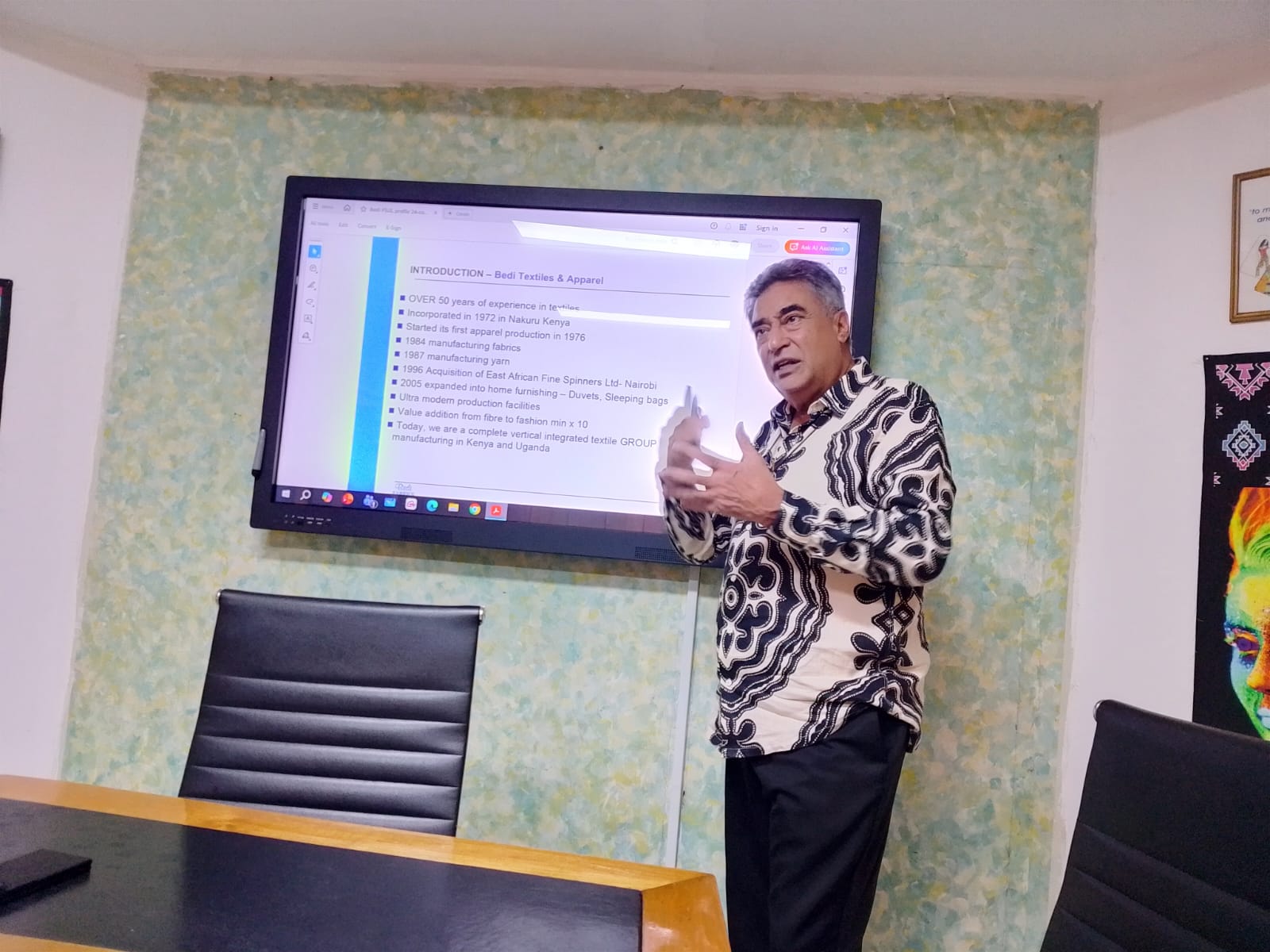
Incorporated in 1972 and headquartered in Nakuru, Bedi
Investments Limited is one of the largest vertically integrated textile and garment manufacturers
in Sub-Saharan Africa.
A manufacturer, investor
and influential business leader, Bedi has built his career on turning crises
into opportunities—from the rise of mitumba imports and global competition to
supply chain disruptions and shifting export markets.
As former chairman of the
Kenya Association of Manufacturers (KAM), Chairperson of the Kenya Private
Sector Alliance (KEPSA), and Vice Chairman of the East African Business Council
(EABC), he has been at the centre of debates on industrialisation,
competitiveness, regional trade and job creation.
He reflects on his entrepreneurial journey, the future
of Kenya’s manufacturing sector, East Africa’s industrial ambitions, and why
competitiveness remains the defining challenge for business and economic
growth.
You grew up in a family business that evolved
into one of East Africa’s leading textile manufacturing groups. What early
experiences shaped your entrepreneurial mindset?
The early growing-up experience was
listening to shop talk at the dinner table and quietly grasping knowledge
without any attempt
You studied textile technology in the UK
before returning to Kenya. At what point did you realise manufacturing would
become your life’s mission?
I was sent to the UK specifically to learn
about textiles as my family was embarking on a textile investment and thereby, I was clear that would be my life’s mission
The textile industry in Kenya has gone
through dramatic highs and lows over the last four decades. What kept you
committed to the sector when many others exited?
I looked at every crisis as an opportunity. The initial mitumba crisis meant we diverted our business to uniforms that are
not affected by mitumba, the Covid crisis meant we manufacture PPE, lack of locally sourced cotton meant we relocated this production to Uganda.
You have often spoken about seeing
opportunity in adversity. Was there a defining setback in your career that
fundamentally changed how you lead business?
I guess the defining setback was the influx of
mitumba, which meant either you export or perish.
Looking back, what leadership lessons did
you learn from transforming a family tailoring business into a vertically
integrated textile manufacturer?
Verticality started by cushioning the company
from low-quality local raw materials in search of high-quality export potential.
Bedi Investment has grown into a fully
integrated textile and apparel value chain employing thousands of workers and
cotton farmers. What has been the secret behind that growth?
There is no secret except securing the supply chain. That is the most important thing.
Your business spans spinning, weaving,
dyeing, garment production, and exports. Why was vertical integration important
for competitiveness?
Cotton and polyester are commodities that
have volatile spikes in price. Hence, to cushion the company from this price
volatility, verticality helps cushion this adversity.
Kenya’s textile sector was heavily
affected by cheap imports and market liberalisation. How did Bedi Investments
survive while many factories collapsed?
We embarked on mitumba-free, fashion-free, and recession-free product lines such as uniforms and corporate wear. This helped us to remain in business and continue to grow.
Sustainability and traceability are
becoming critical for global buyers. How is Bedi Investments adapting to
changing international standards?
We embrace to sustainability and traceability since it helps secure export orders.
You employ thousands directly and
indirectly through cotton farming networks. How important is manufacturing in
addressing unemployment and social stability in Africa?
The textile apparel industry is labour-intensive and thereby to address the unemployment problem facing Africa, we
have no choice but to invest in the value chain to secure social peace.
What role should local cotton farming
play in reviving East Africa’s textile ecosystem?
Improve cotton yield by good agronomics to
improve cotton income.
As a manufacturer, what are the biggest
operational challenges businesses face in Kenya today—energy costs,
logistics, taxation, or regulation?
Generally, it is the high costs of doing business that are making it
difficult to compete in the global arena.
During your tenure as the Kenya
Association of Manufacturers chairman, what achievements are you most proud of?
Making KAM independent and financially stable
with its building, which is an income-generating asset.
You were among the strongest voices
advocating for industrialisation and export-led growth. Do you think Kenya has
moved fast enough in supporting manufacturers?
Kenya continues to import more than export.
The issue of global competitiveness is crucial to reverse this status.
What policy battles during your KAM
leadership were the most difficult?
Advocacy to become globally competitive.
If you were advising a young entrepreneur
today, would you still encourage them to invest in manufacturing.
Yes, with a strong agenda of import
substitution.
As Kepsa chairman, what do you see as the biggest
economic risks facing Kenya’s private sector today?
Global competitiveness.
How would you describe the current
relationship between the government and the private sector in Kenya?
It is a partnership that can surely deliver a
win-win agenda.
Many businesses argue that the cost of
doing business in Kenya is becoming unsustainable. What urgent reforms are
needed?
Kenya needs to address five drivers of competitiveness. One is the bill of materials that is benchmarked on global prices, two is financing, especially cost and tenor, then productivity, which is unit cost of production, utilities, which is power and water, then logistics, that is inbound and outbound.
SMEs are often described as the backbone
of the economy, yet many struggle to scale. What practical support mechanisms should the government prioritise?
Create an ecosystem to support innovation, skills upgradation, education, and a relevant curriculum.
Kenya has a young and rapidly growing
population. How can the private sector create enough jobs to absorb this
workforce?
Embrace labour-intensive industries and give
incentives for growth.
What sectors besides textiles do you believe hold the greatest potential for industrial transformation in Kenya?
What sectors besides textiles do you believe hold the greatest potential for industrial transformation in Kenya?l for industrial transformation in Kenya?
I would say agriculture and agri-business. There is huge potential there.
As vice chairman of the EABC, how do you
assess the current state of regional integration in East Africa?
It is 25 years and member states continue to insist that the CET needs to stop.
You have warned about protectionism slowing
intra-African trade. What specific barriers are hurting businesses the most?
Unlevel playing field, extractive
infrastructure, costs of doing business.
East Africa has enormous market
potential, yet intra-regional trade remains relatively low. Why has progress
been slow?
Political goodwill influenced by
protectionism, advocated by individual member states private sector.
How can East African countries move from
exporting raw materials to building regional manufacturing value chains?
Adequately protecting the degree of
processing using the common external tariff effectively in all value chains.
Do you believe East Africa can become a
globally competitive manufacturing hub?
Only if we address the costs of doing
business and the unit cost of production.
What lessons can African countries learn
from Asia’s industrialisation journey?
Economies of scale and economies of scope
to manufacture quality products competitively.






![[PHOTOS] The new Ngong –Naivasha Road viaduct](https://cdn.radioafrica.digital/image/2026/06/64d4f771-4432-4aee-ba3c-2f304c4436ec.jpg)