Big dilemma: MPs trapped between Ruto taxes, 2027 survival
Lawmakers have to strike a balance between unpopular tax proposals and their survival chances in 2027 elections.
by MOSES OGADA
Audio By Vocalize
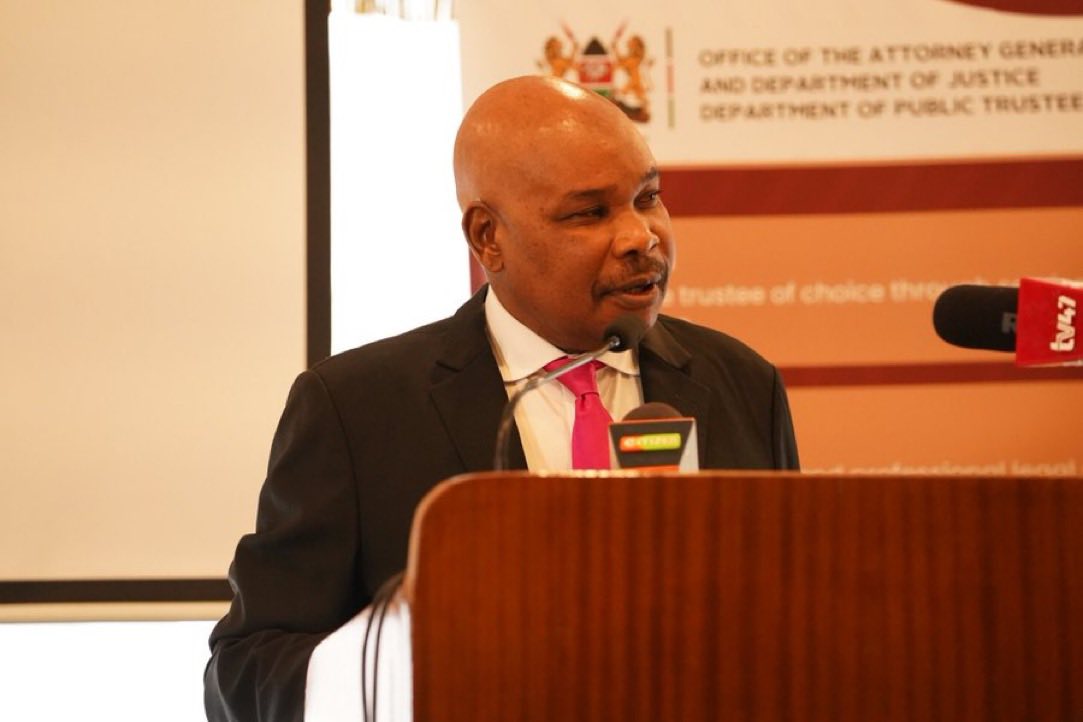
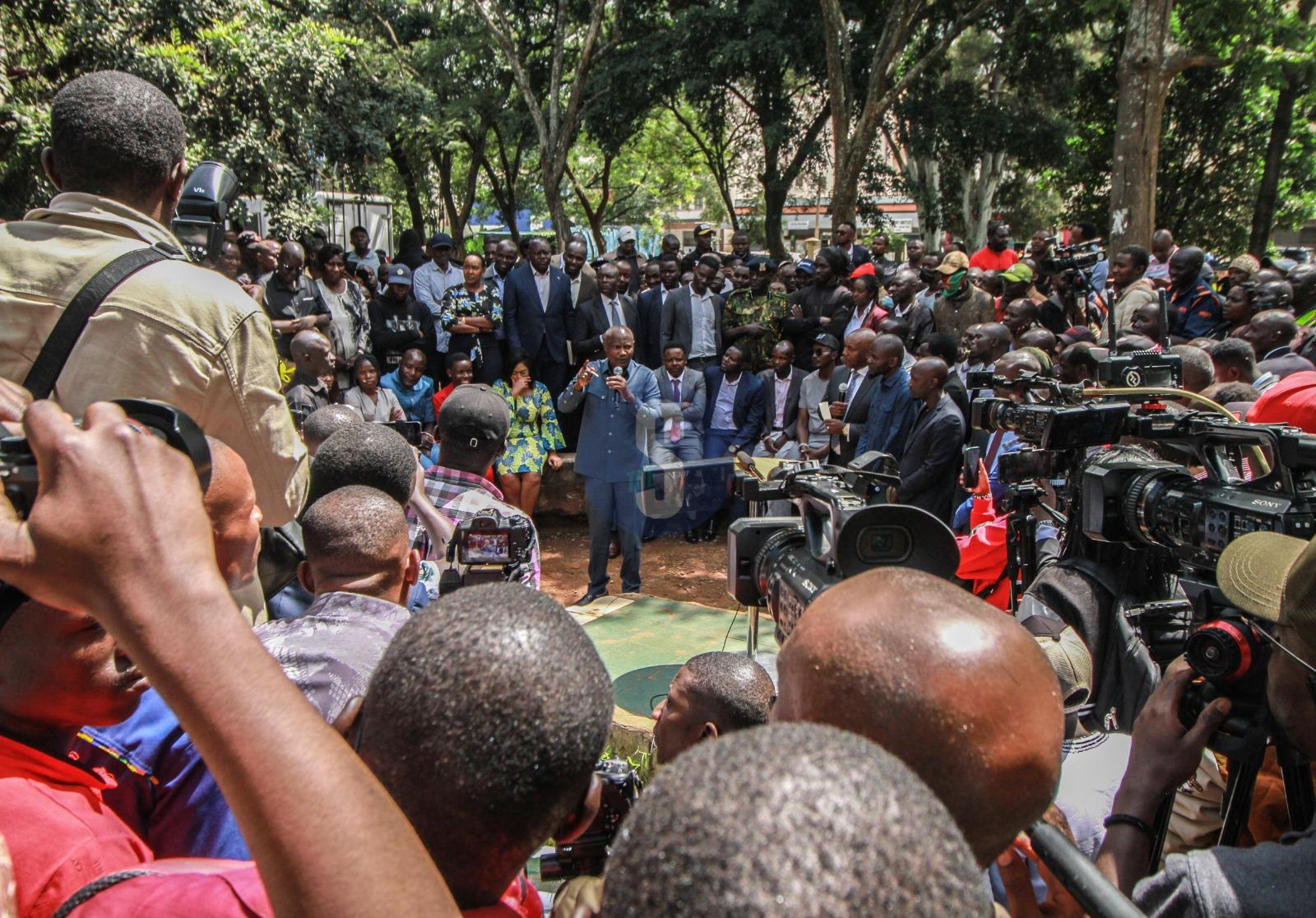
Treasury Cabinet Secretary John Mbadi during a public engagement session on the Finance Bill 2026 at Jivanjee Gardens in Nairobi on May 26, 2026/ ENOS TECHEMPs are headed for another politically charged budget season as they prepare to consider fresh tax proposals by President William Ruto’s administration.
The new tax law comes amid growing pressure from a cash-strapped Treasury and restless voters ahead of the 2027 general election.
The Finance Bill, 2026, already before the National Assembly, has revived memories of the chaotic 2024 tax protests in which demonstrators stormed Parliament Buildings, forcing President William Ruto to withdraw the controversial legislation.
This time, however, the political stakes appear even higher.
The Bill is already attracting fierce contestation from sections of civil society, opposition figures and consumers wary of any new tax burden in an economy struggling with high cost of living.
It is also being debated at a politically sensitive moment, with opposition groups mobilising supporters to commemorate the June 2024 protests that shook the Kenya Kwanza administration.
MPs have found themselves at the centre of the storm, and have to balance the Treasury’s push for more revenue with growing public anger over the cost of living.
President Ruto's administration is under mounting pressure to raise an additional Sh230 billion in revenues to sustain government operations and service debt obligations.
Treasury projections show the next financial year’s debt repayment bill will hit Sh2.3 trillion, with interest payments alone consuming Sh1.3 trillion.
At the same time, the government has prepared a Sh4.79 trillion budget against projected revenues of Sh3.63 trillion, leaving a financing gap of nearly Sh1.1 trillion.
The burden of bridging that gap has now shifted squarely onto Parliament.
The National Treasury admits the economy remains under pressure and has revised projected economic growth downward by 0.3 percentage points.
Treasury data shows inflation rose to 5.6 per cent in April 2026 from 4.1 per cent in April 2025, driven largely by higher fuel and food prices.
“Additional pressure came from elevated food prices due to erratic weather patterns that affected agricultural output,” Treasury said in budget documents.
The government was recently forced to temporarily lower VAT on fuel products from 16 per cent to eight per cent for three months, while also cushioning consumers through subsidies financed under the Petroleum Development Levy Fund.
Even with those interventions, pressure on households remains high.
Treasury Cabinet Secretary John Mbadi has sought to calm growing anxiety around the Bill, insisting that several proposals have been misunderstood or misrepresented in public debate.
In a public forum at Jeevanjee Gardens in Nairobi, Mbadi argued that much of the public discourse had mixed provisions in the Finance Bill, 2026 with proposals contained in the withdrawn Finance Bill, 2024.
The Treasury clarified that controversial proposals such as VAT on bread, motor vehicle circulation tax, access to mobile money transaction data and the 2024 eco levy on phones are not part of the current Bill.
The CS particularly defended the proposed 25 per cent excise duty on mobile phones, which has triggered sharp criticism online and among consumer groups.
According to the Treasury, the proposal is not a new tax but a restructuring of the existing tax framework on mobile phones.
Mbadi said phones are currently subjected to multiple taxes and levies, including 16 per cent VAT, 10 per cent excise duty, 25 per cent import duty, Import Declaration Fees and Railway Development Levy, creating a cumulative tax burden of about 55.5 per cent.
Under the new proposal, Treasury says several of these charges would be removed and replaced with a single 25 per cent excise duty collected upon activation of the phone.
“The proposal was therefore primarily conceived as a tax simplification and rationalisation measure rather than the introduction of a new tax on digital access,” Mbadi said.
He acknowledged, however, that mobile phones have become essential tools for communication, education, financial access and youth livelihoods, explaining the heightened public sensitivity around the proposal.
Treasury also moved to clarify concerns around digital money transfers, saying the Bill does not target traditional financial services such as cash deposits, withdrawals or forex exchange.
Instead, Mbadi said the intention is to address tax treatment for technology-driven digital intermediaries and payment platforms that currently operate in legal grey areas.
The Treasury also denied reports that the Bill introduces a five per cent withholding tax on digital content monetisation, saying no such proposal exists.
Mbadi also defended proposed reporting requirements for virtual asset service providers, arguing the digital asset sector currently lacks sufficient record-keeping and reporting obligations necessary for tax administration.
“The proposal, therefore, seeks to apply reporting and record-keeping principles that are already common within traditional financial and commercial activities to the emerging virtual asset sector,” he said.
Even so, some provisions are argued to be politically sensitive. The Bill proposes a 10 per cent excise duty on plastic products, a five per cent levy on coal and the movement of several products from zero-rated to VAT-exempt status.
Affected items include solar batteries, electric bicycles, electric buses, motorcycles, and the transportation of sugarcane and animal feed inputs.
Economists warn that shifting products from zero-rated to VAT-exempt status could quietly increase consumer prices because manufacturers are often unable to claim input tax refunds and may pass costs onto consumers.
Carol Muasya, KPMG’s manager in tax and regulatory services, warned that even technical tax changes may have wider consequences for households and businesses already under strain.
“Several indirect tax proposals may have cost and pricing implications across supply chains,” she said.
For MPs, memories of the 2024 protests remain fresh, particularly among lawmakers who faced public backlash after supporting the Finance Act, 2024.
Some MPs had homes and businesses attacked during demonstrations, while others required heightened security during constituency visits.
That political trauma continues to shape parliamentary calculations and partly explains why lawmakers recently resisted proposals such as the controversial Mitumba tax.
The pressure is particularly intense in Mt Kenya, where many MPs are still grappling with the political fallout from former Deputy President Rigathi Gachagua’s impeachment.
Already, Gachagua allies are framing the Finance Bill as a political litmus test ahead of the 2027 elections.
Embakasi Central MP Benjamin Gathiru, who has since rebelled from UDA and joined Gachagua’s camp, accused Parliament of surrendering to the Executive.
“Parliament is captured. It is a choir for the Ruto government. They will pass whatever he brings,” Gathiru said.
“For us, we will and must stand with Wanjiku. We are listening to the ground and hearing the loud rejection against any tax increment.”
Kibwezi East MP Jessica Mbalu believes voters are becoming more nuanced in how they judge their representatives.
“The voters are enlightened,” she said, arguing that MPs will increasingly be evaluated individually rather than through blanket political positions.
During its sitting on Tuesday, some members dismissed assertions by the opposition. Majority leader and Kikuyu MP Kimani Ichung'wah and his Minority counterpart Junet Mohamed led the onslaught.
“Because of the misinformation that
had gone on, we lost the Finance Bill even before we factored in what was
canvased during the public participation,” Ichung’wah said.
“There is no other person who can make
laws in this country. It is important to tell Kenyans the truth that the Finance
Bill we are considering here is not the same one being discussed in public," Junet said, accusing the opposition for misleading Kenyans.
The political risk is amplified by the fact that campaigns for 2027 are already quietly taking shape. Traditionally, MPs become more cautious about supporting unpopular government policies as elections approach.
Parliamentary leadership insists the House will not bulldoze the legislation and that public participation will shape the final outcome.
The National Assembly Finance Committee, chaired by Molo MP Kuria Kimani, is currently conducting nationwide hearings before formal debate begins.
The atmosphere at the opening session demonstrated how deeply the ghost of June 2024 still hangs over Parliament. “We hope to end up with a good bill after these deliberations,” Kimani said.
This is premium content
Subscribe to Continue Reading
Help us continue bringing you unbiased news, in-depth investigations, and diverse perspectives. Your subscription keeps our mission alive and empowers us to provide high-quality, trustworthy journalism. Join us today to make a difference!





![[PHOTOS] The new Ngong –Naivasha Road viaduct](https://cdn.radioafrica.digital/image/2026/06/64d4f771-4432-4aee-ba3c-2f304c4436ec.jpg)