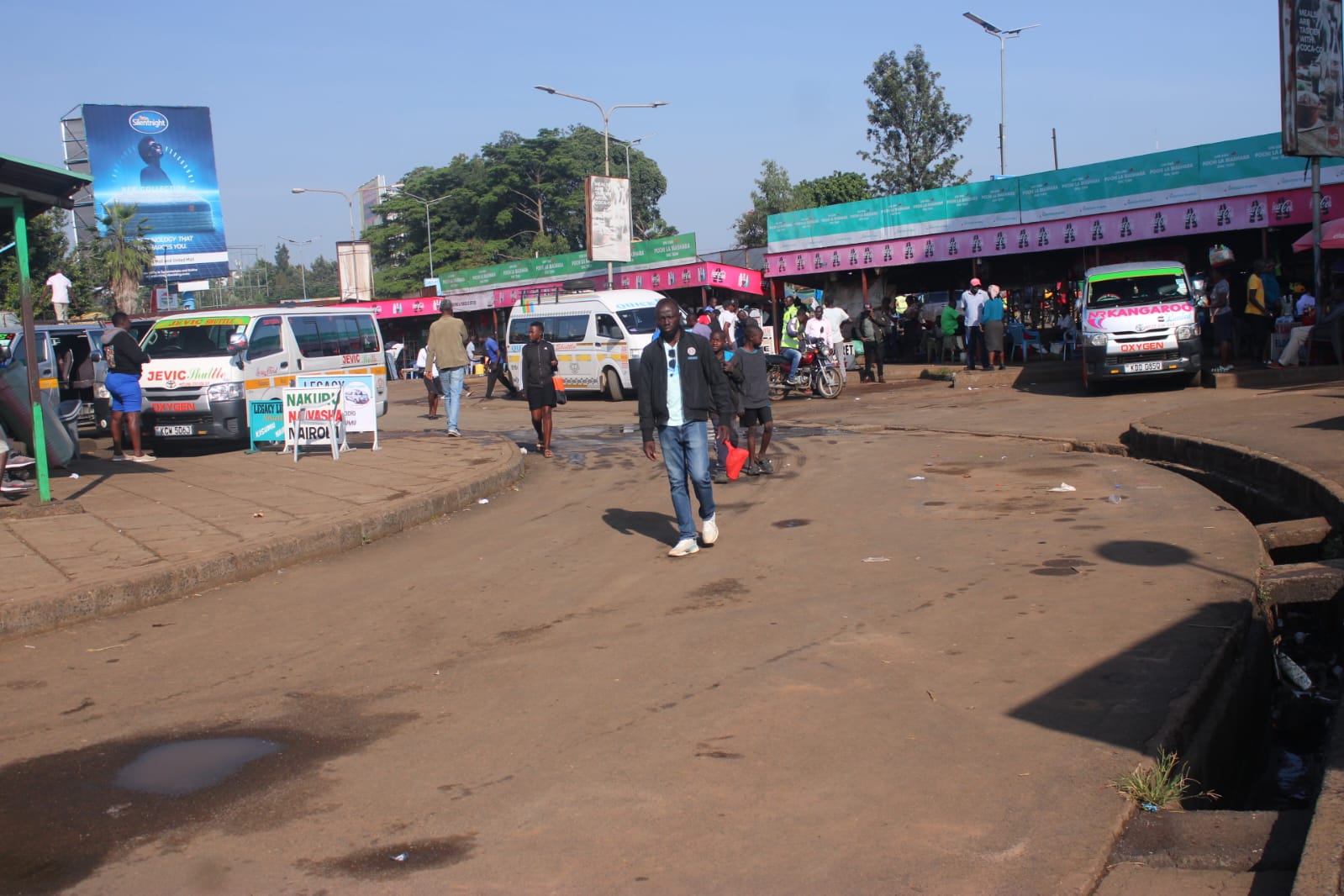
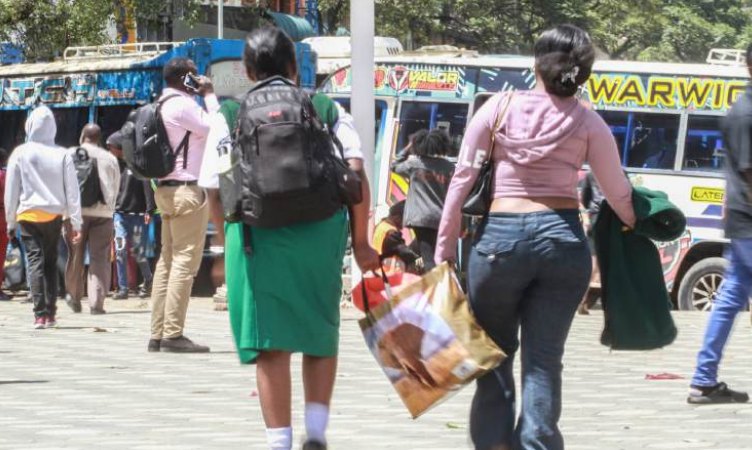
 Kisumu main bus terminus on Monday, May 18 /FAITH MATETE
A calm but tense atmosphere engulfed Kisumu City on Monday morning as the nationwide matatu strike disrupted transport services, leaving hundreds of passengers stranded and forcing commuters to dig deeper into their pockets for transport.
The usually busy Kisumu Main Bus Terminus remained unusually quiet, with only a few vehicles operating as many public service vehicles kept off the roads in support of the strike.
Major streets within the city experienced minimal vehicle movement, while some sections that are often packed with buses and matatus heading to western Kenya remained nearly empty.
Passengers travelling to different destinations said transport fares had sharply increased due to shortage of vehicles.
Fares from Kisumu to Migori rose to Sh1,000, while those travelling to Homa Bay were charged Sh800. Kisii passengers were charged Sh700 while Mombasa Sh3000.
Passengers heading to Nairobi said they were being asked to pay as much as Sh2,000.
“I arrived here at around 6.30am after hearing there would be a strike because I hoped I could still get a vehicle before operations stopped completely, but up to now I have not gotten one,” said Jane Achieng, a stranded passenger travelling to Homa Bay.
She said many passengers had been forced to wait at the terminus with hopes that the situation would ease later in the day.
“We are stranded because there are no vehicles. The few available are charging very high fares that some of us cannot afford,” she added.
Another commuter, Kevin Otieno, who was travelling to Migori, said the fare hike had caught many travellers by surprise.
“Normally, I pay around Sh800 to Migori but today they are asking for Sh1,000. Some people have decided to postpone their journeys because the cost is too high,” he said.
Despite the disruption affecting long-distance travel, some town service vehicles continued operating in parts of Kisumu, although operators claimed business was low.
A conductor operating within the town routes, who identified himself as Collins, said the strike had affected normal movement patterns.
“Town service vehicles are moving but the number of passengers is low because many people opted to use boda bodas early in the morning,” he said.
He said some operators feared losses due to the uncertainty surrounding the industrial action.
Another stranded passenger, Mercy Adhiambo, who was travelling to Nairobi, said she had been forced to remain at the bus park for hours while monitoring the situation.
“The fare to Nairobi is now Sh2,000 yet some of us had budgeted for much less. We are just waiting to see whether things will change during the day,” she said.
Motorcycle riders were among the biggest beneficiaries of the disruption, with many commuters opting for boda boda rides to work and within the city.
The strike significantly reduced activity at the transport hub, with many travellers seen seated with luggage as they waited for transport services to resume.

![[PHOTOS] The new Ngong –Naivasha Road viaduct](https://cdn.radioafrica.digital/image/2026/06/64d4f771-4432-4aee-ba3c-2f304c4436ec.jpg)