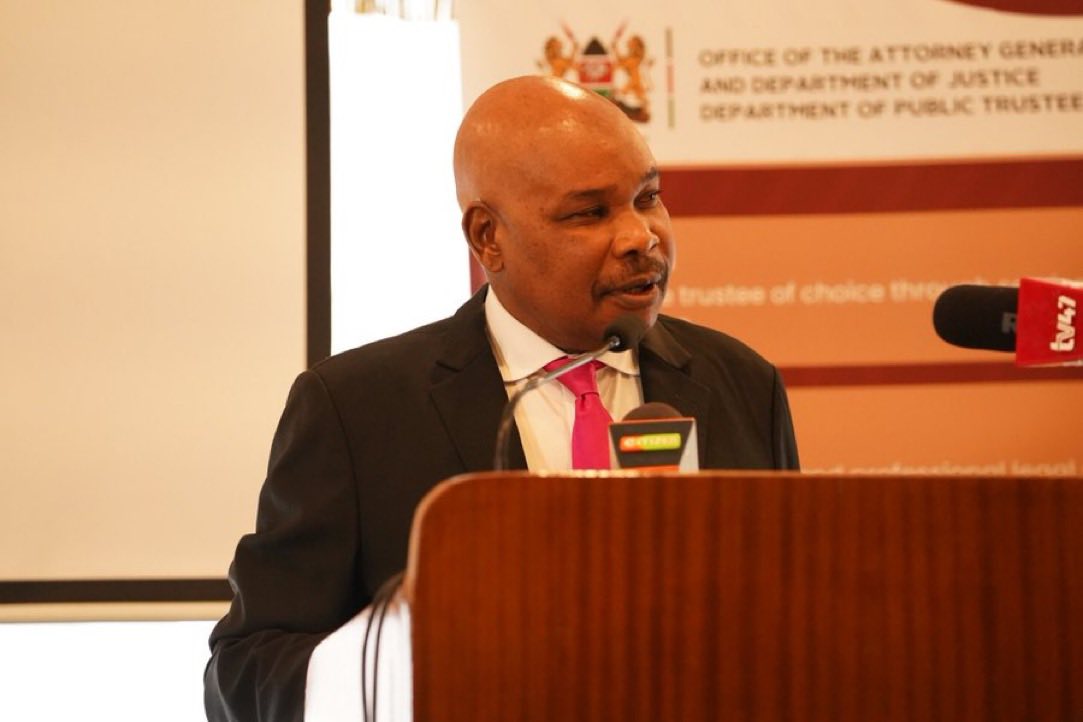
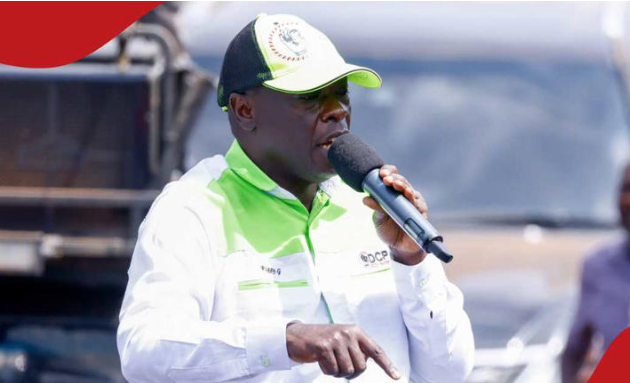
 DCP party leader Rigathi Gachagua at a past Democracy for the Citizens Party (DCP) event/HANDOUT
Support for ex-Deputy President Rigathi Gachagua’s Democracy for the Citizens Party (DCP) has registered a sharp rise in the latest TIFA poll.
The survey released Thursday shows DCP support rising from six per cent in November 2025 to 16 per cent in May 2026, making it one of the fastest-growing political outfits in the country.
The poll also paints a picture of declining influence for both ODM and UDA compared to their standing during the August 2022 general election period.
According to the findings, ODM support dropped from 32 per cent in August 2022 to 18 per cent in May 2026, despite recovering slightly from 13 per cent recorded in September 2025.
UDA, which enjoyed 38 per cent support in August 2022, now stands at 17 per cent, reflecting a steep decline in backing for President William Ruto’s party over the last four years.
TIFA noted that the figures point to increasing voter fatigue, shifting alliances and growing uncertainty within the political landscape ahead of the next election cycle.
“The findings suggest a significant decline in support for both ODM and UDA compared to their August 2022 levels, highlighting possible voter fatigue, shifting political loyalties, and growing uncertainty within the political landscape,” the pollster said.
The emergence of DCP appears to be reshaping the political conversation, especially among voters seeking alternatives to the traditional major parties.
The party’s growth trajectory has been consistent over the last eight months, climbing from nine per cent in September 2025 to 16 per cent in May this year.
The poll also showed Jubilee making modest gains, rising from three per cent in September 2025 to 11 per cent in both November 2025 and May 2026.
Wiper party support also improved from four per cent in late 2025 to nine per cent in May 2026, suggesting renewed activity among smaller opposition-aligned parties.
Meanwhile, the number of undecided voters remains significantly high.
Those who identified as undecided or having no party preference stood at 23 per cent in May 2026, down from 43 per cent in September 2025 but still representing a sizeable bloc that could influence future political alignments.
Support for smaller parties, including DAP-Kenya and Ford Kenya, remained largely stagnant at about one per cent, while the “Other” category fluctuated between four and 10 per cent across the survey periods.
According to the pollster, the study was conducted using a nationally representative sample.
“The results provide a credible snapshot of current public sentiment and emerging national trends,” it said.
The survey fieldwork was conducted using a nationally representative sample drawn from nine zones across the country, namely Central Rift, Coast, Lower Eastern, Mt Kenya, Nairobi, Northern, Nyanza, South Rift and Western regions.
Data collection was carried out through face-to-face household interviews, mainly in Swahili, although English was also used where necessary to ensure respondents fully understood the questions.
A total of 2,013 respondents participated in the survey. TIFA indicated that the study had a margin of error of plus or minus 2.18 per cent, with larger margins applicable to smaller sub-samples.



![[PHOTOS] The new Ngong –Naivasha Road viaduct](https://cdn.radioafrica.digital/image/2026/06/64d4f771-4432-4aee-ba3c-2f304c4436ec.jpg)