Stigmatisation is the leading factor preventing teenage girls who become pregnant while in school from resuming their studies after childbirth, a new survey has found.
The second Gender Equality in Education Status Report by Usawa Agenda released o n May 12, 2026 found that nearly half, or 48.8 per cent, of school-going girls who become pregnant never return to class after delivery.
Overall, among those who fail to resume learning, 45 per cent cited fear of stigma and discrimination as the main reason.
The study, conducted in June and July 2025, found that fear of being laughed at among teenage mothers in senior schools slightly dropped to 34.5 per cent.
Fear of ridicule remains the biggest obstacle in national schools, with 40.8 per cent of girls in cluster 1 schools saying they feared being laughed at by fellow learners.
Parental responsibilities associated with raising children emerged as the second biggest barrier at 29.6 per cent, followed by girls choosing to stay home to nurse their babies at 18.4 per cent.
Other obstacles cited include lack of parental support for girls returning to school after delivery at 15.2 per cent, lack of caregivers for the babies at 13.6 per cent and unwillingness by parents to allow their daughters back to school at 5.1 per cent.
Only 1.1 per cent of respondents cited refusal by nearby schools to admit teenage mothers.
The survey, conducted across all 47 counties, collected data from households, primary schools, junior schools and cluster one to four senior schools.
Researchers interviewed 41,156 households and assessed 49,835 children aged between 10 and 15 years, including both in-school and out-of-school children.
The study also assessed 1,527 public and private primary and comprehensive schools, interviewing learners in Grades 3 to 9 aged up to 17 years.
The survey found that teenage pregnancy prevalence in senior schools is highest in cluster four schools at 4.3 per cent, followed by private schools at 3.2 per cent and special schools at 2.6 per cent.
The lowest prevalence was recorded in cluster one schools at 0.4 per cent, followed by cluster two schools at 0.8 per cent.
Return-to-school rates after childbirth were highest among girls in cluster two schools at 62.8 per cent, followed by cluster four schools at 59.8 per cent and cluster one schools at 56.8 per cent.
The lowest return rates were recorded in special schools at 48.6 per cent and private schools at 46.5 per cent.
The study further found that most victims of teenage pregnancy are older adolescents, with 17-year-olds accounting for 32.2 per cent of reported cases.
Sixteen-year-olds accounted for 22.1 per cent of cases, while 15-year-olds represented 19.5 per cent.
Thirteen-year-olds made up 14.1 per cent of the cases, while 12.1 per cent occurred among 14-year-olds.
Regionally, Rift Valley recorded the highest rate of teenage pregnancy in senior schools at 5.1 per cent, followed by Nyanza at 4.4 per cent, Eastern at 3.5 per cent and Western at 3.4 per cent. Northeastern recorded the lowest prevalence at 0.4 per cent.
The central region posted the highest return-to-school rate among senior school teenage mothers at 69.2 per cent, followed by Nyanza at 64 per cent, Western at 62.2 per cent, Rift Valley at 55.4 per cent and Eastern at 54.6 per cent. Northeastern recorded the lowest return rate at 18.5 per cent.
Nationally, the report found that 1.5 per cent of teenage girls were pregnant in the year preceding the survey, with Nairobi recording the highest prevalence at 2.5 per cent, followed by Nyanza at 2.1 per cent and Rift Valley at 1.8 per cent.
Nyanza emerged as the region with the highest proportion of girls returning to school after childbirth at 64.7 per cent, followed by Rift Valley at 60.2 per cent and Eastern at 53 per cent.
All other regions recorded return rates below 50 per cent, with Coast posting the lowest rate at 22.6 per cent.
The survey found that the majority of learners affected by teenage pregnancy are in junior schools at 60 per cent, followed by senior schools at 33.9 per cent and primary schools at 6.2 per cent.
In primary schools, the most common interventions to support teenage mothers include readmitting them to school at 43.4 per cent and providing counselling services at 42.8 per cent.
Other support measures include allowing girls time to care for their babies at 6.4 per cent and offering remedial lessons at 3.9 per cent.
The report warned that low return-to-school rates continue to expose girls to long-term social and economic disadvantages.
“An out-of-school teenage girl is 12 times as likely as her in-school counterpart to suffer early pregnancy,” the report states.
Usawa Agenda executive director Emmanuel Manyasa called for greater collaboration among parents, schools and communities to ensure girls who become pregnant are supported to continue learning.
Lack of support by parents (36.9 per cent) emerged as the biggest challenge senior school management face in their quest to retain teenage pregnancy victims in school.
“That is one area where we still have work to do because one of the things that is driving non-return is lack of support from parents. We need to redouble our efforts to make sure that all children are in school because that's where they are safest,” Manyasa said.
“A pregnancy does not terminate the right for a girl to get education because you don't just punish her, you punish the child that is being born. The child that is being born is going to be born to an illiterate mother. Data shows that children from households where parents have high level of education have a better chance of being in school,” he added.

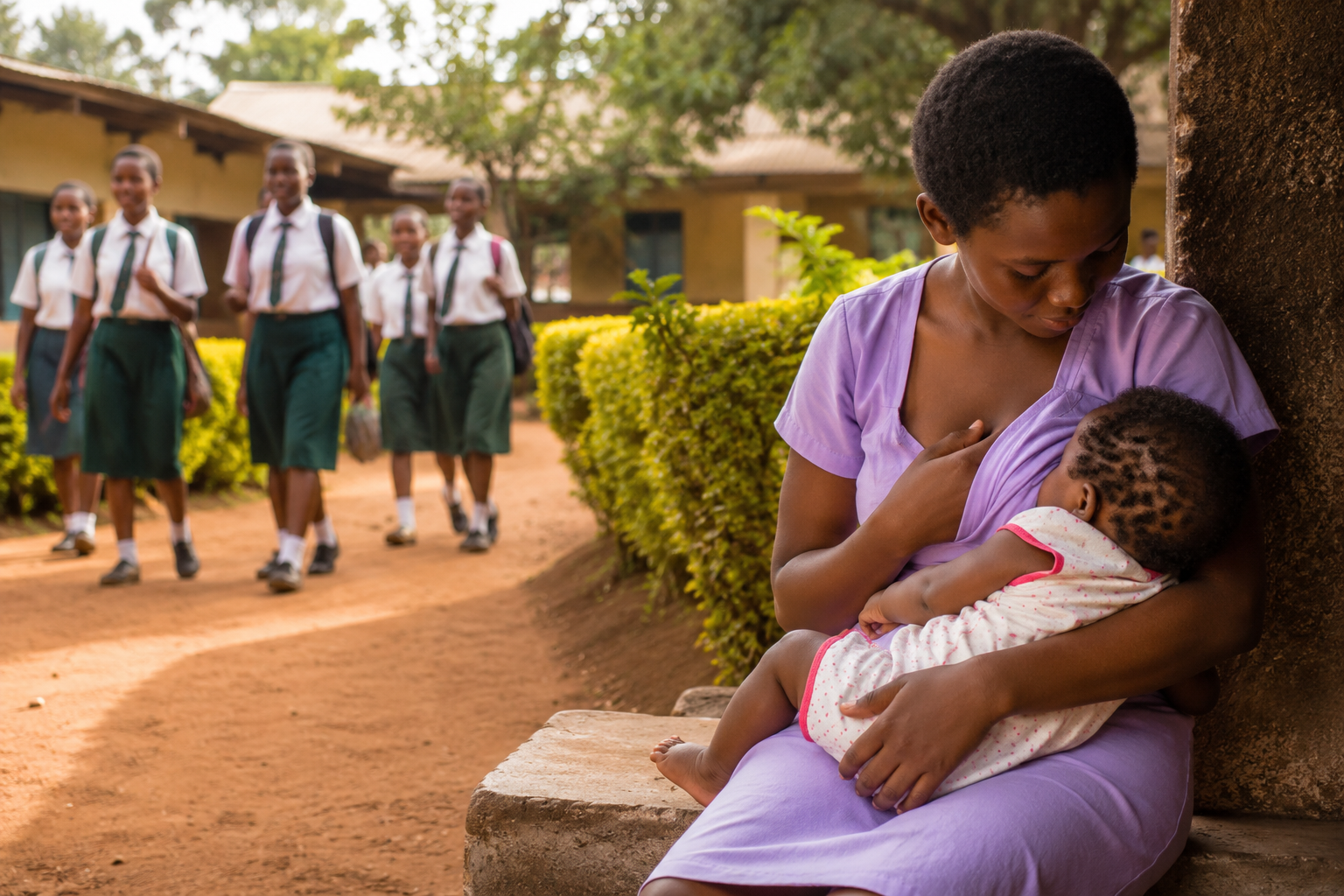 Usawa Agenda survey found that lack of parental support and childcare responsibilities is also driving dropouts. /AI




![[PHOTOS] The new Ngong –Naivasha Road viaduct](https://cdn.radioafrica.digital/image/2026/06/64d4f771-4432-4aee-ba3c-2f304c4436ec.jpg)