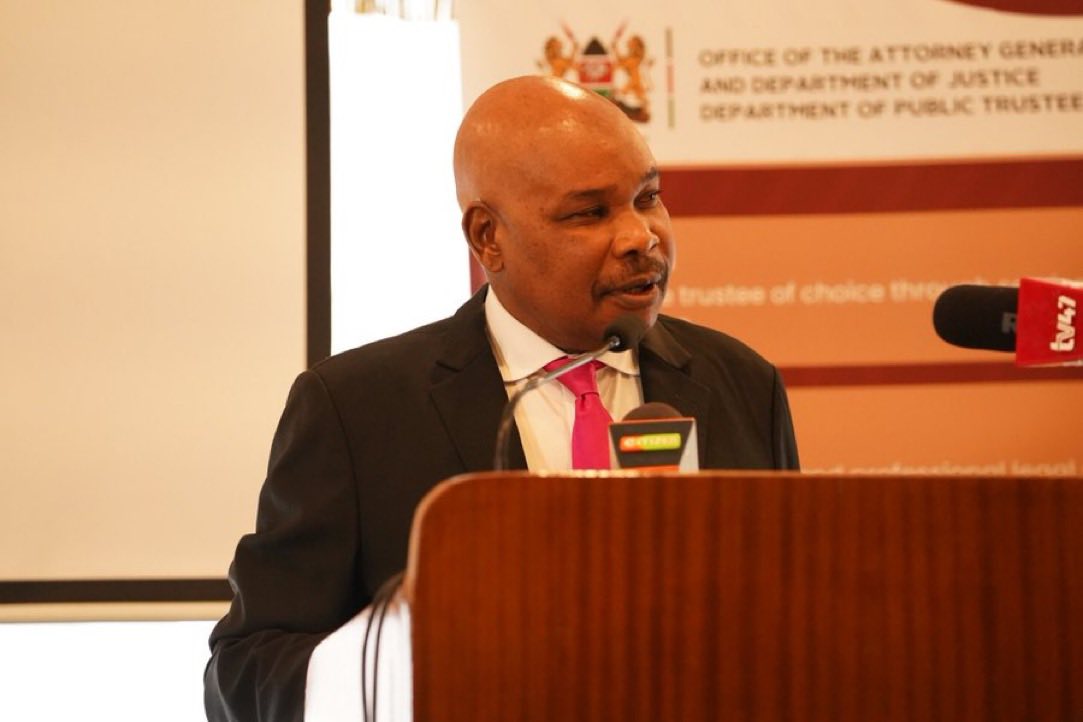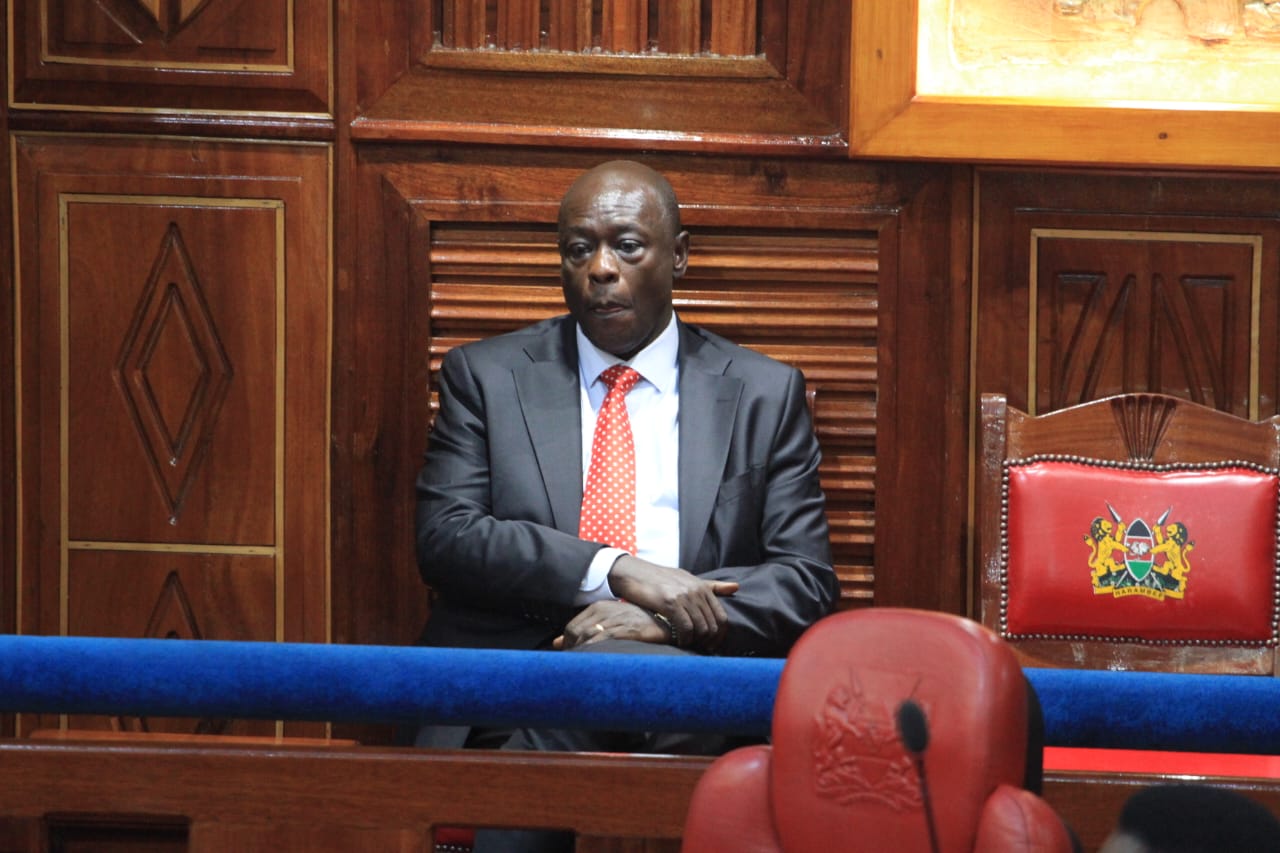
Lawyer Moses Kipkogei, appearing for Parliament, has defended the public participation exercise conducted during the impeachment of former Deputy President Rigathi Gachagua in 2024.
Submitting before the High Court, he likened the exercise to the nationwide civic engagement process that preceded the adoption of the 2010 Constitution.
Kipkogei argued that the impeachment process attracted one of the "most extensive public participation exercises ever undertaken in the country."
“Some 223,000 Kenyans submitted views physically in various offices, probably the most intense and elaborate public participation exercise ever undertaken in this country,” he submitted.
“I think it mirrors the one undertaken before the adoption of the Constitution. I think it is the only other public participation session that rivals the adoption of the new Constitution.”
Kipkogei was responding to claims by Gachagua’s legal team that the impeachment process was conducted hurriedly and without adequate public participation.
He told the court that impeachment proceedings are constitutionally time-bound and any assessment of public participation must be viewed within the timelines provided under the Constitution.
“Impeachment was time-bound. Public participation in respect to impeachment must be taken within the context of time available to whichever organ of the legislative assemblies is dealing with the matter,” Kipkogei argued.
The lawyer outlined several mechanisms Parliament said it employed to ensure widespread public involvement in the impeachment process.
According to Kipkogei, notices inviting members of the public to submit views were published in mainstream newspapers in both English and Kiswahili between October 2 and October 4, 2024.
The notices, he said, were also disseminated through television stations, radio broadcasts, Parliament’s official website and social media platforms including X, Facebook, and Instagram.
Referring to affidavits filed in court, the lawyer further stated that Parliament organised public hearings in all county headquarters where citizens were invited to physically present their views.
"There were public hearings initially held at every county headquarters where members of the public were invited to engage staff of the National Assembly and submit their views through templates provided to them,” he submitted.
Kipkogei told the court that the grounds for impeachment were clearly outlined both in the templates and in public notices circulated before the hearings.
He added that additional hearings were conducted on October 4 and 5, 2024, across the counties to further widen public engagement.
The court also heard that Parliament established a dedicated email address through which Kenyans unable to attend physical hearings could electronically submit their views.
According to the lawyer, the views collected through the exercise directly informed Members of Parliament ahead of the vote on the impeachment motion.
“At the end of the day, all the views were for the benefit of Members of Parliament,” he submitted.
Kipkogei argued that none of the petitioners challenging the impeachment had demonstrated that MPs lacked public input before making their decisions.
“None of the petitioners before you have suggested that any Members of the National Assembly were unable to vote or were not duly instructed by constituents,” he argued.
“Only one MP abstained. They made choices based on the views they gathered from members of the public.”
Elsewhere in the proceedings, another counsel representing the National Assembly defended the pace of the impeachment process, arguing that the timelines were dictated by the Constitution and not by Parliament’s preference.
Responding to criticism that the proceedings moved at “breakneck speed,” the lawyer told the court that Article 145 of the Constitution provided strict timelines within which impeachment proceedings must be concluded.
“What determines timelines between which impeachments are supposed to be done? Article 145 gives a total of 19 days within which the impeachment process should have been completed,” counsel submitted.
The respondents, including the Parliament and Senate, argued that the timelines were fixed constitutional requirements and not optional political decisions.
“The question of timely and expeditious determination of an impeachment motion is a dictate of the Constitution, not a whimsical escapade or undertaking by either the National Assembly or Senate. Those timelines are cast in stone and must be complied with,” counsel argued.
The respondents further submitted that impeachment proceedings involve highly divisive national questions and therefore require certainty and expeditious determination.
“Impeachment is a nuclear option and should be the last resort in dealing with disciplinary issues involving a President or Deputy President,” counsel told the bench.
On claims that Gachagua was denied a fair hearing, the respondents insisted that he had been given multiple opportunities to defend himself both in writing and physically before Parliament.
“Gachagua was given an opportunity to respond. He responded in writing. He was also given an opportunity to attend in person before the National Assembly and Senate,” counsel argued.
The court heard that the former Deputy President attended proceedings accompanied by a team of 14 lawyers who actively participated during the hearings.
“He seized the opportunity and attended, not alone, but with a battery of 14 lawyers who were given an opportunity to ask questions,” counsel submitted.
The respondents maintained that both Houses of Parliament interrogated the issues extensively before arriving at their determinations.
“Is that a case of somebody who was not afforded an opportunity to be heard?” counsel posed.


![[PHOTOS] The new Ngong –Naivasha Road viaduct](https://cdn.radioafrica.digital/image/2026/06/64d4f771-4432-4aee-ba3c-2f304c4436ec.jpg)