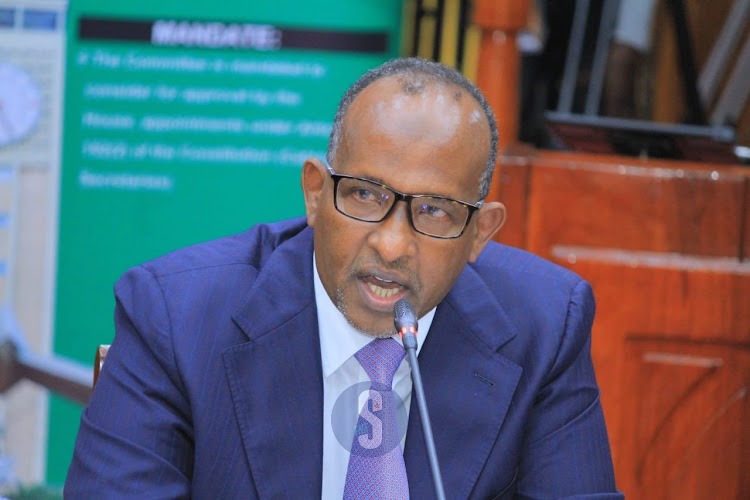
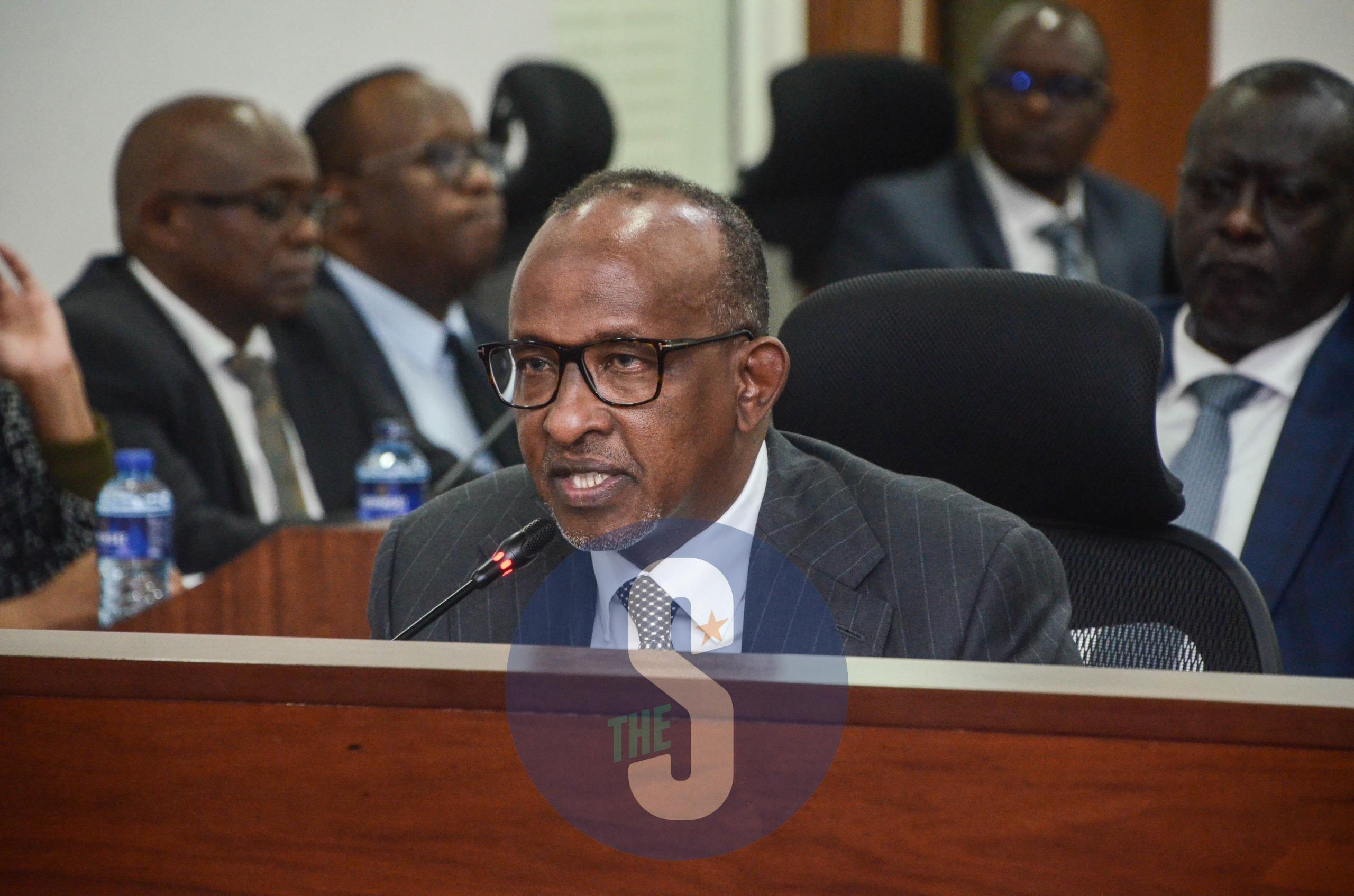
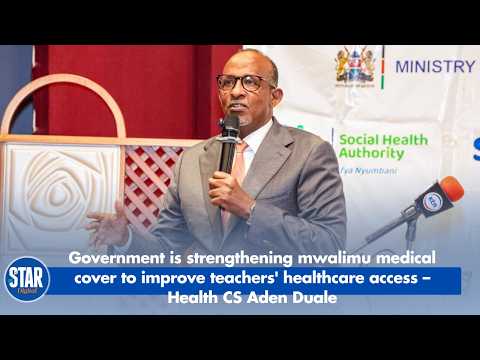
 Health CS Aden Duale when he appeared before the Committee on Health to present Budget Estimates for FY 2026/2027 at Bunge Towers on May 12 2026/DOUGLAS OKIDDY
Health Cabinet Secretary Aden Duale has unveiled a broad package of reforms aimed at strengthening Kenya’s healthcare system through increased workforce investment, strategic financing and improved collaboration between the national and county governments.
The reforms, announced during separate engagements on Tuesday in Nairobi, signal the government’s renewed push to accelerate Universal Health Coverage (UHC), improve frontline healthcare delivery and address longstanding structural weaknesses within the country’s health sector.
Appearing before the National Assembly Departmental Committee on Health at Bunge Towers, Duale led the Ministry of Health in presenting the 2026/2027 budget estimates for the State Department for Medical Services.
He outlined a wide-ranging reform agenda focused on health systems strengthening, digital transformation, expanded local manufacturing of medical products and improved access to quality care.
Duale told lawmakers that healthcare financing remained central to Kenya’s broader economic and social resilience.
“Our commitment is to build a health system that guarantees accessible, affordable and quality healthcare for every Kenyan,” Duale said.
Among the most significant proposals is the planned transition of 107,000 Community Health Promoters into the Social Health Authority comprehensive medical scheme through a joint framework between national and county governments.
The move is expected to significantly improve welfare, job security and institutional support for frontline health workers who play a key role in preventive and promotive healthcare services at the grassroots.
Duale said Community Health Promoters had become essential in linking households to formal healthcare systems and improving primary healthcare interventions.
He also called for urgent replacement and upgrading of CHP kits to improve service delivery at the community level.
At the same time, the government confirmed that contracts for UHC healthcare workers would be extended until June 30, 2026, allowing county governments more time to absorb them into permanent and pensionable terms.
The Ministry further appealed for increased budget allocations to support several underfunded but high-impact programmes, including the East Africa Centre for Excellence in Urology and Nephrology, Kenya National Blood Transfusion Services, Primary Healthcare Fund and Emergency, Chronic and Critical Illness Fund.
Additional support was also sought for national referral hospitals facing growing operational and staffing pressures.
Later, while presiding over the grand finale of International Nurses Week celebrations in Nairobi, Duale launched key policy and strategic frameworks designed to strengthen nursing and midwifery services in Kenya.
The event also marked the unveiling of the Nurses and Midwives Recognition and Awards Scheme, which aims to recognise outstanding service, promote professionalism and inspire excellence among nurses and midwives.
Duale said nurses and midwives remained central to Kenya’s healthcare delivery system and the success of UHC.
He reaffirmed the government’s commitment to strategic deployment of nurses to underserved areas, strengthening professional training, supporting continuous learning and improving career progression.
“Nurses and midwives remain at the heart of accessible, quality and people-centred healthcare,” Duale said.
He praised the resilience and dedication of healthcare workers, noting that strengthening the nursing workforce was critical to improving service delivery across both rural and urban settings.
The reforms also place strong emphasis on the digitisation of healthcare systems, accountability in resource use and uninterrupted access to essential medicines.
Health experts say the combined reforms could significantly strengthen Kenya’s health infrastructure if effectively implemented, particularly by improving preventive healthcare, workforce morale and institutional efficiency.
With increasing pressure on healthcare systems from population growth, chronic disease burden and financing gaps, Duale’s proposals represent one of the government’s most comprehensive recent attempts to stabilise and modernise the sector.
The reforms now await parliamentary budgetary support and coordinated implementation between national and devolved governments, which will determine how quickly the proposed improvements translate into better healthcare outcomes for millions of Kenyans.



![[PHOTOS] The new Ngong –Naivasha Road viaduct](https://cdn.radioafrica.digital/image/2026/06/64d4f771-4432-4aee-ba3c-2f304c4436ec.jpg)