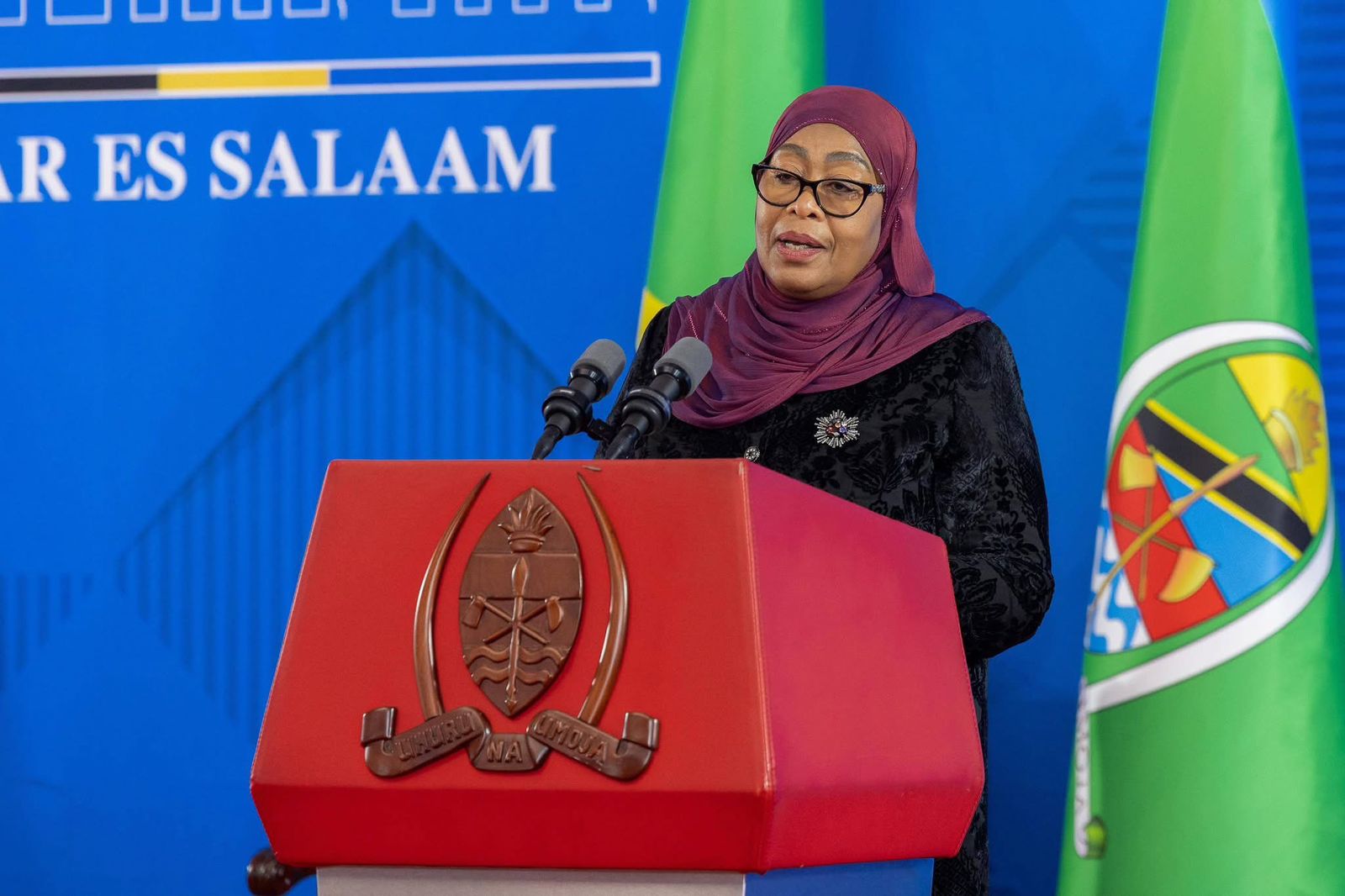
Recent remarks by Tanzania’s President Samia Suluhu
suggesting that youth and activists who protest against bad governance and call out bad leadership
in the region should be subjected to flogging are not only troubling, but are
profoundly out of step with the democratic aspirations of East Africa’s
citizens.
At a time when our region is grappling with complex social,
economic and political challenges, the role of youth and civic actors has never
been more important.
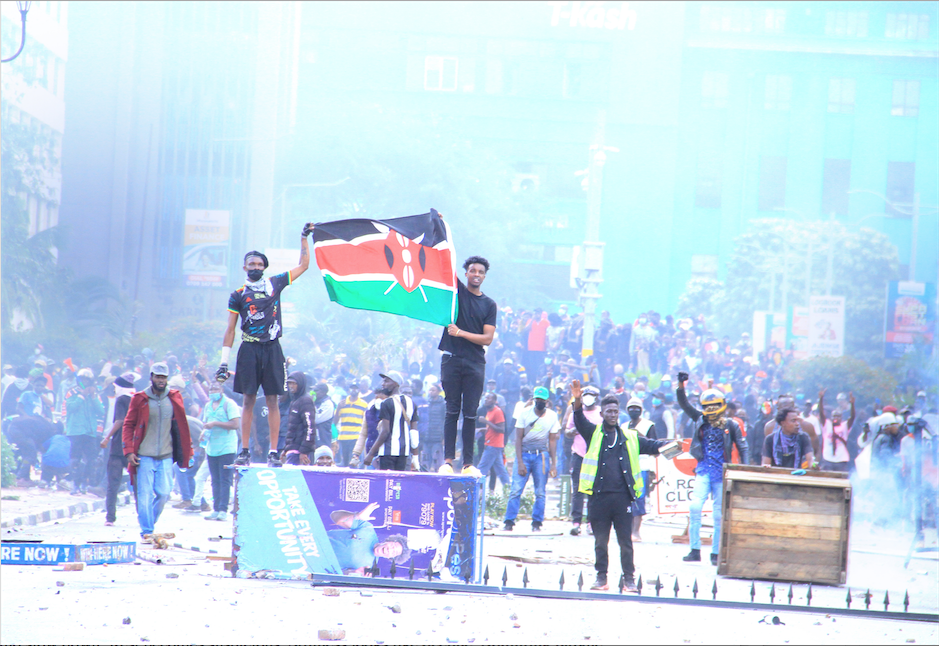
Across Kenya, Tanzania, Uganda and beyond, young people are
organising, speaking out and insisting on a future defined by justice,
transparency and opportunity. For President Suluhu to dismiss them as unruly or
to threaten them with punishment is to misunderstand both the source of their
frustration and the legitimacy of their demands.
The truth is simple. The youth of East Africa are not rising
in defiance for its own sake. They are responding to lived realities. High
unemployment, rising costs of living, corruption, inequality and shrinking
civic space are not abstract concerns - they are daily struggles.
When young
people take to the streets or raise their voices online, they are not rejecting
order. They are calling for fairness. They are asking Suluhu and other leaders
to live up to the promises embedded in the constitutions and national ideals.
Democracy cannot and must not be reduced to obedience. It is
not a system where citizens are expected to bow to authority without question
or “toe the line” in the face of injustice. On the contrary, democracy thrives
on participation, dissent and accountability. It requires leaders who are
willing to listen, to engage and when necessary, to change course.
It is precisely here that the danger of Samia’s remarks
becomes evident. When leaders suggest that civic activism should be met with
force, they risk normalising repression as a tool of governance. This is not
only a disservice to democratic values. It is a recipe for deeper instability.
History has shown, time and again, that suppressing legitimate grievances does
not make them disappear; it intensifies them.
There is an old saying that goes when a cat is pushed to the
wall and faces danger from all corners, it does not retreat quietly; it fights
back. This is not a call to violence. It is a reflection of human nature.
People who feel unheard, cornered and unjustly treated will inevitably seek
ways to assert their dignity and rights. Calls to “discipline” youth through
harsh and punitive measures risk pushing societies toward exactly the kind of
confrontation that responsible leadership should strive to prevent.
What is needed instead is a shift in perspective. Youth
should not be viewed as adversaries of the state but as partners in nation-building.
Their energy, creativity and determination are among the region’s greatest
assets. Governments that choose to engage them constructively through dialogue,
inclusive policymaking and meaningful reforms stand to gain not only
legitimacy but also innovative solutions to persistent challenges.
Leadership, in its truest sense, is not about control. It is
about responsibility. It is about recognising that power is entrusted by the
people and must be exercised in their best interests. When leaders like Suluhu respond
to social concerns with threats or force, they reveal a troubling disconnect
from the realities their citizens face. Such responses suggest not strength but
a failure to listen and to lead with empathy.
East Africa is at a critical juncture. Our region is one of
the youngest in the world, with a rapidly growing population that is
increasingly informed, connected and aware of its rights. This demographic
reality presents both an opportunity and a challenge. Harnessed effectively, it
can drive economic growth, innovation and democratic consolidation. Ignored or
suppressed, it can lead to frustration, unrest and lost potential.
We must be clear and tell Tanzania’s president to her face
that advocating for accountability, transparency and justice is not
indiscipline. It is citizenship in its most active and meaningful form. The
young people who organise protests, who question authority, who demand better
governance, are not enemies of the state. They are its conscience.
At the same time, it is important to emphasise to Suluhu that
the pursuit of change must remain grounded in peaceful and lawful means not
threats and flogging of the masses. Sustainable progress is built not through
chaos but through principled engagement, solidarity and a commitment to
democratic norms. Governments must take the responsibility of creating and
protecting such spaces so that engagements can occur freely and safely.
We need to remind Suluhu that East Africans share more than just
borders. We share histories, cultures and aspirations. The challenges facing
one nation often resonate across the region. So too must the solutions. We
cannot afford to embrace narratives that pit governments against their own
people or that frame civic engagement as a threat to stability.
Instead, we must work toward a shared vision of a region
where leaders are accountable, institutions are strong and citizens are
empowered. A region where the voices of young people are not feared but valued.
A region where democracy is not a slogan but a lived reality.
The path forward requires courage - not the courage to
silence dissent but the courage to confront uncomfortable truths. It requires
leaders who are willing to listen, to learn and to act in the interests of all
their citizens. Conversely, it requires citizens who remain steadfast in their
commitment to justice, accountability and peaceful change.
Let Tanzania’s president know that when youth speak, leaders
must listen. Anything less is not leadership - it is a failure of it.






![[PHOTOS] The new Ngong –Naivasha Road viaduct](https://cdn.radioafrica.digital/image/2026/06/64d4f771-4432-4aee-ba3c-2f304c4436ec.jpg)