MPs have backed a push by the police oversight authority to hold
personally responsible police commanders in cases of rights abuses.
The Independent Policing Oversight Authority (IPOA) has proposed
that police bosses bear the responsibility in situations that lead to avoidable deaths,
serious injuries, or sexual violence, especially during protests.
Ipoa argues that police commanders make key decisions such as how officers are deployed, which tactics are used,
the rules of engagement, and how operations are supervised.
It noted that when these decisions are careless or poorly
made, the risk of harm to the public increases.
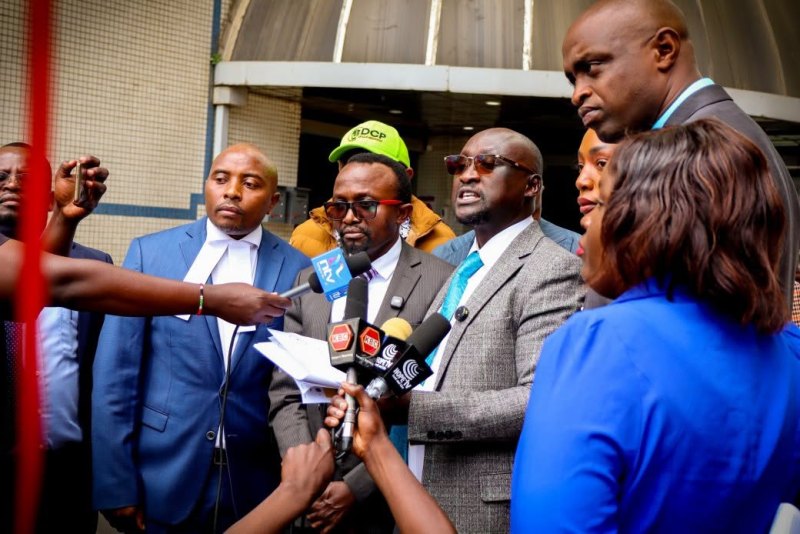
The authority’s board met the National Assembly’s
Committee on Administration and Internal Security.
Committee chairman Gabriel Tongoyo (Narok West) however noted that existing laws already provide some level of accountability
for officers in charge.
He challenged Ipoa to clearly identify the specific
gaps that require new laws or amendments.
“In my mind, we already have provisions under the National
Police Service Act assigning responsibility, especially to officers commanding
stations,” Tongoyo said.
He added: “What we need now is a clear mapping of what
exists, where the gaps are, and what exactly needs to be fixed.”
Ipoa commissioner Kenwilliam Nyakomitah however told the
committee that existing laws only require senior officers to report misconduct
after it occurs, leaving a critical gap in prevention.
He warned that the current legal framework falls
short in holding senior officers accountable for preventing misconduct.
“There is currently no criminal sanction for a superior
officer who fails to prevent misconduct,” Nyakomitah said.
“A superior officer may know what is being planned and what
is likely to happen, but the law does not compel them to act to stop it. That is
the gap we must address.”
He argued that the law should impose clear duties on commanders
to prevent, repress and report misconduct, arguing that such provisions would
compel proactive leadership within police ranks.
“If a superior officer fails to act despite having
knowledge, then there should be consequences. That would ensure these incidents
do not occur in the first place,” he said.
The meeting also brought into focus the struggling Internal
Affairs Unit (IAU) within the National Police Service, which Ipoa says has
failed to effectively handle complaints against officers.
The authority described the unit as largely dysfunctional
and lacking public trust.
Ipoa director of complaints Ruth Kaguta said more
than 70 per cent of complaints received by the authority relate to police
conduct and could ideally be resolved internally.
Kaguta noted that Ipoa has, for a considerable period,
attempted to collaborate with the unit, but the effort has been largely
unsuccessful.
“Unfortunately, the unit is almost dysfunctional,” she said.
“Frequent leadership changes, lack of independence, and public distrust have
made it difficult for us to collaborate or offload cases.”
She added that persistent restructuring at the unit has
further hampered Ipoa’s work and derailed dispensation of Justice.
“There have been constant leadership changes, and in some
instances we are told meetings cannot even take place due to reorganisations,”
she said.
Kaguta emphasised that the unit’s placement under the
Inspector General undermines its independence and, by extension, public
confidence.
“Complainants come back to us saying they do not trust how
their cases are handled. The unit is not independent, and that affects its
credibility,” she said.
The meeting also delved into proposals in the draft Public
Order Management Bill, including a contentious suggestion to shift the role of
regulating public gatherings from police officers to national government
administrators.
Ipoa deputy director of legal services Festus Kinoti opposed
the proposal, warning it would be unconstitutional.
“Public order
management is strictly a policing function under the command of the Inspector
General,” Kinoti said. “Transferring that role would create a constitutional
conflict and weaken civilian oversight.”
Ipoa chief executive Elema Halake urged the police to embrace technology as a tool for accountability and efficiency,
citing resistance within the system.
“We have consistently recommended the adoption of
technology—from digital occurrence books to CCTV surveillance and body
cameras,” Halake said. “
There has been huge resistance, yet this is key to improving
transparency and addressing manpower challenges.”
Halake also raised concerns over the creation of special
police units without clear regulation warning that such formations could
operate outside accountability frameworks.
“The establishment of special units, particularly those
operating informally, is a matter of great concern. These units must be
formally recognised and remain accountable,” he said. “Operating in secrecy
creates serious risks.”
Nyakomitah emphasised the strain on IPOA’s capacity,
noting that the authority is severely understaffed compared to the size of the
police service.
“We have over 100,000 police officers and only about 270
staff at IPOA,” he said.
“Without a functional Internal Affairs Unit, all complaints
are pushed to us, which is not sustainable.”
He emphasised the need for stronger collaboration between
oversight bodies and internal police mechanisms to ensure efficiency.



![[PHOTOS] The new Ngong –Naivasha Road viaduct](https://cdn.radioafrica.digital/image/2026/06/64d4f771-4432-4aee-ba3c-2f304c4436ec.jpg)