


 AI Illustration
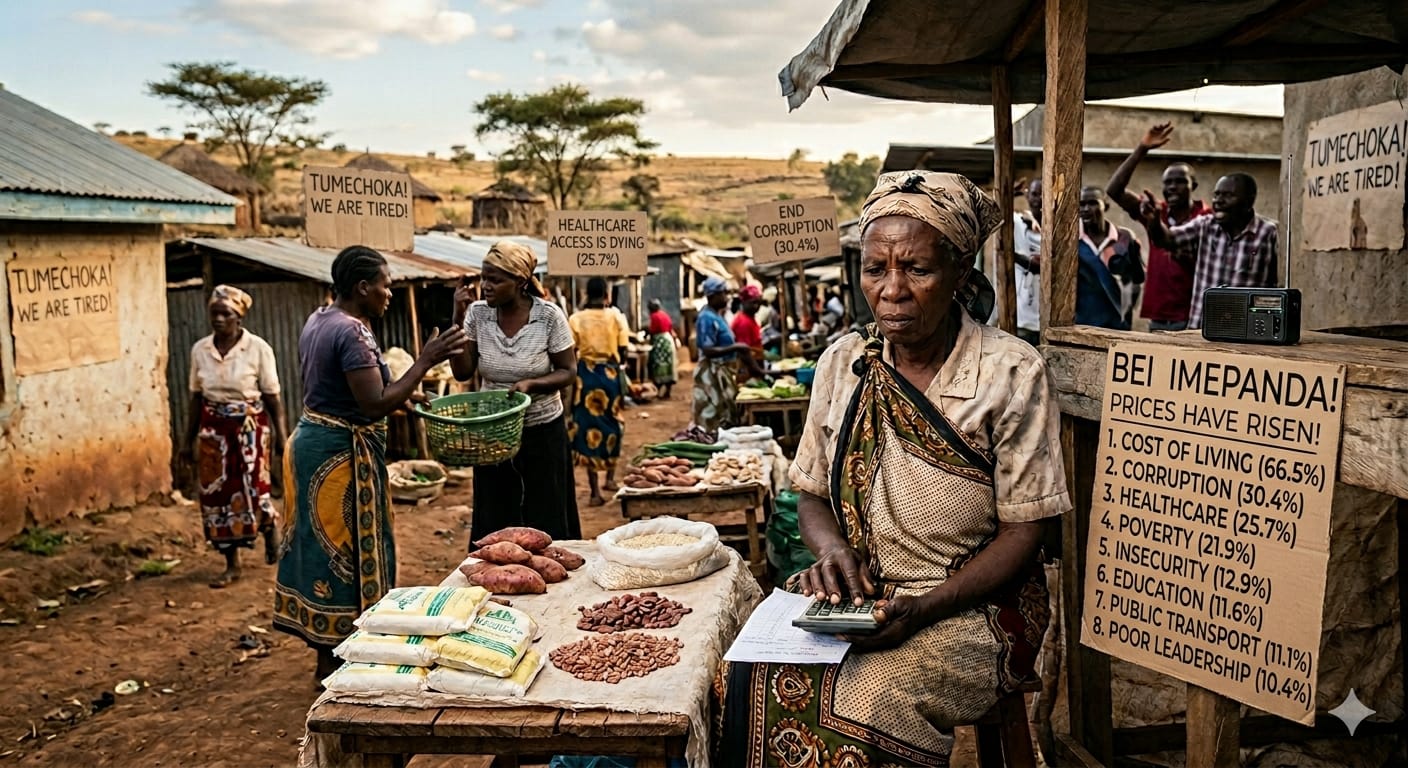
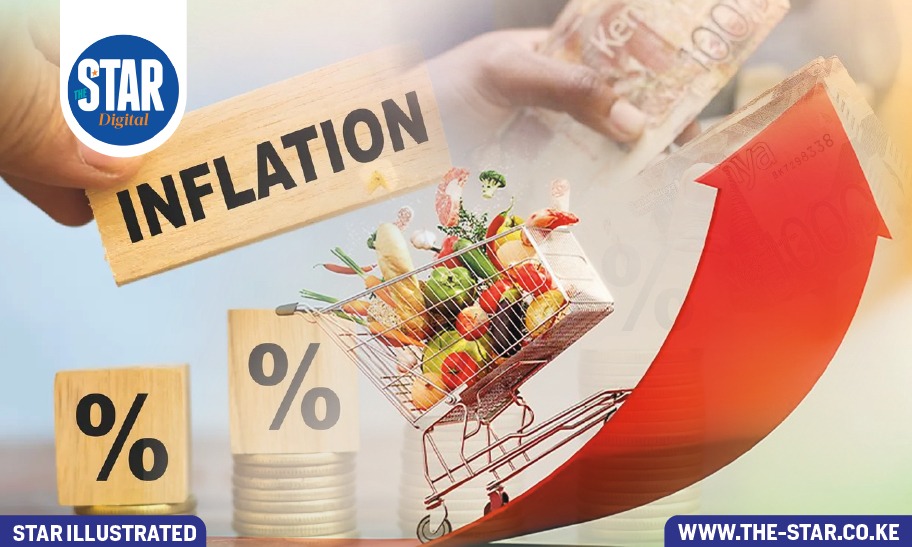
The rising cost of living has emerged as the single most pressing challenge facing the country, with 66.5 per cent of respondents identifying it as their top concern, a new report has shown.
Findings from the National Gender and Corruption Survey 2025 says the figure not only leads by a wide margin but also underscores the intensity of financial strain households are currently grappling with, as prices of basic commodities and essential services continue to climb.
This dominant concern places the cost of living crisis far ahead of corruption, which ranks second at 30.4 per cent.
While corruption remains deeply entrenched and widely acknowledged as a systemic issue, the data suggests that immediate survival needs are taking precedence in the public mind.
According to the report, for many, the urgency of putting food on the table and meeting daily expenses outweighs longer-term governance concerns.
Healthcare follows at 25.7 per cent, reflecting persistent challenges in access, affordability and quality of medical services, it says.
The figure highlights a population still struggling with gaps in the health system, where the cost of treatment and limited infrastructure continue to push many into vulnerability.
Closely trailing is poverty at 21.9 per cent, reinforcing the broader economic narrative.
"The overlap between poverty and the cost of living crisis is evident, with rising prices exacerbating already fragile livelihoods," the report says.
For a significant portion of the population, economic pressures are not isolated issues but part of a larger cycle of hardship.
Beyond these leading concerns, the report says, other issues though cited by smaller proportions, paint a picture of a nation facing multiple interconnected challenges.
Insecurity is mentioned by 12.9 per cent of respondents, pointing to ongoing safety concerns in certain regions.
Education follows at 11.6 per cent, suggesting unease about access to quality learning and the future of the country’s human capital.
Poor public transport infrastructure, cited by 11.1 per cent, reflects frustrations with mobility, especially in areas where inefficient systems increase the cost and time of daily commutes.
Meanwhile, poor leadership is identified by 10.4 per cent, signalling underlying dissatisfaction with governance and decision-making.
At the lower end of the scale, 7.2 per cent of respondents cited other unspecified challenges, while industrial unrest was barely mentioned at 0.3 per cent, indicating it is currently a minimal concern relative to broader economic and social issues.
Taken together, the data reveals a clear hierarchy of public concern, dominated overwhelmingly by economic pressures.
The prominence of the cost of living crisis suggests a population under strain, where day-to-day survival has become the defining issue.
Until the burden of rising costs is eased, other national challenges no matter how significant will continue to take a back seat to the simple, urgent struggle to make ends meet.





![[PHOTOS] Red carpet in Pretoria as Ruto begins South Africa visit](https://cdn.radioafrica.digital/image/2026/06/abe3e750-6e5a-4394-a45c-899768be6240.jpeg)